Should you block AI crawlers? How to choose which bots get in
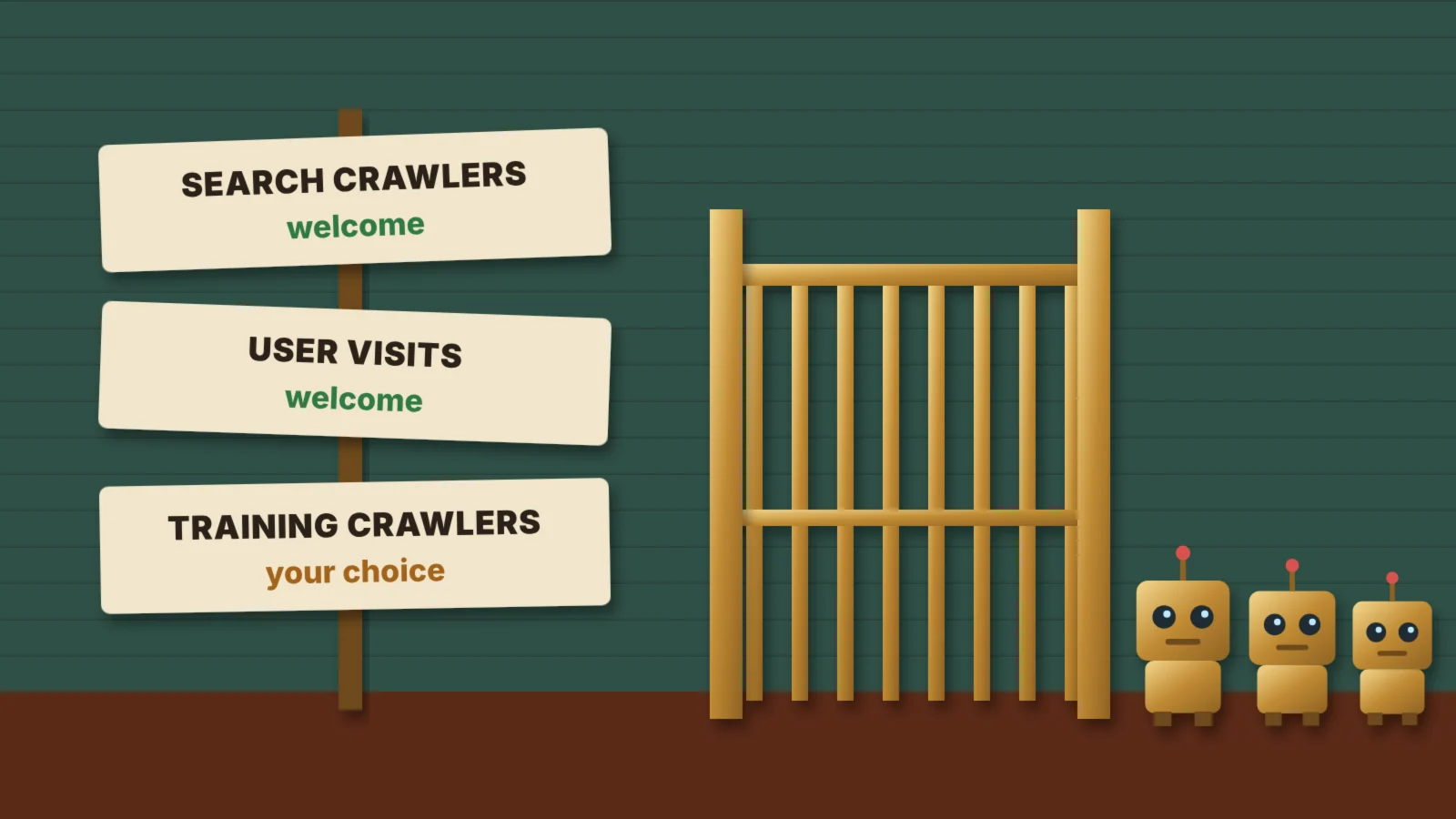
Most businesses should not block AI crawlers across the board. A better approach is to split them into three groups and decide on each one: crawlers that collect content to train AI models, crawlers that index pages for AI search answers and fetchers that visit a page when someone asks an AI assistant about it. Blocking the search and user groups can remove you from the answers that send customers your way, while blocking training crawlers is a business choice about how your content is used.
This guide explains the three groups, lists the main crawlers from OpenAI, Anthropic, Google, Perplexity and others, shows what blocking really changes and where UK copyright law stands. It ends with a simple way to decide and the robots.txt rules to put that decision into practice.
The three kinds of AI crawler
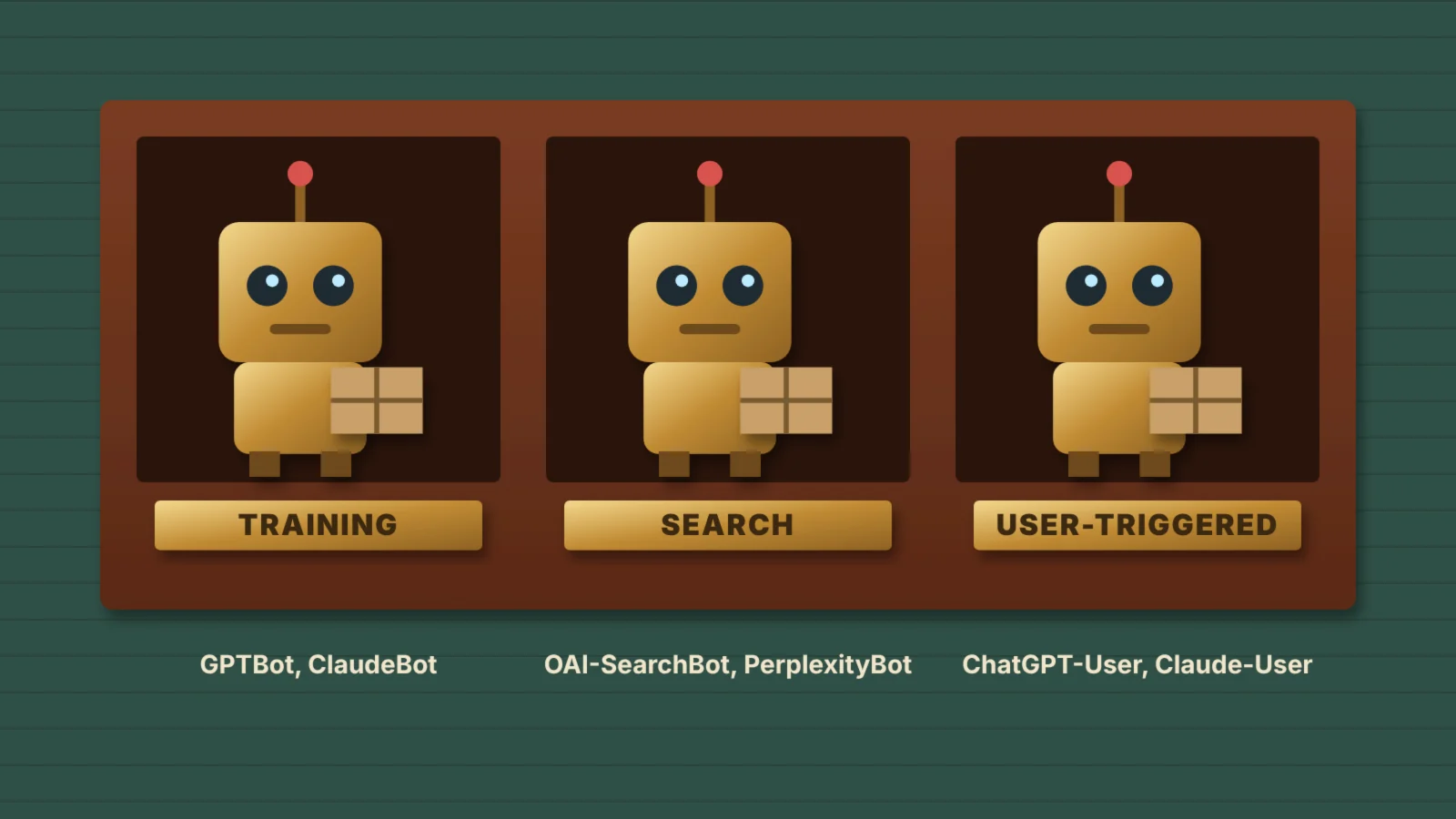
AI companies now run separate bots for separate jobs, and each one can be allowed or blocked on its own:
- Training crawlers collect public web content to train and improve AI models. GPTBot and ClaudeBot are the best-known examples. Blocking them stops future collection, but it does not remove content already gathered.
- Search crawlers index pages so an AI tool can find and cite them in answers. OAI-SearchBot does this for ChatGPT search, Claude-SearchBot for Claude and PerplexityBot for Perplexity.
- User-triggered fetchers visit a page because a person asked the assistant to read it or look something up. ChatGPT-User, Claude-User and Perplexity-User fall into this group.
The difference matters because the value to you is different. Training gives you no direct visit or credit. Search and user fetches can lead to a citation, a link and sometimes a customer.
The main AI crawlers and what they do
The table lists the crawlers most UK sites see, based on each company’s own documentation.
| Company | User agent | Job | Follows robots.txt? |
|---|---|---|---|
| OpenAI | GPTBot | Training | Yes |
| OpenAI | OAI-SearchBot | ChatGPT search | Yes |
| OpenAI | ChatGPT-User | User-triggered visits | May not apply, says OpenAI |
| Anthropic | ClaudeBot | Training | Yes |
| Anthropic | Claude-SearchBot | Claude search | Yes |
| Anthropic | Claude-User | User-triggered visits | Yes |
| Google-Extended (token) | Gemini training and grounding | Yes, read by Googlebot | |
| Perplexity | PerplexityBot | Perplexity search | Yes |
| Perplexity | Perplexity-User | User-triggered visits | Generally no, says Perplexity |
| Apple | Applebot-Extended (token) | Apple AI training | Yes, read by Applebot |
| Common Crawl | CCBot | Open dataset used for training | Yes |
You can check the current lists on OpenAI’s crawler page, Perplexity’s crawler page and Google’s list of common crawlers. Names change from time to time, so review them at least once a year.
What blocking actually changes
Blocking a crawler in robots.txt is a request, not a lock. Before you decide, it helps to know what each choice does and does not do:
- Blocking training crawlers stops new collection by bots that follow the rules. It does not remove content from models already trained, and it does not affect AI search visibility on its own.
- Blocking search crawlers removes you from that tool’s search answers. OpenAI says sites that opt out of OAI-SearchBot will not be shown in ChatGPT search answers.
- Blocking Google-Extended stops your content being used for Gemini training, but it does not keep you out of AI Overviews or AI Mode, which use the normal Googlebot index.
- Blocking user-triggered fetchers may not work. OpenAI and Perplexity say robots.txt may not apply when a person asks for a page, because the visit acts on that person’s behalf.
- Bots that ignore the rules need blocking at the server or CDN level, for example with a firewall rule.
If you are not sure which bots reach your site, look at your server logs or your CDN’s bot report before you change anything. That shows which crawlers visit, how often and how much load they add.
Where UK copyright law stands
UK copyright law has no exception that lets AI companies copy content for commercial training without permission. The only text and data mining exception covers non-commercial research. In December 2024 the government consulted on a new exception that would have allowed training unless rights holders opted out.
That plan has stalled. In its report on copyright and AI, published in March 2026 under the Data (Use and Access) Act 2025, the government said most respondents rejected the opt-out approach and that it would gather more evidence before making further proposals. There is no new law yet, so robots.txt, your website terms and technical blocks remain the practical tools for UK site owners.
How to decide which AI crawlers to allow
- Ask what your content does for you. If it exists to win customers, being found and cited by AI tools usually matters more than how it is used for training.
- Check whether your content is the product. Publishers, educators and creators who sell content or rely on ad views have more reason to limit training and some AI access.
- Decide on each group separately. Most businesses allow search crawlers and user fetchers, then choose whether to allow training crawlers.
- Look at the load. If one crawler is making thousands of requests and slowing your site, rate-limit or block it, whatever group it belongs to.
- Write the decision down and apply it in robots.txt, at your CDN and in your website terms, so all three say the same thing.
- Review it every six to twelve months, as new crawlers appear and the law develops.
What to allow, by type of site
These are sensible starting points, not rules. Your own goals should decide.
Service businesses and online shops
Allow search crawlers and user fetchers, so AI tools can recommend you and quote your prices, services and opening hours. Training is a matter of preference. Many businesses allow it, since being well represented in models may help brand awareness over time.
Publishers, educators and creators
Allow search crawlers if you want citations and traffic from AI answers. Consider blocking training crawlers if your content is what you sell, and watch for licensing offers, which some AI companies now make to publishers.
Members-only or premium content
Keep paid content behind a login, which stops crawlers whatever robots.txt says. Use robots.txt for the public pages and decide on those as you would for any other site.
How to block or allow AI crawlers
Add rules to your robots.txt file, one group per crawler. This example allows AI search and user fetchers while blocking the main training crawlers:
# Block AI training
User-agent: GPTBot
User-agent: ClaudeBot
User-agent: Google-Extended
User-agent: Applebot-Extended
User-agent: CCBot
Disallow: /

# Allow AI search and user-triggered visits
User-agent: OAI-SearchBot
User-agent: ChatGPT-User
User-agent: Claude-SearchBot
User-agent: Claude-User
User-agent: PerplexityBot
Allow: /

# Everyone else
User-agent: *
Disallow: /wp-admin/
Allow: /wp-admin/admin-ajax.php
Then check three things:
- Your CDN or host. Cloudflare and some hosts can block AI crawlers by default or add their own robots.txt rules, which can override what you intended.
- The result. Run your site through the Kutola AI Crawler Checker to see which AI crawlers your robots.txt allows and blocks.
- Your logs. After a few weeks, check that blocked crawlers have stopped and allowed ones still visit.
Common AI crawler mistakes
- Blocking every AI bot in one go. This removes you from AI search answers as well as training, often without anyone realising.
- Blocking Googlebot to avoid AI Overviews. It removes you from normal Google search too.
- Expecting robots.txt to remove past data. It only affects future crawling by bots that follow it.
- Forgetting the CDN. A firewall or default setting can block crawlers your robots.txt allows.
- Using old bot names. Companies add and rename crawlers, so lists copied from old articles miss some.
- Setting it and forgetting it. Review your rules as new crawlers appear and your goals change.
Frequently asked questions
Should I block GPTBot?
Only if you do not want OpenAI to use your content for training. Blocking GPTBot does not remove you from ChatGPT search, which uses OAI-SearchBot. Most businesses that want to be found in ChatGPT allow OAI-SearchBot whatever they decide about GPTBot.
Will blocking AI crawlers hurt my SEO?
Blocking AI crawlers does not affect normal Google rankings, as long as you do not block Googlebot. It can reduce your visibility in AI search tools such as ChatGPT search and Perplexity if you block their search crawlers.
Does blocking Google-Extended remove me from AI Overviews?
No. Google-Extended controls whether your content is used for Gemini training and grounding. AI Overviews and AI Mode use the normal search index built by Googlebot.
Do AI crawlers respect robots.txt?
The main training and search crawlers from OpenAI, Anthropic, Google and Perplexity say they do. Some user-triggered fetchers may not, and some smaller or unknown bots ignore robots.txt, so they need blocking at the server or CDN.
Is it legal for AI companies to train on my website in the UK?
UK copyright law only allows text and data mining without permission for non-commercial research. The government’s March 2026 report did not change the law and said more evidence was needed, so the position for commercial training remains contested.
On this page
Back to topSee which AI crawlers can reach your site
Kutola checks how search engines and AI tools access your website, sets up robots.txt and CDN rules that match your goals and helps you get cited in AI answers. Start with the free AI Crawler Checker, see how it fits into our SEO and AI search work or get in touch to talk through your site.