User-generated content (UGC): types, examples and how to use it
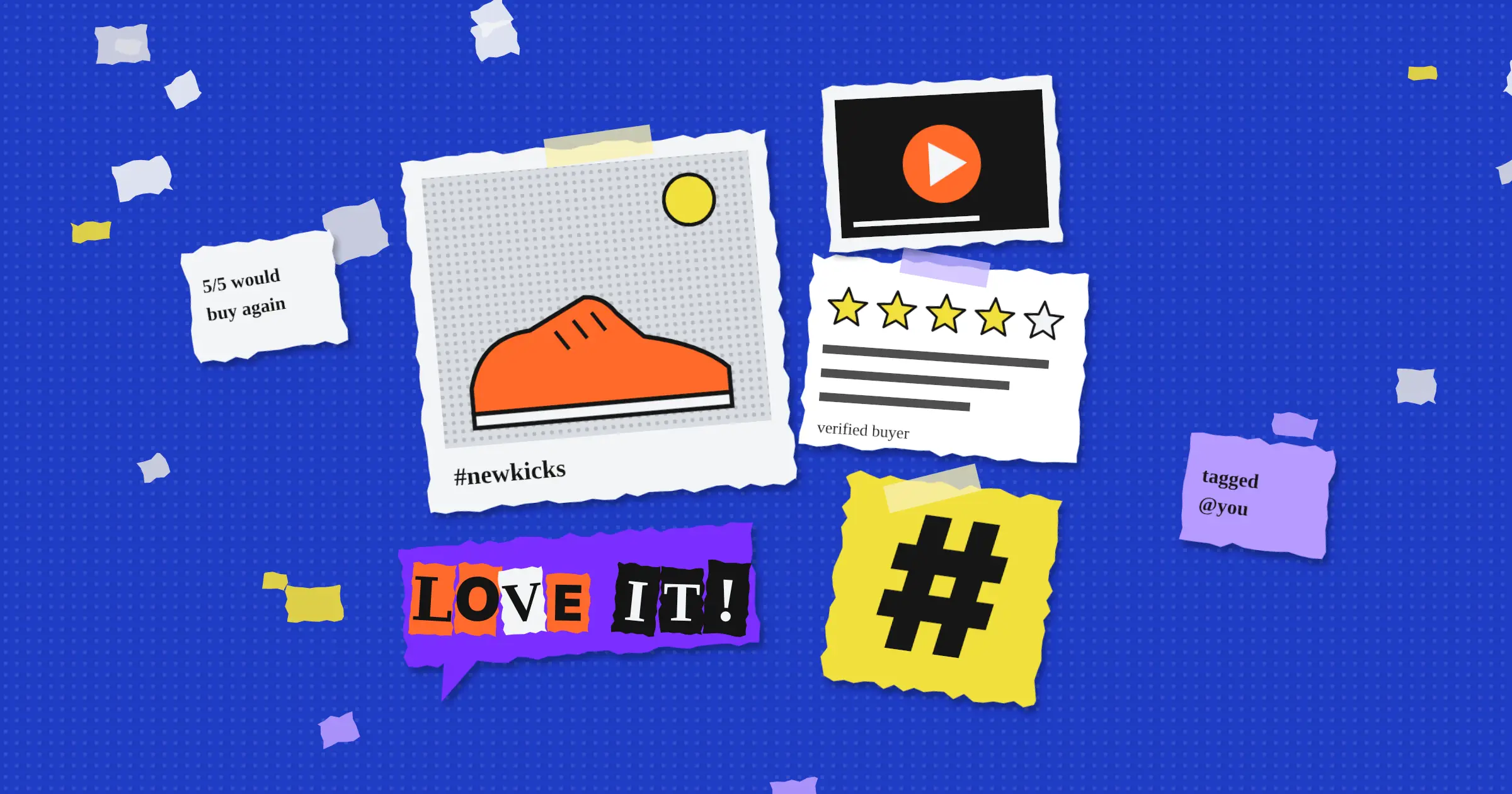
User-generated content (UGC) is any content about a brand that its customers or users create, rather than the brand itself: reviews, photos, videos, comments, forum answers and social posts. People read it as evidence rather than advertising, which is why brands ask for it and reuse it across social media, websites and ads.
UGC is one of the most useful inputs to a social media strategy, and one of the easiest to get wrong. This guide covers the main types of UGC, how it differs from paid “UGC creator” content and influencer posts, what the research shows, examples from Apple, Starbucks and Gymshark, how to get more of it, how to reuse it with permission and the UK rules that apply once you share it.
What is user-generated content?
UGC is content people make because they want to, about something they bought, used or experienced. A customer posts a photo of new trainers, reviews a plumber or answers a stranger’s question about a product on Reddit. The brand did not write the words and, in the original sense of UGC, did not pay for them.
That independence is the whole point. UGC is a form of social proof: it shows a new customer that people like them have already chosen the brand and were happy enough to say so in public. It also gives a small team a steady supply of real material, often in the short, phone-shot video format that social platforms favour.
On social media you will often see “UGC” used in a second, narrower way: short videos that look like customer content but are made by paid creators for a brand. That is a different thing with different rules, covered below.
Types of user-generated content
Most UGC falls into one of six types. Each one tends to live in a different place and do a different job.
| Type | Where it usually appears | What it does best |
|---|---|---|
| Reviews and ratings | Google Business Profile, Trustpilot, product pages, app stores | Reassures people at the moment they decide |
| Photos and videos | Instagram, TikTok, Facebook, product galleries | Shows the product in real homes, on real bodies and in real use |
| Unboxing and how-to videos | TikTok, YouTube, Instagram Reels | Answers practical questions before someone buys |
| Questions and answers | Product page Q&A, Reddit, Mumsnet, forums | Covers the detail a product description leaves out |
| Comments and replies | Under your own posts and other people’s posts | Shows that a community exists and is active |
| Stories and testimonials | Social posts, emails, case studies the customer agrees to | Explains why someone chose you, in their own words |
UGC vs creator content and influencer posts
Three kinds of content now share the UGC label, and the difference matters for both trust and the law.
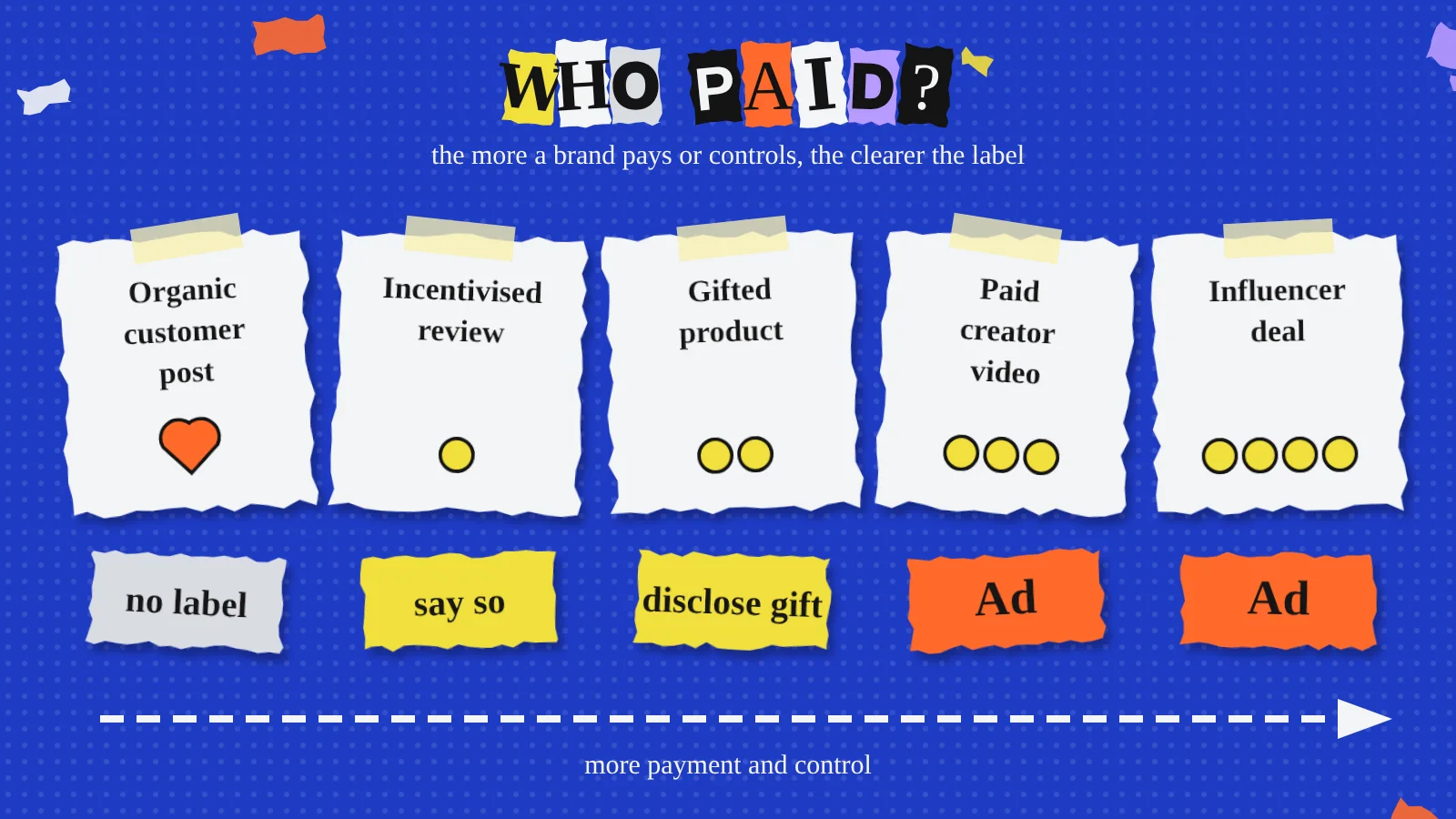
- Organic UGC is made by real customers, unpaid and unprompted, or prompted only by a general invitation to share.
- Creator content (often sold as “UGC ads”) is made by freelance creators the brand pays to produce videos in a customer style. The brand usually runs them as ads from its own account, and the creator may never post them.
- Influencer marketing pays or gifts people with an audience to post about the brand on their own channels, so the value is their reach as well as the content.
Creator content can work very well in paid social, because it looks native to the feed. It is still advertising, though, and it is not evidence that customers like you. A creator who presents a product as though they have used it for months, when they received it last week, crosses into the territory UK law treats as a fake review.
Why UGC works
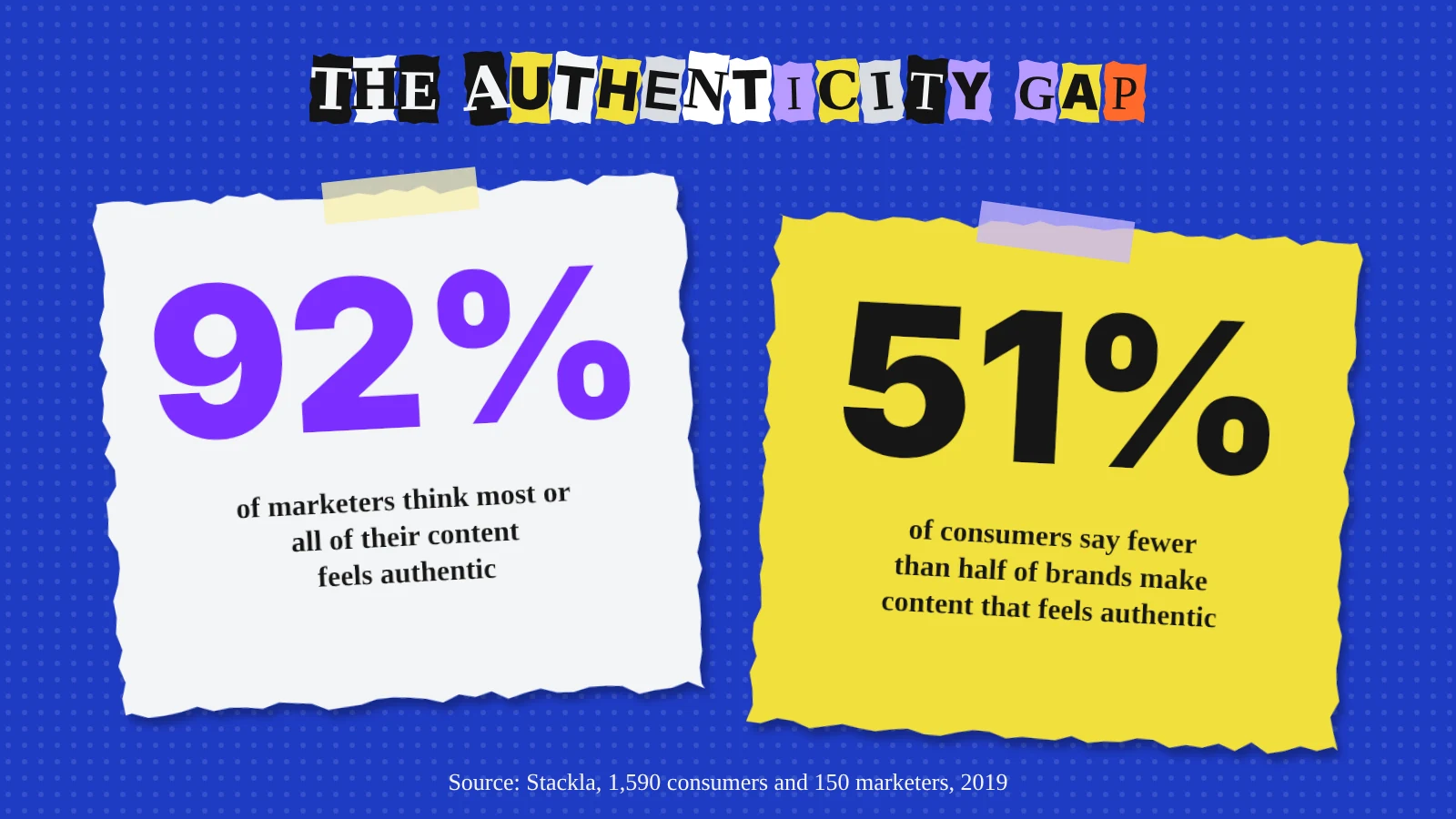
People trust each other more than they trust brands, and they can tell the difference. In a 2019 Stackla survey of 1,590 consumers and 150 marketers in the US, UK and Australia, 79% of consumers said UGC highly affects their purchasing decisions. The same survey found a gap in how authentic brand content feels: 92% of marketers believed most or all of their content came across as authentic, while 51% of consumers said fewer than half of brands create content that does.
The effect shows up in sales data too. Bazaarvoice’s 2019 Shopper Experience Index, based on activity across around 6,000 websites, reported a 137% conversion lift and a 157% lift in revenue per visitor for leading sites when shoppers engaged with UGC. Both studies come from companies that sell UGC software, so treat the exact figures as directional and test the effect on your own pages.
There is a newer reason as well. AI assistants lean heavily on what real people say: Semrush’s tracking of more than 100 million AI citations found Reddit and Wikipedia among the most cited domains across the main AI platforms. Reviews, forum threads and customer posts about your brand feed the answers people get when they ask an AI tool which business to choose, which is a large part of how generative engines choose what to cite.
User-generated content examples
The best-known UGC campaigns share one trait: they give people a specific, easy thing to make, and a reason to share it.
- Apple, “Shot on iPhone”: in 2015 Apple put photos taken by ordinary iPhone 6 users on billboards around the world. The campaign proved the camera’s quality with customers’ own pictures and won the Outdoor Grand Prix at Cannes Lions that year. It still runs a decade later.
- Starbucks, White Cup Contest: in 2014 Starbucks asked customers to draw on its plain white cup and post a photo with #WhiteCupContest. It received nearly 4,000 entries in about three weeks, and the winning design became a limited-edition reusable cup.
- Gymshark, Gymshark66: the UK fitness brand built a challenge around the idea that a habit takes 66 days to form. Participants post at least once a week with #gymshark66 and tag the brand, which turns personal progress stories into content the brand never had to film.
A small business can use the same pattern on a smaller scale. A bakery in Bristol could ask customers to share birthday cake photos with a shop hashtag, feature one a week on Instagram and add the best, with permission, to its ordering page.
How to get more UGC
Most customers will not create content unless something prompts them.
- Ask at the right moment. The best time is just after a good experience: the day a parcel arrives, after a finished project or at the end of a class. Put the ask in the delivery email or on a card in the box.
- Give a specific prompt. “Share your photos” gets little. “Show us where you put your new lamp” or “film your first ride” gives people an idea they can act on in a minute.
- Make it easy to find. Pick one short hashtag or ask people to tag your account, and use it on packaging, receipts and your profile.
- Feature contributors. Reposting, replying and thanking people publicly shows others that sharing gets noticed. Give featured customers a regular slot in your content pillars rather than an occasional repost.
- Run a challenge or competition now and then. A clear theme and a modest prize can start a wave of posts, but prize draws on social media must follow the UK rules for giveaways.
- Collect reviews as a habit. Reviews are the most valuable UGC for most businesses, and a short request with a direct link is usually enough.
How to reuse UGC with permission
A customer’s photo belongs to the customer. Under UK copyright law the person who takes a photo or films a video usually owns it, and the Intellectual Property Office points out that uploading to social media does not transfer copyright to the platform. Platform terms give the platform a licence to show the post, not your business a licence to reuse it. Tagging you or using your hashtag is not permission either.
A simple process keeps you safe and keeps contributors happy:
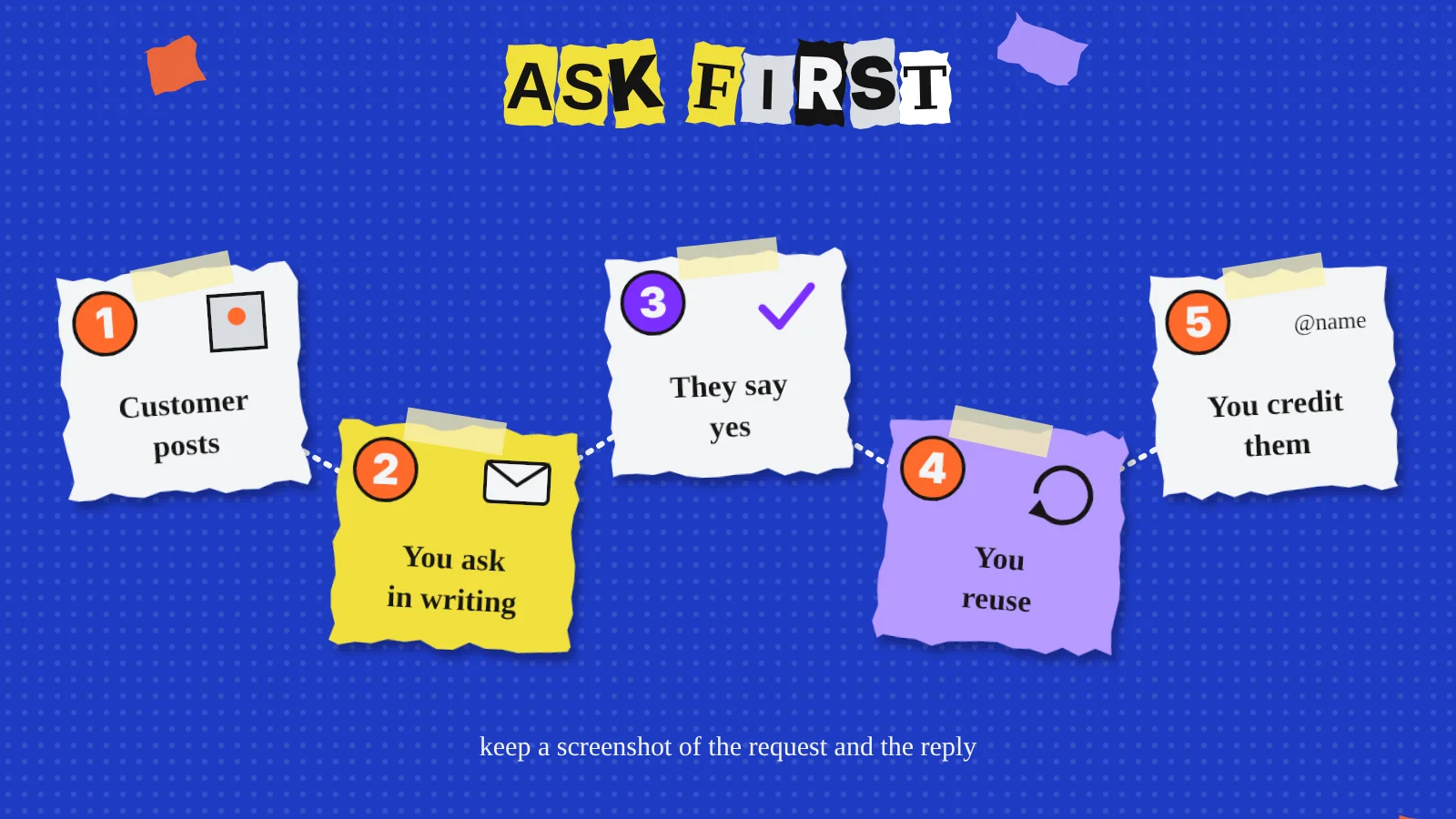
- Ask in writing, in a comment or direct message, and say where you want to use the content: your social accounts, website, emails or paid ads.
- Wait for a clear yes, then keep a screenshot of the request and the reply alongside the original file.
- Credit the creator by name or handle wherever you use their work, unless they ask you not to.
- Ask again before moving content into paid ads or print, which most people did not have in mind when they agreed to a repost.
- For paid creator content, agree usage rights in the contract: where it can run, for how long and whether you can edit it.
UK rules for using UGC
Organic posts by customers are their own business. The moment you share them, the rules change. Three points cover most situations.
- Reposted UGC becomes your advertising. The ASA’s guidance on social media remit says user content falls under the CAP Code once a brand adopts and incorporates it into its own marketing, for example by reposting it with its own sales message. From then on you are responsible for it as if you had written it, so a customer’s claim that your cream “cured my eczema” cannot appear in your feed.
- Reviews must be genuine and shown fairly. Under the Digital Markets, Competition and Consumers Act 2024, the CMA’s fake reviews guidance bans reviews that do not reflect a genuine experience, incentivised reviews that hide the incentive and publishing reviews in a way that misleads, such as showing only the positive ones. The wider picture is in social proof and the law.
- Paid and gifted posts need a label. If you pay a creator, send free products or control what someone posts, the ASA and CMA influencers’ guide expects the post to be obviously identifiable as advertising, usually with “Ad” at the start. Creator content run from your own ad account is clearly yours, but it must still not pretend to be an independent customer’s experience.
How to measure UGC
Measure UGC in two layers: whether you are getting more of it and whether it helps people decide.
| Question | What to track |
|---|---|
| Are customers creating more? | Posts using your hashtag or tag each month, new reviews per month, share of customers who leave a review |
| Is it reaching people? | Reach and saves on reposted UGC compared with your own posts |
| Does it help people buy? | Conversion rate on pages with and without customer photos or reviews, ideally through an A/B test |
| What do people say? | Average rating, recurring praise and complaints, questions that keep coming up |
Don’t skip the last row: recurring questions in reviews and comments are ready-made topics for your next posts.
Frequently asked questions
What is user-generated content?
User-generated content (UGC) is content about a brand created by its customers or users rather than the brand itself, such as reviews, photos, videos, comments and forum answers.
What does UGC mean on TikTok and Instagram?
UGC usually means content made by real customers. On TikTok and Instagram it is also used for paid creator videos made in a customer style, which are advertising and must be treated as such.
What is a UGC creator?
A UGC creator is a freelancer paid to make short, customer-style videos or photos for a brand, which the brand then uses in its own posts or ads. Unlike an influencer, the creator does not need a large audience.
Can I repost a customer’s photo without asking?
No. The customer usually owns the copyright, and tagging your brand is not permission. Ask in writing, say where you will use it and credit them.
Do I have to label UGC as an ad?
Organic customer posts need no label. Content you pay for, gift products for or control must be clearly identifiable as advertising, and reposted UGC must follow the CAP Code like your own ads.
On this page
Back to topLet your customers do the talking
Kutola helps brands build a steady flow of customer content and use it well in their social media strategy, website and ads, within the UK rules. Get in touch to see where UGC could work harder for you.