The best time to post on Instagram in the UK (and why it matters less than you think)
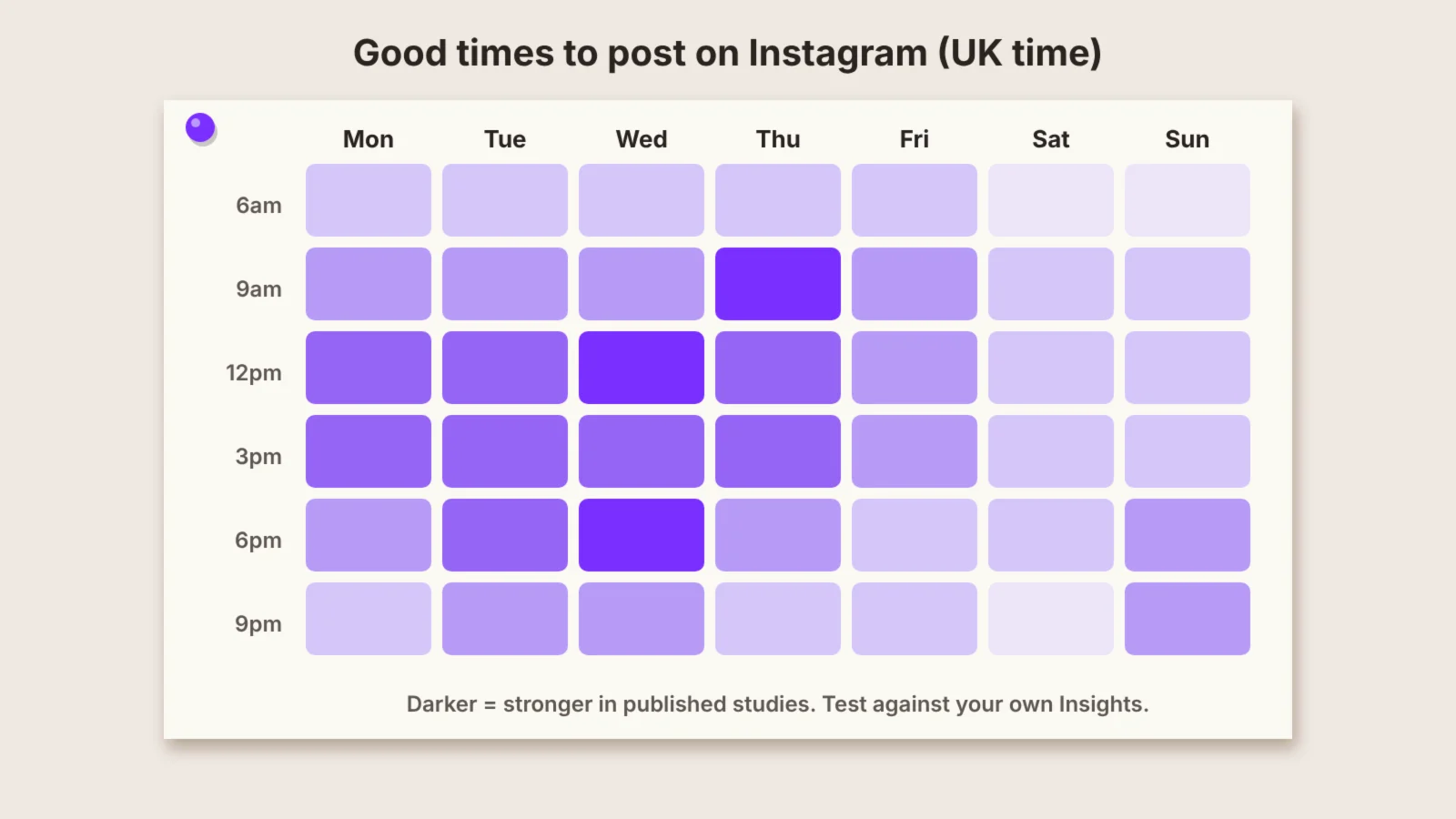
The best time to post on Instagram in the UK is usually midweek, from late morning to early evening UK time, with Wednesday and Thursday the strongest days in most large studies. Weekends, especially Saturday, and the early hours of the morning tend to perform worst. Your own audience may differ, and timing matters less than the quality of what you post.
Posting schedules are one small part of a wider social media strategy. This guide summarises what the largest studies found, turns their findings into UK times, explains why timing has become less important and shows how to find the right time for your own account.
The best times to post on Instagram in the UK
Use these as starting points, then test them against your own data.
| Day | Good starting times (UK time) | Notes |
|---|---|---|
| Monday | 12pm to 4pm | Engagement builds through the afternoon |
| Tuesday | 1pm to 7pm | A strong day in most studies |
| Wednesday | 12pm and 6pm | Often the best day of the week |
| Thursday | 9am, then 12pm to 2pm | Strong morning and lunchtime slots |
| Friday | Late morning | Engagement fades into the evening |
| Saturday | Late morning, if at all | Usually the weakest day |
| Sunday | Evening, around 7pm to 9pm | Better than Saturday for some audiences |
What the big studies say
Two of the largest recent analyses come from social media scheduling platforms, which can see engagement across millions of posts.
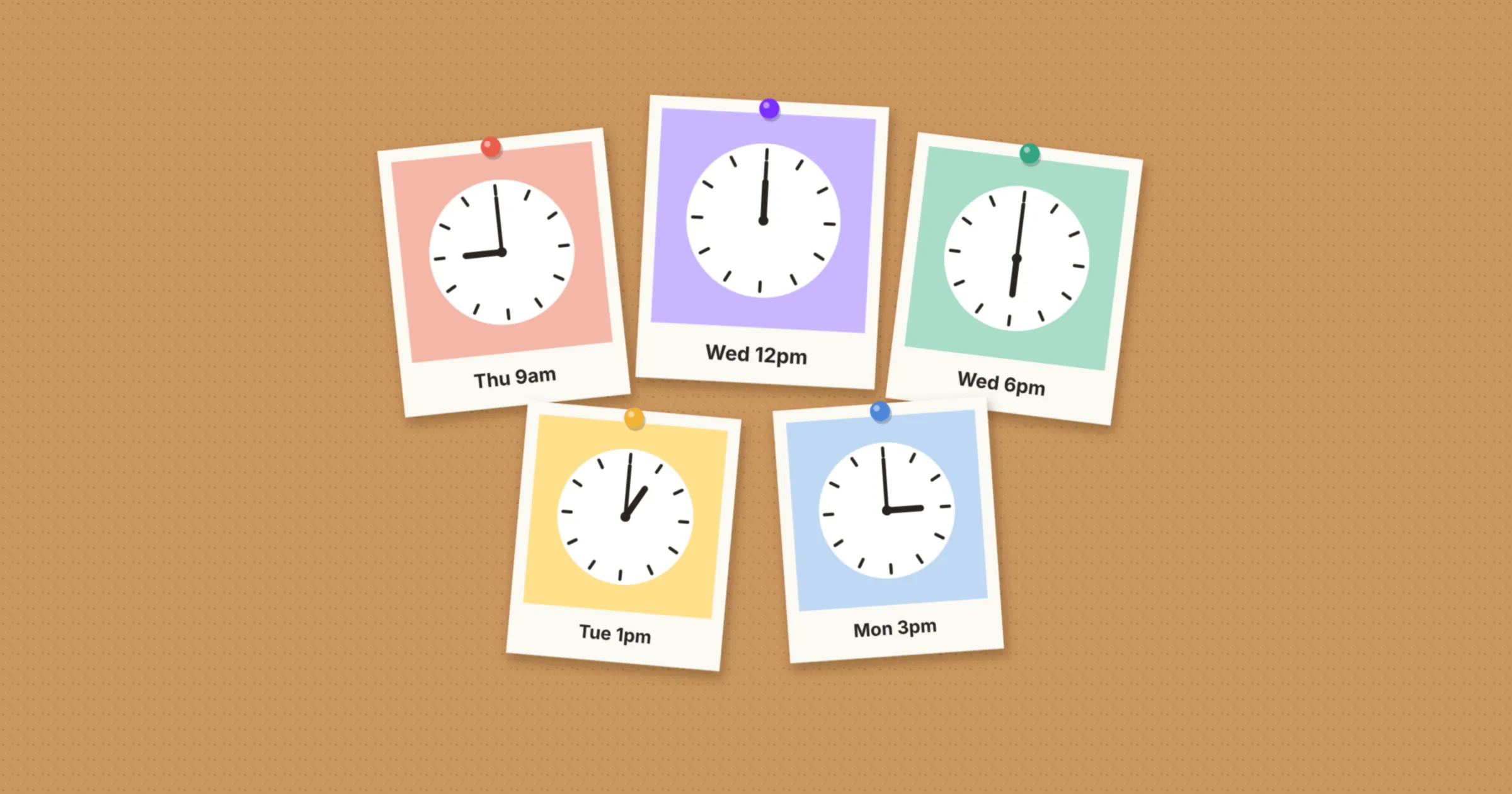
- Buffer. Buffer’s analysis of around 9.6 million Instagram posts, reported in local time, found that Wednesday and Thursday produced the highest engagement, with Thursday at 9am, Wednesday at 12pm and Wednesday at 6pm as the top slots. Evenings performed well on most days, while the hours between 1am and 5am, and Fridays and Saturdays in general, performed worst.
- Sprout Social. Sprout’s 2026 analysis points to weekday afternoons, with its strongest windows on Monday to Thursday and Saturday the weakest day overall.
The studies disagree on details, partly because they measure different accounts, industries and kinds of engagement. They agree on the broad pattern, though: weekdays beat weekends, midweek is strongest and the middle of the night is the worst time to post.
Keep their limits in mind. Both draw on the customers of those platforms, which skews towards businesses and towards the US. Engagement is also partly a result of when accounts choose to post, so popular times can look better simply because more effort goes into them.
How to apply the data in the UK
Studies that report times in local time translate directly: 12pm in the data means 12pm UK time for a UK audience. A few UK specifics are worth planning for.
- Daily rhythms. UK engagement tends to follow the working day: a morning commute, a lunchtime peak from about 12pm to 2pm and an evening peak after people get home. Schools, shift work and hospitality hours shift this for some audiences.
- Clock changes. When the clocks go back in October or forward in March, check that your scheduling tool posts at the local time you intended.
- Audiences abroad. If many followers live elsewhere, look at where they are in Instagram Insights and favour times that overlap, such as UK late morning for an audience split between the UK and Europe.
- Seasonal patterns. Engagement often changes around school holidays, Christmas and summer. Look at last year’s data before planning big campaigns.
Best times by type of business
Your customers’ routines matter more than any average. These are sensible starting points to test, based on when each audience is likely to be scrolling.
- Cafés, restaurants and takeaways: late morning before lunch and late afternoon before dinner, when people decide where to eat.
- Retail and ecommerce: lunchtime and evenings, when people browse at leisure, with extra posts before paydays and seasonal sales.
- B2B and professional services: weekday mornings and lunchtimes, when people check their phones around work.
- Fitness, beauty and wellbeing: early mornings and early evenings, around workouts and the end of the working day.
- Events, venues and attractions: midweek, when people make weekend plans, plus a reminder on the day.
Why timing matters less than you think
Instagram does not show posts in time order. Its ranking systems decide what each person sees based on how likely they are to engage with it, so a strong post can keep reaching people for hours or days after it goes up. Adam Mosseri, the head of Instagram, has said that posting time makes only a small difference compared with the content itself.
Three changes have reduced the importance of timing further:
- Recommendations. Reels and posts are increasingly shown to people who do not follow you, through the Reels tab and Explore, often well after they were published.
- Search. Posts that answer common questions can be found through Instagram search and even Google long after publication. Our guide to Instagram SEO explains how to make the most of this.
- Engagement signals. Instagram weighs signals such as watch time, saves and shares to judge quality. A post that people send to friends will travel regardless of the hour it went live.
Timing still helps in one way. Posting shortly before your followers are most active gives a post its best chance of early engagement, which can help it reach more people. Treat timing as a small advantage on top of good content, not a substitute for it.
How to find your own best time to post
- Check your most active times. In the Instagram app, open your professional dashboard, go to your follower insights and look at the most active times by day and hour. Instagram shows this once an account has at least 100 followers.
- Pick two or three slots to test. Choose times that overlap your followers’ active hours and the broad patterns above.
- Test for at least four weeks. Post similar types of content in each slot so you are comparing timing rather than topic.
- Compare rates, not totals. Look at reach, saves, shares and comments relative to how many people saw each post, and for Reels, average watch time.
- Build the winners into your plan. Add your best slots to your content calendar and recheck every few months, because audiences change.
How often you post matters as much as when. Our social media content strategy guide covers how to choose a frequency you can keep up.
Does timing differ for Reels, Stories and carousels?
- Reels are distributed to non-followers over a longer period, so timing affects them least. Focus on the first few seconds and on topics people search for.
- Stories disappear after 24 hours and are seen mostly by followers, so timing matters more. Post them when your followers are most active, and spread them through the day rather than in one batch.
- Carousels and photo posts rely more on followers at first. Instagram may show a carousel again with a different first slide to people who scrolled past, which gives it a second chance.
Common mistakes with Instagram posting times
- Copying a single chart. Generic times are a starting point. Your followers’ habits are what count.
- Posting at the same time forever. Audiences and Instagram’s systems change, so recheck regularly.
- Ignoring time zones. A tool set to a US time zone can quietly post in the middle of the night for UK followers.
- Posting more to hit every slot. More posts of lower quality usually lower engagement per post.
- Judging by likes alone. Saves, shares and watch time are better signs that a post is working.
Frequently asked questions
What is the best time to post on Instagram in the UK?
Most large studies point to weekdays, especially Wednesday and Thursday, from late morning to early evening UK time. Good starting points are around 9am, 12pm to 2pm and 6pm midweek. Test these against your own audience’s most active times.
What is the worst time to post on Instagram?
The early hours of the morning, roughly 1am to 5am, perform worst in most studies, and Saturday is usually the weakest day of the week.
Does the time you post on Instagram really matter?
A little. Instagram ranks posts by how likely people are to engage, not by time, and Reels can reach non-followers for days. Posting when followers are active gives a modest early boost, but content quality matters far more.
How do I find the best time to post for my account?
Open your professional dashboard in the Instagram app and check your followers’ most active times. Then test two or three slots for at least four weeks and compare reach, saves and shares relative to views.
Is the best time to post the same for Reels and Stories?
Not quite. Stories are seen mainly by followers within 24 hours, so timing matters more. Reels are distributed to non-followers over a longer period, so timing affects them less.
On this page
Back to topGet more from every post you publish
Kutola helps you plan what to post, when and on which platforms, then measure what reaches and converts your audience. See how it fits into our social media strategy work, or get in touch to talk through your social channels.