Newsletter ideas that give subscribers a reason to open
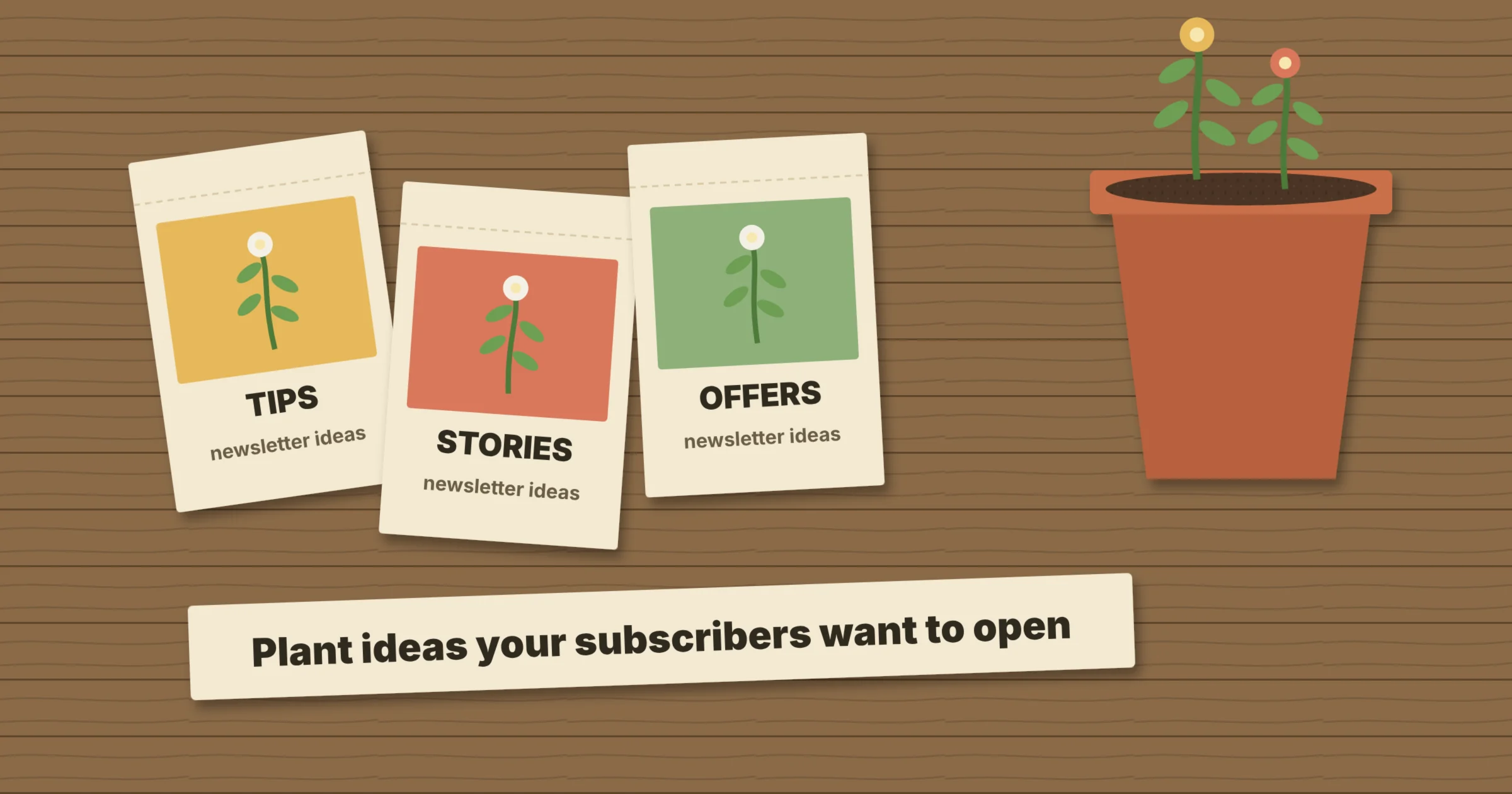
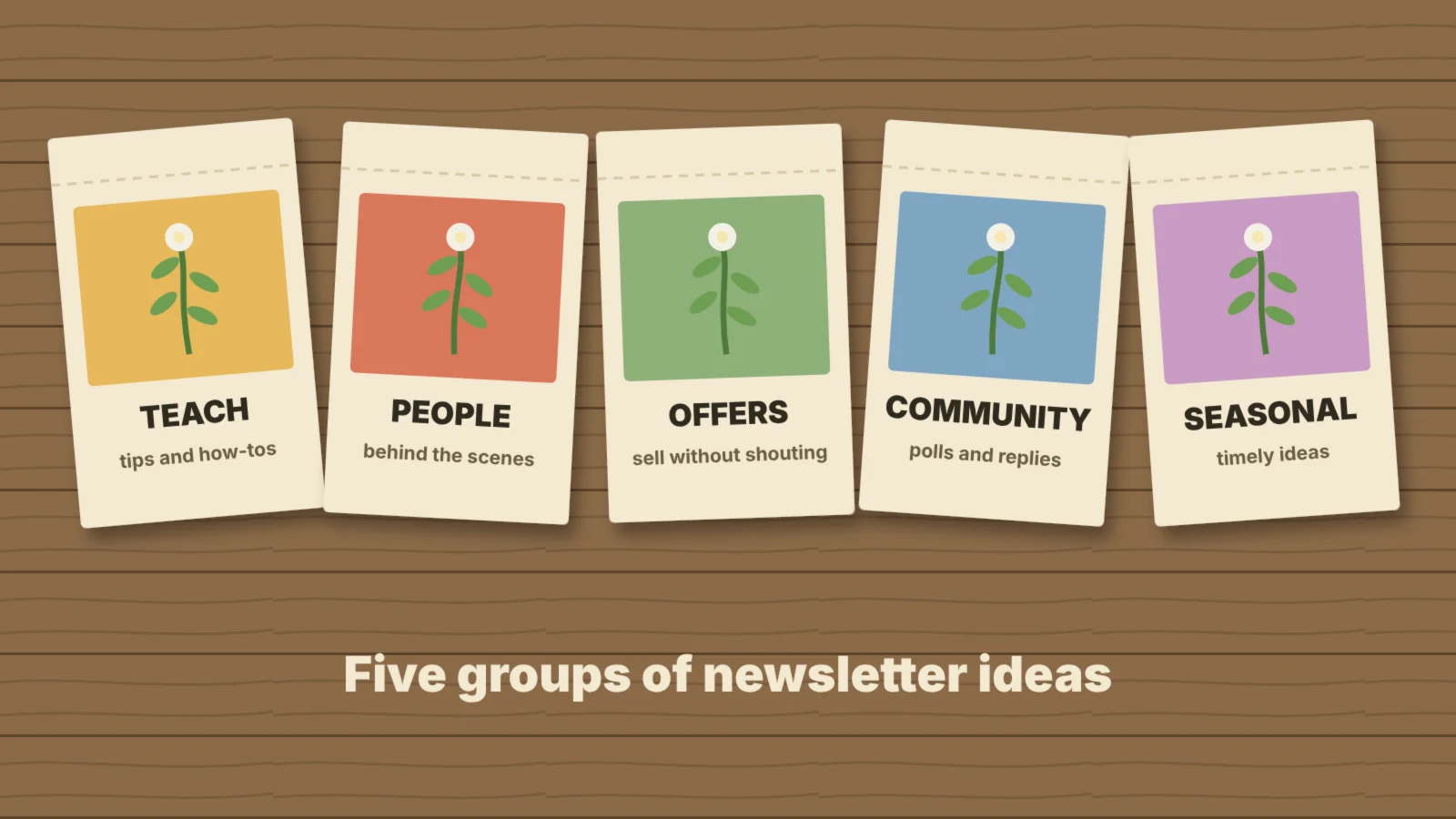
A good newsletter idea gives subscribers something they would miss if the email stopped arriving: a useful tip, an honest look behind the scenes, early access or a story they want to hear. The ideas that work best come from five places: teaching, showing the people behind the business, selling without shouting, involving subscribers and timing issues to the moment. This guide gives you 21 ideas across those five groups, lessons from UK brands and a simple way to choose and plan what goes into each issue.
A newsletter is one of the main types of marketing email, and the one most businesses find hardest to keep going. If you already have a list, the ideas below will help you fill the next few months. If you are still building one, start with our guide to building an email list the right way.
Why newsletters run out of ideas
Most newsletters start well and then drift into a pattern: a product update, a discount and a reminder to follow on social media. Subscribers notice. In the DMA’s 2019 Consumer Email Tracker, the most common reasons UK consumers gave for unsubscribing were receiving too many emails (59%) and information that was no longer relevant (43%).
The fix is not to send less by default. It is to send something worth opening every time, which is easier when you have a bank of ideas to draw from rather than starting with a blank page each month.
Ideas that teach or help
Useful content is the backbone of a newsletter people keep. It builds trust before you ask for anything.
- One quick tip. A single, specific piece of advice your customers can use today, such as a florist explaining how to make cut tulips last longer.
- Answer a customer question. Pick a question you hear every week and answer it properly. If one person asks, many more are wondering.
- A short how-to. Three to five steps for a task your customers struggle with, linked to a fuller guide on your website.
- Myth versus fact. Correct something people commonly get wrong in your industry, with a plain explanation.
- What changed this month. A summary of new rules, prices or trends that affect your customers, and what they should do about it.
- A curated round-up. Three to five links worth reading, each with one line on why it matters. The Guardian’s morning briefing newsletters show how well a short, curated summary can work.
Ideas that show the people behind the business
People buy from people, and small businesses have an advantage here that big brands struggle to copy.
- Meet the team. Introduce one person each issue, with a photo, what they do and something unexpected about them.
- How something is made. Show the process behind a product or service, from sourcing to the finished result.
- A day in the life. Walk subscribers through a normal day, including the parts that do not go to plan.
- Lessons learned. Share a mistake, what you changed and what you would tell someone starting out. Honest stories get replies.
Ideas that sell without shouting
Your newsletter can sell, as long as selling is not the only thing it does. These ideas give promotional content a reason to exist.
- Early access. Let subscribers see a new product, booking slot or sale before anyone else.
- The story behind a product. Explain why you made it, who it is for and what makes it different, rather than listing features.
- Customer results. Share a short case study or before-and-after, with the customer’s permission and in their words.
- A subscriber-only offer. A genuine reward for being on the list, used occasionally so it keeps its value.
Ideas that involve your subscribers
Newsletters that invite a reply feel like a conversation, and replies also help your emails reach the inbox.
- Ask a question. End the email with one simple question and promise to share the best answers next time.
- Run a quick poll. Let subscribers vote on a new flavour, colour, workshop topic or event date.
- Feature customer stories. Share photos or stories from customers, which our guide to user-generated content covers in more depth.
- Reader questions answered. Turn the questions subscribers send into a regular section.
Seasonal and timely ideas
Timing gives an ordinary idea a reason to land now. Plan these in advance so they do not become last-minute discount emails.
- Seasonal guides. Advice tied to the time of year, such as preparing a garden for winter or getting accounts ready before the 31 January tax deadline.
- Local events. What is happening near you, and how your business is taking part.
- Milestones. An anniversary, a new location or a thank-you to customers for a strong year.
Seasonal emails need care. In 2019, Bloom & Wild gave customers the option to opt out of its Mother’s Day emails, recognising that the day can be painful for some people. The Drum reported that close to 18,000 customers took up the offer, and the idea grew into the Thoughtful Marketing Movement, which other brands have since joined. A simple opt-out before sensitive dates shows subscribers you are paying attention.
How to choose the right idea for each issue
A long list of ideas only helps if you can pick the right one quickly. For each issue:
- Start with your goal for the month, such as more bookings, more replies or more visits to a new page.
- Pick one main idea from the groups above that supports that goal.
- Check it is useful or interesting even to someone who will not buy this month.
- Add one short secondary item at most, such as an event or an offer.
- Write a subject line that says what the reader gets, not what you want.
- Rotate the groups so subscribers never get the same kind of email twice in a row.
Plan your newsletter ideas in advance
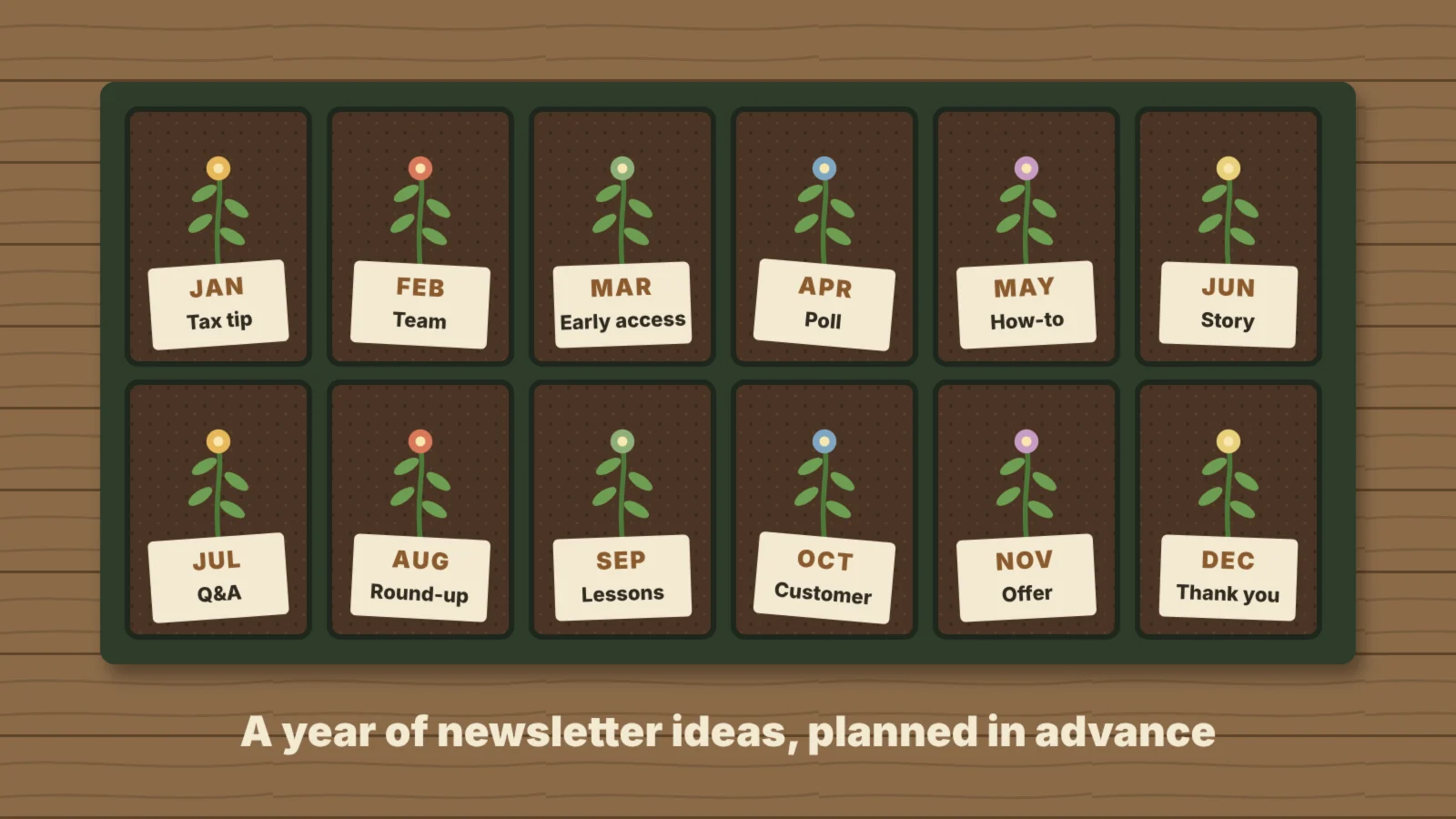
A simple plan stops the newsletter becoming the job everyone puts off. Add your newsletter dates to your content calendar, map seasonal ideas against the months they suit and keep a running list of customer questions and stories to draw on.
Reuse your other content too. A blog post can become a quick tip, a social post that did well can become a story and a customer review can become a case study. That way the newsletter fits into your wider content strategy rather than sitting on its own.
Before you send, check you have permission. Under UK rules, most marketing emails need consent, with a limited exception for existing customers, as explained in our guide to PECR and marketing emails.
Common newsletter mistakes
- Every issue is a sale. Subscribers learn to ignore emails that only ever ask them to buy.
- Too much in one email. Five stories compete with each other. One main idea gets read.
- Irregular sending. Long silences followed by a burst of emails lead to unsubscribes and spam complaints.
- Writing for yourself. Company news matters to you. Ask what the reader gets from each section.
- No way to reply. A no-reply address shuts down the conversation that makes newsletters work.
- Ignoring the numbers. Clicks, replies and unsubscribes after each issue show which ideas your subscribers value.
Frequently asked questions
What should I put in a newsletter?
One main idea that is useful or interesting to your subscribers, such as a tip, a customer question answered, a behind-the-scenes story or early access to something new, plus at most one short secondary item. Rotate the type of idea so each issue feels different.
How often should I send a newsletter?
As often as you can send something worth reading. For most small businesses that means monthly or fortnightly. Consistency matters more than frequency, and too many emails is the most common reason people unsubscribe.
How do I make people open my newsletter?
Send from a name people recognise, write a subject line that says what the reader gets and make every issue useful, so subscribers learn that your emails are worth opening.
What makes a newsletter interesting?
Specific, honest content that subscribers cannot get elsewhere: practical advice from your experience, stories about your team and customers, early access and a chance to reply or take part.
Can a small business newsletter sell products?
Yes, as long as selling is not all it does. Mix promotional issues with useful and personal ones, and give offers a reason, such as early access or a subscriber-only reward.
On this page
Back to topTurn your newsletter into something people look forward to
Kutola helps businesses plan content that customers actually want, from newsletter themes and calendars to guides that answer real questions. See how it fits into our content strategy work, or get in touch to talk through your emails.