The 12 brand archetypes, and how to choose yours
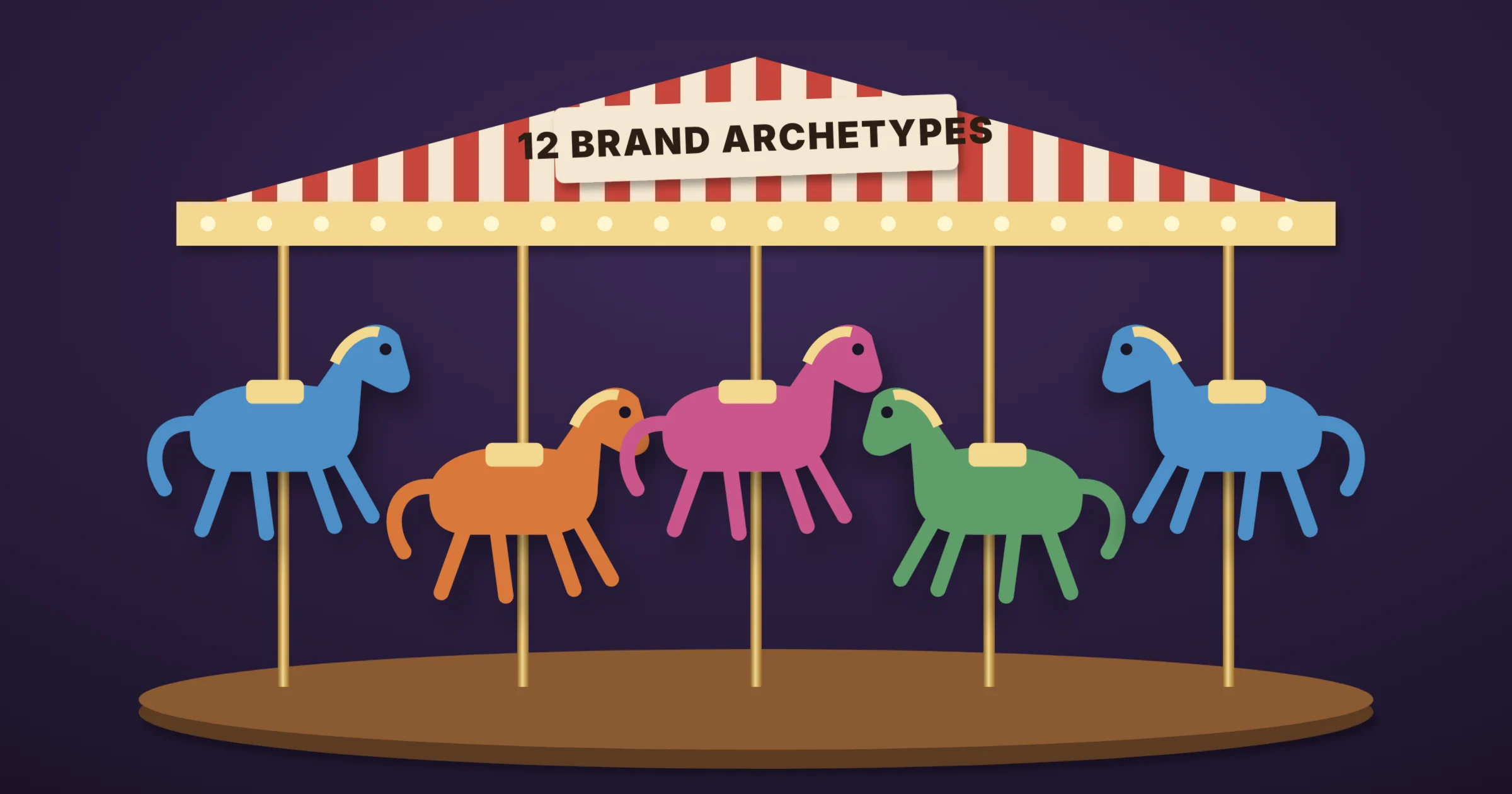
Brand archetypes are 12 recognisable character types, such as the Hero, the Caregiver and the Rebel, that help a business describe the personality its brand should have. The idea comes from Margaret Mark and Carol S. Pearson’s 2001 book The Hero and the Outlaw, which drew on Carl Jung’s work on archetypes. You choose one main archetype that fits what your customers want and what your business genuinely does, then use it to keep your words, visuals and behaviour consistent.
Archetypes sit inside your brand strategy, where they help define personality and voice. This guide explains what brand archetypes are, describes all 12 with examples, shows how to choose yours in six steps and how to put it to work without turning your brand into a cliché.
What are brand archetypes?
A brand archetype is a shorthand for the role a brand plays in its customers’ lives. Jung described archetypes as patterns of character that appear across cultures, myths and stories. Mark and Pearson applied that idea to marketing, arguing that brands people feel strongly about tend to express one clear archetype consistently over time.
The appeal is practical. “Friendly, professional and innovative” could describe almost any business. Saying “we are a Caregiver brand” gives a team a shared picture of how the brand should sound, look and behave, and what it should never do.
Archetypes are a creative and planning tool rather than a scientific model. Use them to make choices clearer, not as proof that one personality will outsell another.
The 12 brand archetypes, with examples
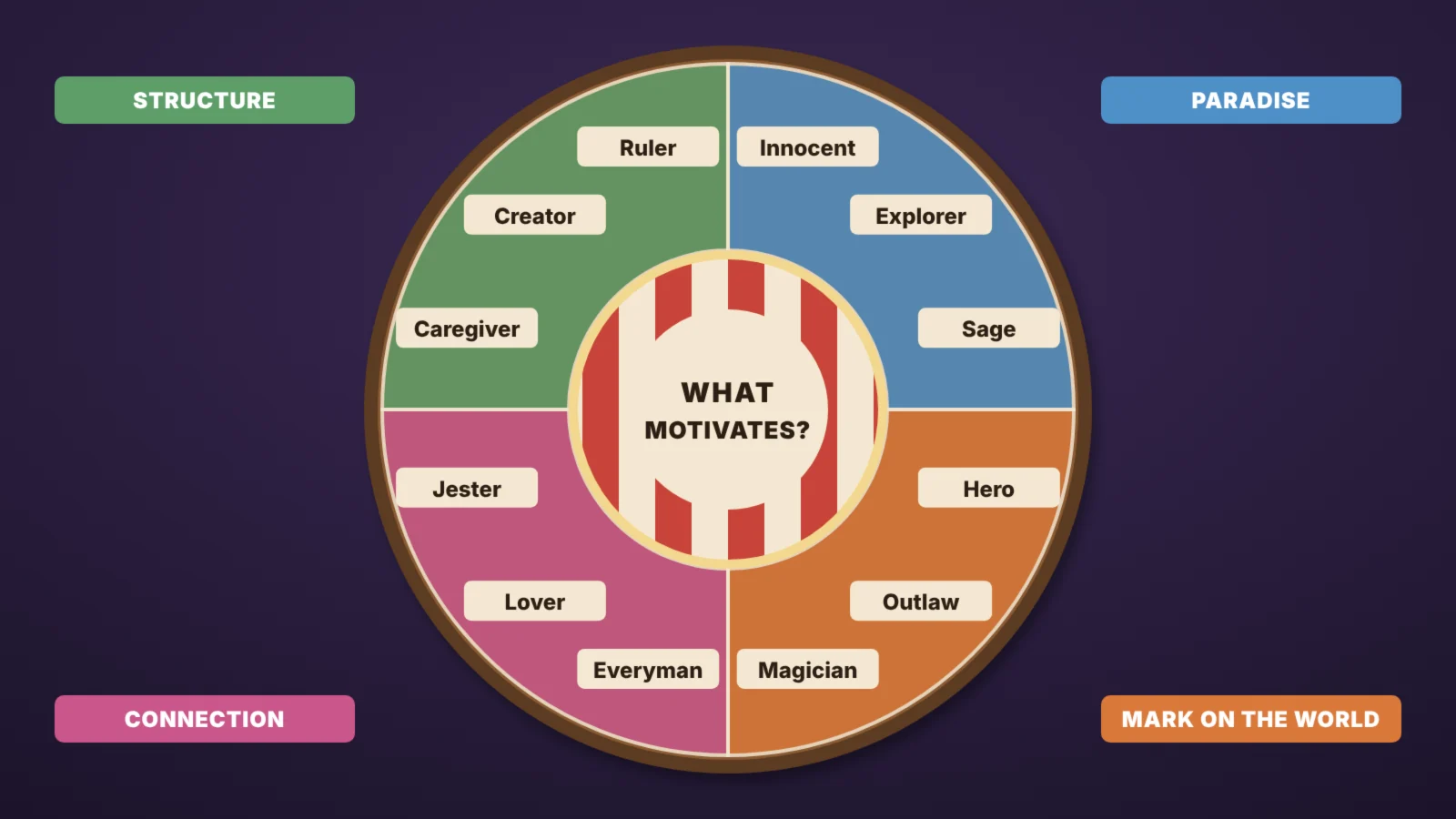
Mark and Pearson group the 12 archetypes by the basic motivation they speak to. The examples below are brands that are often read as each type. Archetypes are interpretations, so others may see a brand differently.
Archetypes that seek paradise
- The Innocent: optimistic, simple and honest. Promises goodness and a return to basics. Often cited example: innocent drinks.
- The Explorer: independent and adventurous. Promises freedom and discovery. Often cited examples: The North Face, Jeep.
- The Sage: wise, informed and thoughtful. Promises understanding and truth. Often cited examples: the BBC, Google.
Archetypes that leave a mark on the world
- The Hero: brave, determined and competitive. Promises achievement through effort. Often cited example: Nike.
- The Outlaw (or Rebel): disruptive and defiant. Promises change and breaking the rules. Often cited examples: Virgin, Harley-Davidson.
- The Magician: visionary and transformative. Promises to make dreams come true. Often cited example: Disney.
Archetypes that seek connection
- The Everyman (or Regular Guy or Gal): down to earth and relatable. Promises belonging. Often cited example: IKEA.
- The Lover: passionate and sensual. Promises intimacy and pleasure. Often cited examples: Chanel, Godiva.
- The Jester: playful and irreverent. Promises fun and enjoying the moment. Often cited examples: M&M’s, Old Spice.
Archetypes that provide structure
- The Caregiver: compassionate and protective. Promises care and support. Often cited examples: Johnson & Johnson, the NHS.
- The Creator: imaginative and expressive. Promises the tools to make something original. Often cited examples: LEGO, Adobe.
- The Ruler: confident, organised and in control. Promises order, status and stability. Often cited examples: Rolex, Mercedes-Benz.
Why use brand archetypes?
Archetypes help most when a brand feels inconsistent or bland. They can:
- Give the team a shared language, so a designer, a copywriter and a salesperson make choices that fit together.
- Make the brand easier to remember, because familiar characters are quicker to recognise than a list of adjectives.
- Guide tone of voice, from the words you use in an advert to how you reply to a complaint.
- Sharpen positioning, by showing how your personality differs from competitors who all sound the same.
- Speed up decisions, because you can ask whether a campaign, partnership or design fits the archetype.
How to choose your brand archetype in 6 steps
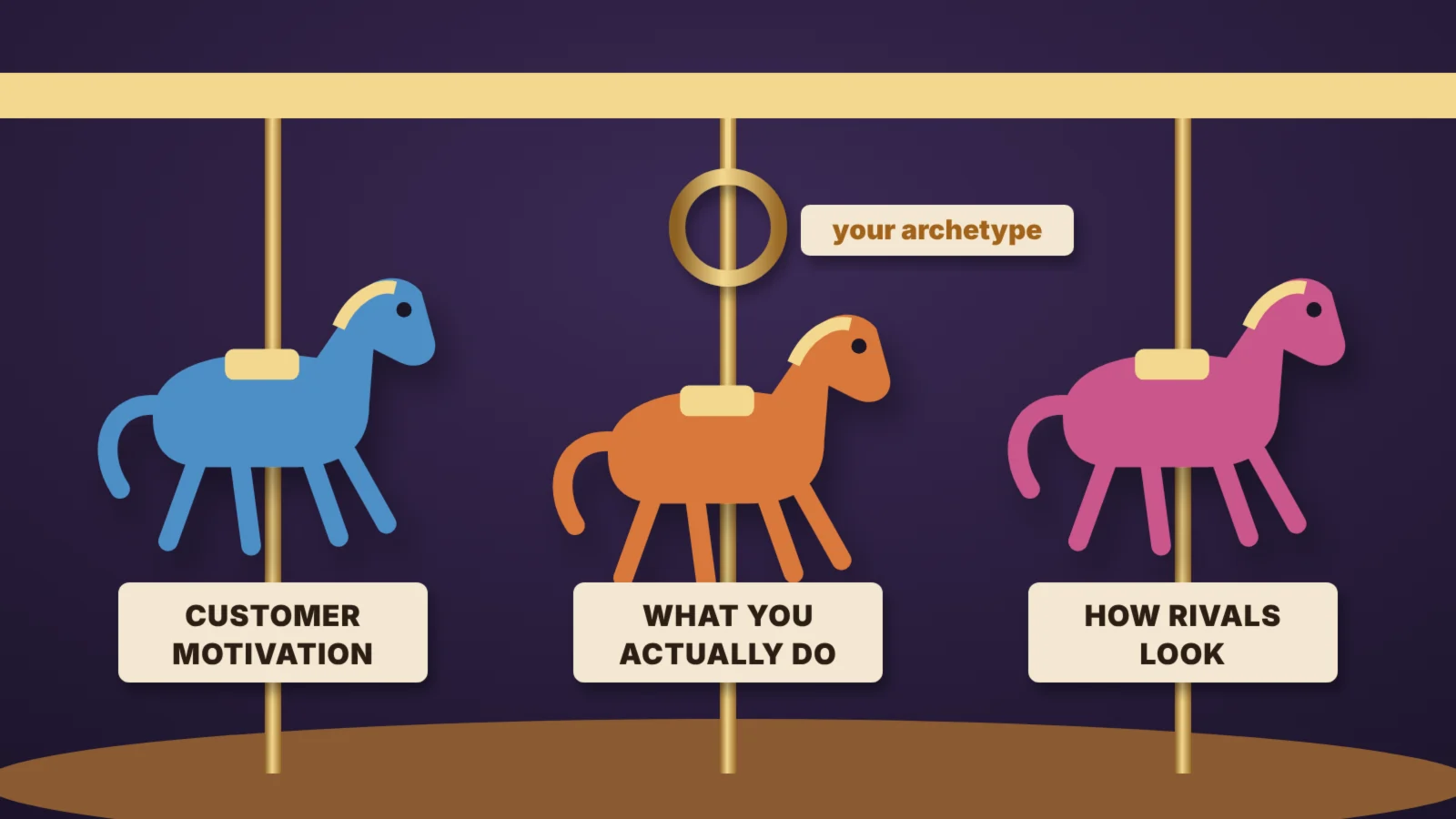
- Start with your customers. Write down what they want to feel and achieve when they buy from you, using what your target audience research tells you.
- Look at what you actually do. List the behaviour your business already shows: how you treat customers, how you make decisions and what you are proud of.
- Shortlist two or three archetypes that match both the customer motivation and your real behaviour.
- Map your competitors. Note which archetypes they express. If everyone in your market is a Sage, a well-executed Jester or Everyman may stand out.
- Test the shortlist. Write a sample headline, social post and complaint reply in each voice and show them to customers or staff. One usually feels right.
- Choose one main archetype and, if useful, one supporting archetype that adds nuance, such as a Caregiver with a touch of Jester.
The archetype has to be believable. A brand that claims to be a Rebel while behaving cautiously will feel fake, and customers notice.
How to put your archetype to work
An archetype only helps if it shows up in everything the brand does. Once you have chosen one:
- Write it into your brand guidelines, with a short description, three or four personality traits and examples of what the brand would and would not say. Our guide to what to include in brand guidelines shows where it fits.
- Shape the visual identity, because colours, type and imagery should match the character. A Ruler rarely uses playful hand-drawn type, while a Jester might.
- Set the tone of voice, with “this, not that” notes such as “confident, not arrogant”.
- Check behaviour, including customer service, packaging and partnerships, since actions shape how people see the brand more than words.
- Review campaigns against it before they go out.
Small businesses can benefit as much as large ones. A local accountant who chooses the Sage might publish clear guides and explain tax changes in plain English, while one who chooses the Everyman might focus on friendly, jargon-free service for sole traders.
Common brand archetype mistakes
- Choosing the archetype you admire rather than the one your customers need and your business can live up to.
- Mixing too many archetypes. One main type with one supporting type is plenty. Four makes the brand confusing.
- Copying a famous brand. Being a Hero brand does not mean imitating Nike. Express the archetype in your own way.
- Treating it as a design exercise only. If service and behaviour do not match, the archetype stays on paper.
- Letting it become a cliché. An Explorer brand does not need mountains in every image. Find specific, fresh ways to show the character.
- Never revisiting it. Review the archetype if your audience, offer or market changes significantly.
Frequently asked questions
What are the 12 brand archetypes?
The Innocent, Explorer, Sage, Hero, Outlaw, Magician, Everyman, Lover, Jester, Caregiver, Creator and Ruler. Margaret Mark and Carol S. Pearson described them in their 2001 book The Hero and the Outlaw, based on Carl Jung’s ideas about archetypes.
How do I find my brand archetype?
Start with what your customers want to feel and achieve, compare it with how your business actually behaves, shortlist two or three archetypes, check which ones competitors use and test sample copy in each voice before choosing one.
Can a brand have more than one archetype?
Yes, but keep one main archetype and at most one supporting archetype. More than that usually makes the personality unclear.
Are brand archetypes still relevant?
Yes, as a practical tool for defining brand personality and keeping it consistent. They are not a scientific model, so use them to guide creative decisions rather than to predict results.
What is the difference between brand archetypes and brand personality?
Brand personality is the set of human traits a brand shows. An archetype is a familiar character type that packages those traits into one recognisable role, which makes the personality easier to explain and apply.
On this page
Back to topGive your brand a personality people remember
Kutola helps businesses define their brand personality and positioning, then turns them into an identity, voice and guidelines that work across every channel. See how it fits into our brand and digital experience work, or get in touch to talk through your brand.