What goes into brand guidelines? A template and real examples
Brand guidelines are the rules and examples that show anyone working on your brand how it should look, sound and behave. They usually cover your purpose and values, logo, colours, typography, imagery and tone of voice, with clear examples of what to do and what to avoid. Good guidelines make a brand recognisable everywhere it appears, whoever is doing the work.
Guidelines put your brand strategy into practice. This guide explains what brand guidelines are and why they matter, what to include, a simple template you can adapt and real examples from organisations that publish theirs. It finishes with how to create your own in six steps and how to make sure people actually use them.
What are brand guidelines?
Brand guidelines, also called a brand book, brand style guide or brand standards, are a reference document for everyone who represents your brand. That includes your own team, freelancers, agencies, printers, partners and, increasingly, the AI tools people use to draft content.
They work at two levels. The first is the brand foundations: what you stand for, who you serve and how you want to be seen. The second is the expression of those foundations: the visual identity and the words. Many small businesses only document the second level, which is why their guidelines often produce work that looks right but says nothing in particular.
Brand guidelines are not the same as a brand strategy. The strategy decides where the brand should go and why. The guidelines describe how it should show up day to day.
Why brand guidelines matter
- Recognition. People recognise brands through repeated, consistent cues such as colour, logo, layout and phrasing. Inconsistency makes each touchpoint feel like a different business.
- Speed. Clear rules mean fewer rounds of feedback. A designer or writer who knows the rules can get it right first time.
- Quality when you grow. The more people and suppliers involved, the more the brand drifts without a shared reference.
- Trust. A business that looks and sounds the same on its website, packaging, emails and social profiles feels more established and reliable.
- Better AI output. A written tone of voice and word list give AI writing tools something concrete to follow, rather than defaulting to generic copy.
What to include in brand guidelines
Most brand guidelines cover six areas. Small businesses can start with a few pages per area and add detail as the brand grows.
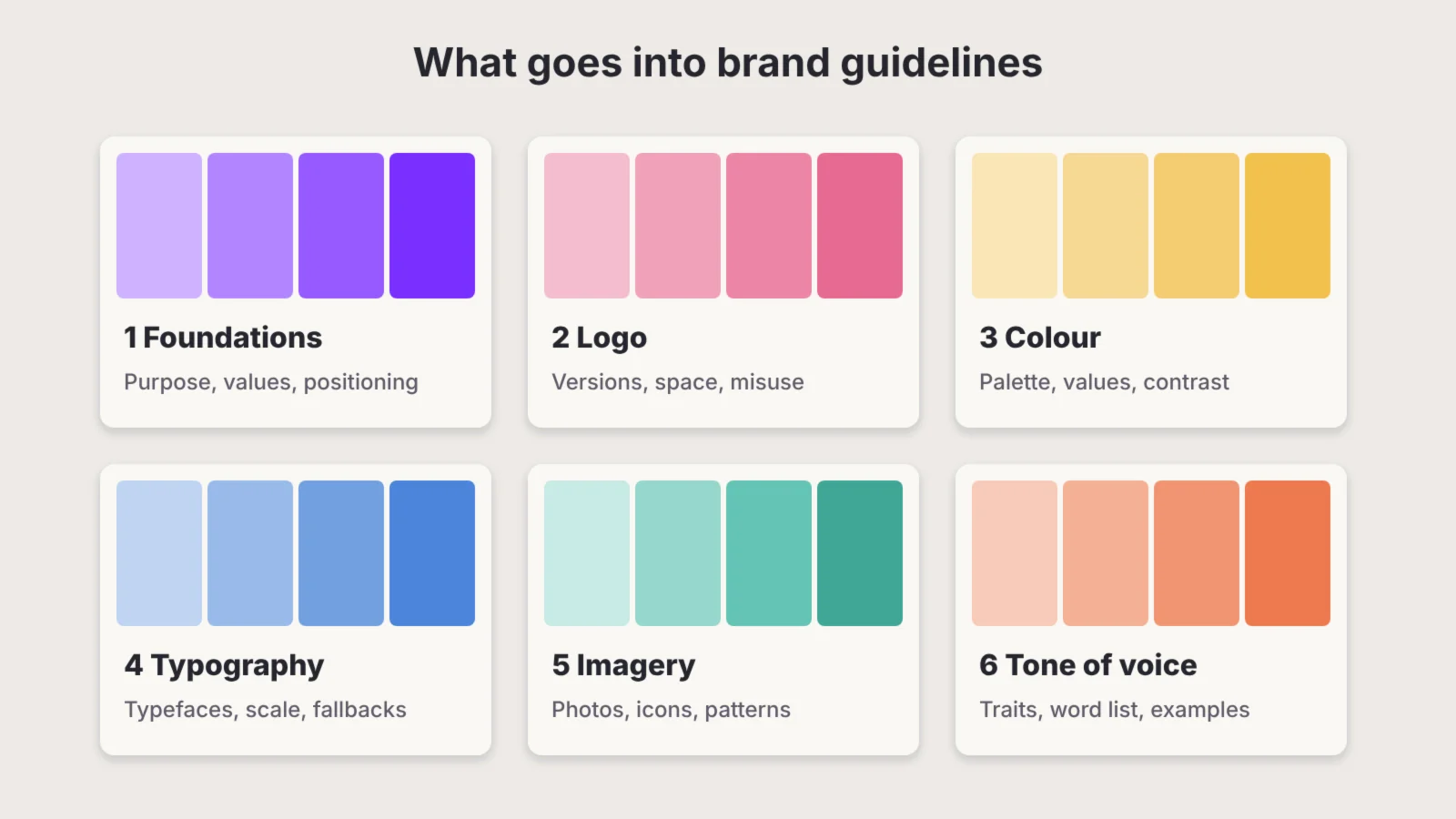
1. Brand foundations
Your purpose, values, audience and positioning statement. Include your value proposition and a few key messages in plain language. This section explains the thinking behind every rule that follows, so people can make good decisions when the rules do not cover a situation.
2. Logo
The main logo and any versions, such as a stacked layout, an icon or a single-colour version. Set the clear space around it, the minimum size, which backgrounds it can sit on and a short list of things not to do, such as stretching, recolouring or adding effects. Show each rule with an example.
3. Colour
Your primary and secondary colours with their values for screen (HEX and RGB) and print (CMYK, or a named ink reference if you use one). Explain how much of each to use, which colour combinations meet accessibility contrast standards for text and which to avoid.
4. Typography
The typefaces for headings and body text, the weights you use, fallback fonts for email and documents and a type scale showing sizes for headings, body and captions. Check font licences cover web, print and app use.
5. Imagery and graphic elements
The style of photography (natural or staged, people or products, colour treatment), illustration and icons, plus any patterns, shapes or layout grids that make your designs recognisable. Example images help far more than written descriptions here.
6. Tone of voice
How the brand sounds in writing: three or four voice traits with what each one means and does not mean, how the tone shifts between, say, a social post and a complaint reply and a word list of preferred and banned terms. Add before and after examples. This section shapes your content strategy as much as any design rule shapes your visuals.
Brand guidelines template
Use this outline as a starting point. A small business can cover it in 15 to 30 pages or a single web page with sections.
- Introduction: who the guidelines are for and how to use them, plus a contact for questions.
- Our brand: purpose, values, audience, positioning statement and key messages.
- Logo: versions, clear space, minimum size, backgrounds and misuse examples.
- Colour: palette with HEX, RGB and CMYK values, proportions and accessible combinations.
- Typography: typefaces, weights, type scale and fallbacks.
- Imagery: photography, illustration and icon style, with good and bad examples.
- Tone of voice: voice traits, tone by situation, word list and before and after examples.
- Applications: real examples, such as a social post, an email, a business card, a slide and a web page.
- Assets: links to download logos, fonts, templates and photography.
The applications section is the one most often skipped and the one people use most. Showing finished examples answers questions that rules alone cannot.
Brand guidelines examples
Several organisations publish their guidelines openly. They are worth studying for structure and level of detail, even if your brand is much smaller.
- NHS. The NHS identity guidelines are one of the most thorough public examples in the UK. They cover the logo, colours, fonts, photography, tone of voice and naming, with a large library of real examples showing how hundreds of organisations apply one identity consistently.
- GOV.UK. The GOV.UK style guide shows how far written guidance can go. It sets rules for plain English, spelling, numbers and specific words, and it is a useful model for any organisation that wants clear, consistent writing.
- Mailchimp. The Mailchimp content style guide is a widely cited example of voice and tone guidance. It explains how the brand’s voice stays the same while its tone changes with the reader’s situation.
- Monzo. The bank’s tone of voice guide shows how a brand can define itself against its category, replacing formal banking language with plain, direct writing.
Notice what they share. Each explains the reasoning behind its rules, shows real examples and is easy to find and search. None of them is a PDF that sits unread in a shared drive.
How to create brand guidelines in 6 steps
- Start from the strategy. Confirm your purpose, audience and positioning before documenting visuals. If those are unclear, work on brand positioning first.
- Audit what exists. Gather your website, social posts, emails, documents, signage and packaging. Note what works, what is inconsistent and what people improvise because no rule exists.
- Decide the rules. Settle the logo versions, colour values, typefaces, image style and voice traits. Where you have several versions of something, choose one.
- Show, do not just tell. For every rule, add an example of it applied well and, where useful, an example of what to avoid.
- Build the templates. Create ready-to-use templates for the things people make most often, such as social graphics, presentations, email headers and documents. Templates do more for consistency than any rule.
- Publish and share. Put the guidelines where people can find them, ideally as a web page or shared document with a clear owner, and walk your team and suppliers through them.
How to make sure people use your brand guidelines
The most common problem with brand guidelines is not what is in them but that nobody opens them. A few habits help.
- Keep them short at first. A ten-page guide people read beats an eighty-page guide nobody opens.
- Make assets easy to find. Put logos, fonts and templates one click away from the guidelines.
- Name an owner. One person should answer questions, approve exceptions and update the guide.
- Review once a year. Add new channels, remove rules nobody follows and update examples.
- Include them in briefs. Every brief to a designer, writer or agency should link to the guidelines.
- Give them to your AI tools. Add your tone of voice and word list to the instructions you give AI writing assistants, so drafts start closer to your brand.
Common brand guidelines mistakes
- Only covering the logo. Visual rules without foundations or tone of voice produce work that looks consistent but sounds generic.
- Rules without reasons. People follow rules better when they understand why, and they make better decisions when a rule does not apply.
- No examples. Descriptions like “warm and confident” mean different things to different people until you show them.
- Too rigid. Guidelines that leave no room for judgement get ignored. Mark which rules are fixed and which are flexible.
- Forgetting accessibility. Colour combinations and font sizes should work for people with low vision or colour blindness.
- Never updating them. Out-of-date guidelines cause the inconsistency they were meant to prevent.
Frequently asked questions
What are brand guidelines?
Brand guidelines are a reference document that explains how a brand should look, sound and behave. They usually cover brand foundations, logo, colours, typography, imagery and tone of voice, with examples of correct and incorrect use.
What should be included in brand guidelines?
Most guidelines include the brand’s purpose, values and positioning, logo rules, colour palette, typography, imagery style and tone of voice. The most useful also include real examples of the brand applied, such as social posts, emails and web pages, plus links to download assets.
How long should brand guidelines be?
Long enough to answer the questions people actually ask. For a small business, 15 to 30 pages or a single web page with sections is usually enough to start, and you can add detail as the brand grows.
What is the difference between brand guidelines and a style guide?
The terms are often used interchangeably. Sometimes “style guide” refers only to writing rules, such as spelling, grammar and word choice, while brand guidelines cover the full visual and verbal identity.
Can a small business create its own brand guidelines?
Yes. Start with your positioning, logo, colours, fonts and a short tone of voice section, add templates for the things you make most often and expand over time. Professional help is most useful when the brand itself needs to be defined or refreshed.
On this page
Back to topBuild a brand people recognise everywhere
Kutola helps you define what your brand stands for and turn it into clear, practical guidelines that your team, suppliers and tools can follow. See how it fits into our brand and digital experience work, or get in touch to talk through your brand.