Local SEO: how to get found by customers near you
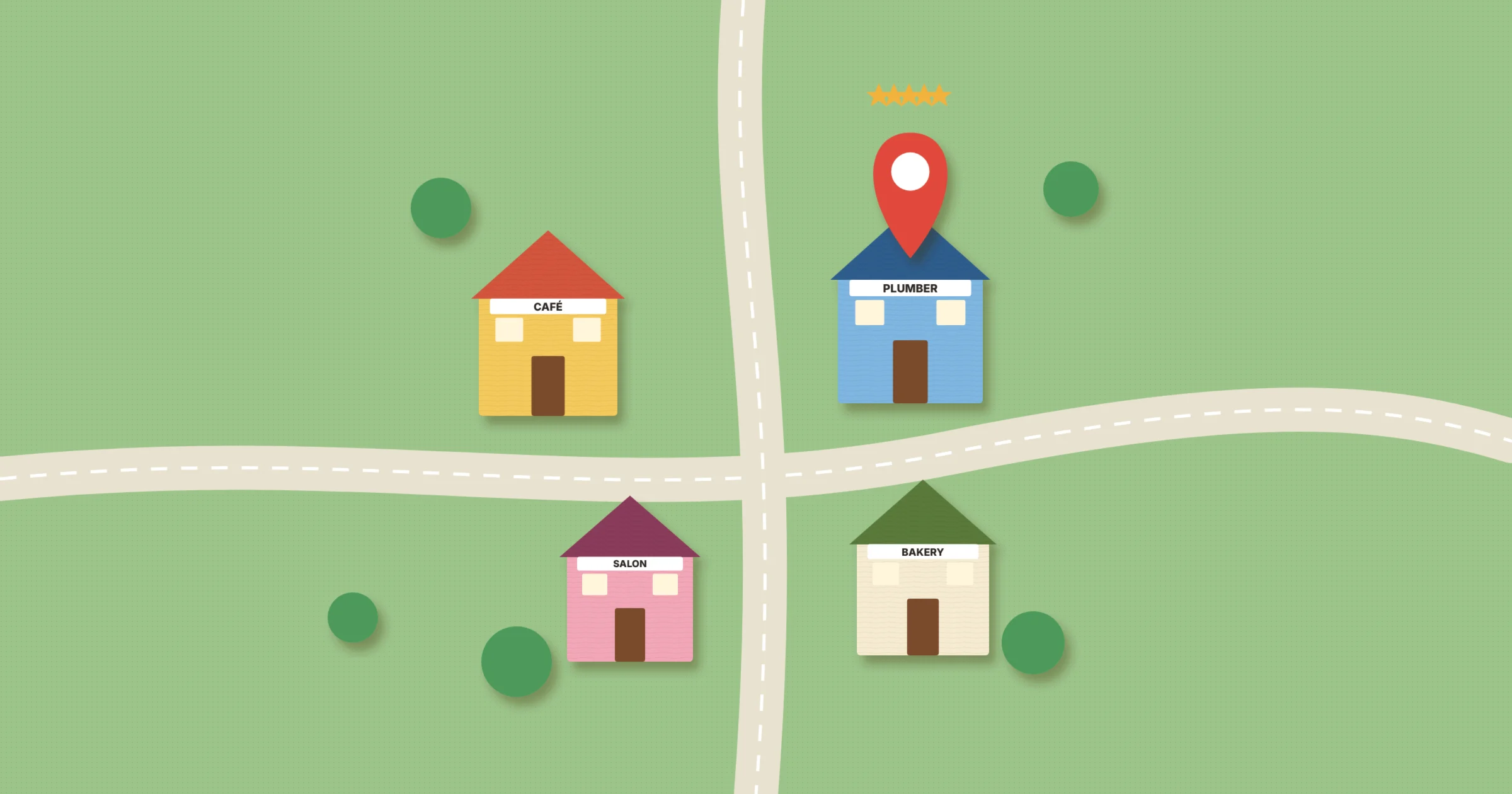
Local SEO is the work that helps a business appear when people nearby search for what it offers, in Google’s map results, in normal search results and increasingly in AI answers. For most UK small businesses it comes down to four things: a complete and accurate Google Business Profile, a steady flow of genuine reviews, a website with a clear page for every main service and consistent business details across the web.
Key takeaways
- Google ranks local results on relevance, distance and prominence. You cannot change distance, so work on the other two.
- Your Google Business Profile is the single most important local asset. The primary category matters most.
- Reviews are both a ranking signal and a sales tool. Ask every customer in the same way, and never buy or filter them.
- Each important service or area deserves a genuinely useful page, not a copy with the town name swapped.
- AI assistants draw on the same listings, reviews and websites, so good local SEO also helps you get recommended by AI.
Local SEO is one part of a wider SEO strategy, focused on customers in a particular place. This guide explains how Google ranks local results, then works through your Google Business Profile, reviews, website, citations and links. It also covers what AI search changes, a seven-step plan, how to measure results and the mistakes that hold most local businesses back.
What is local SEO?
Local SEO covers any search where location shapes the results. That includes searches with a place in them, such as “accountant in Leeds”, searches with “near me” and searches with no place at all, such as “emergency plumber”, where Google assumes the searcher wants someone nearby.
Those searches usually show three kinds of result:
- The local pack. A map with three businesses, shown near the top of Google results. It is often called the map pack.
- Google Maps. The full list of nearby businesses when someone searches in the Maps app or clicks through from the pack.
- Organic results. Normal web pages ranking below the pack, such as your service pages or directory listings.
Local SEO matters most for businesses that serve customers face to face or in a defined area: trades, shops, cafés and restaurants, clinics, salons, gyms, solicitors, accountants and estate agents. Online-only businesses that sell nationally usually get more from general SEO.
How Google ranks local results
Google’s guidance on improving your local ranking names three main factors:
- Relevance: how well your profile and website match what the person searched for.
- Distance: how far your business is from the searcher, or from the place named in the search.
- Prominence: how well known and trusted your business is, judged from reviews, links, articles, directory listings and your position in normal search results.
You cannot move your premises, so local SEO focuses on relevance and prominence. Whitespark’s 2026 Local Search Ranking Factors survey of 47 local SEO experts ranked the primary Google Business Profile category as the most important factor for the local pack, just ahead of proximity. Review and behaviour signals gained weight compared with earlier years. It is an expert survey rather than Google data, but its top factors line up with Google’s own guidance.
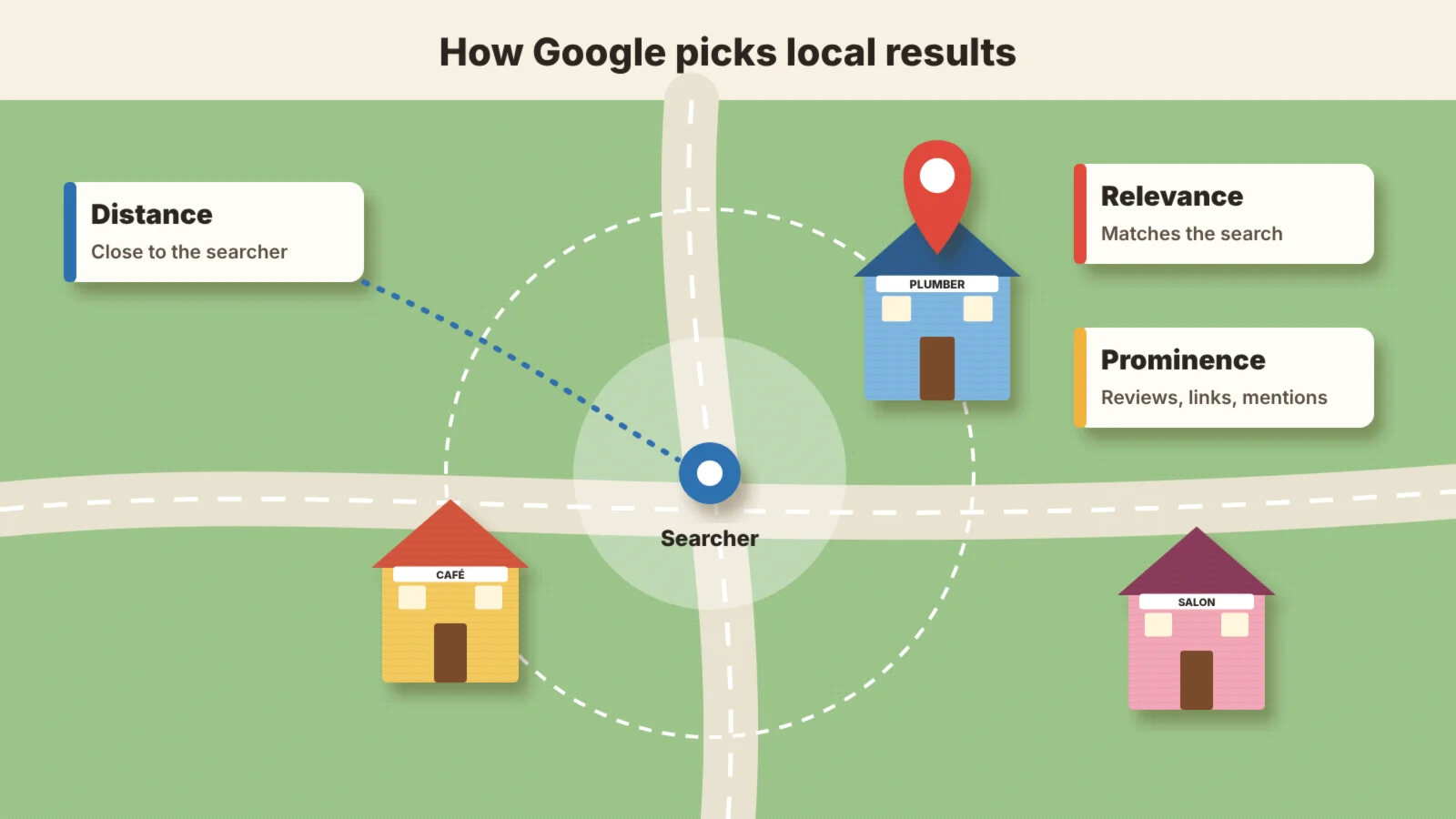
Distance also explains why rankings vary so much across a town. A business can rank first for searches made on its own street and not appear at all three miles away. Checking rankings from one location gives a misleading picture, which is why local rank tracking tools test from a grid of points.
Set up and optimise your Google Business Profile
Your Google Business Profile is the listing that appears in the local pack, on Maps and in the panel beside your branded searches. For many local businesses it gets more views than the website.
Claim and verify it
Search for your business on Google or Maps. If a profile exists, claim it. If not, create one at business.google.com. Google will ask you to verify that you run the business, often by video, and may ask again if you change key details.
Choose the right categories
The primary category has the biggest single effect on which searches you appear for. Choose the most specific one that describes your core business, such as “Emergency locksmith service” rather than “Locksmith” if that is what most of your work is. Add secondary categories for other genuine services, but not for things you only do occasionally.
Complete every field accurately
Use your real business name, exactly as it appears on your signage and paperwork. Adding keywords or towns to the name breaks Google’s guidelines for representing your business and is a common cause of suspension. Then fill in your address or service area, phone number, website, opening hours, holiday hours, services, products, attributes and a description written for customers.
Add photos and keep it active
Upload real photos of your premises, team, work and products, and add new ones regularly. Posts for offers, events and updates show that the business is active. Keep opening hours accurate, especially over bank holidays, because being open at the time of a search affects whether you appear.
Service area businesses
If you visit customers rather than having them visit you, such as a plumber or mobile hairdresser, set your profile up as a service area business and hide your address. Listing a home address as a shopfront, or using a virtual office or PO box, risks suspension.
Reviews: earn them steadily and reply to them
Reviews influence where you rank and whether people choose you once they see you. Quantity, quality, recency and your replies all count.
- Ask everyone, in the same way. Send a short message with a direct review link after each job or purchase. A QR code at the till or on an invoice works too.
- Do not filter or reward. Asking only happy customers, known as review gating, breaks Google’s rules. Offering discounts or gifts for reviews does too.
- Reply to every review. Thank people for positive reviews, and answer negative ones calmly and specifically, with a way to sort the problem out offline. Future customers read your replies as much as the reviews.
- Never write or buy reviews. Since April 2025, the Digital Markets, Competition and Consumers Act 2024 has banned fake reviews and concealed incentives, and the CMA can fine businesses directly.
Google is not the only review site that matters. Depending on your sector, Trustpilot, Facebook, Tripadvisor, Checkatrade or Doctify may carry as much weight with customers. Our guide to social proof and the law explains how to collect and use reviews safely.
Make your website work for local search
Your Google Business Profile and your website support each other. The profile links to the site, and Google uses the site to understand what you do and where.
Create a page for each main service
A single “Services” page listing everything gives Google little to match against specific searches. A page for each main service, explaining what it involves, prices or price ranges, the areas you cover and answers to common questions, can rank in organic results and give the profile a stronger page to link to.
Add location pages only where you genuinely operate
If you have several branches, give each one its own page with its address, opening hours, team, photos and directions. If you serve several towns from one base, a page for each main area can work, but only when it says something specific about the work you do there, such as local projects, reviews or travel times. Pages that copy the same text with a different town name are what Google’s spam policies call doorway pages.
Show your details clearly and consistently
Put your business name, address and phone number, often called NAP, in the footer or on a contact page, written the same way as on your Google Business Profile. Embed a map on the contact page and make the phone number tappable on mobile.
Add local business structured data
LocalBusiness structured data describes your name, address, opening hours and other details in a format machines can read. The Kutola Schema Markup Generator creates the code for you. Make sure it matches what visitors can see and what your profile says.
Keep it fast and mobile friendly
Most local searches happen on phones, often on the move. Pages should load quickly on mobile data, with the phone number, address and booking button easy to reach. The basics are covered in our technical SEO guide.
Local citations and links
A citation is any mention of your business name, address and phone number on another website, such as a directory, a map service or a trade body. Consistent citations confirm to search engines and AI tools that your details are correct.
In the UK, start with the listings that feed other services and the ones customers actually use:
- Map services: Apple Business Connect for Apple Maps and Siri, and Bing Places for Bing and Copilot.
- General directories: Yell, Thomson Local and Facebook.
- Trade and sector sites: Checkatrade, TrustATrader and MyBuilder for trades, Doctify for healthcare, the Law Society’s Find a Solicitor and similar professional registers.
- Local sources: your council’s business directory, local business groups and your chamber of commerce.
Quality matters more than quantity. Twenty accurate listings on relevant sites beat two hundred on low-quality directories. When you move or change your phone number, update every listing.
Local links add prominence that directories alone cannot. Sponsoring a local team or event, joining a business improvement district, working with neighbouring businesses, supplying expert comment to local news and publishing useful local guides can all earn links from websites that matter in your area.
Local SEO and AI search
People increasingly ask AI tools for recommendations, such as “who’s a good electrician in Bristol?” or “best brunch near Clapham Common”. In BrightLocal’s 2026 Local Consumer Review Survey of US consumers, 45% said they had used ChatGPT or other AI tools to find local businesses, up from 6% a year earlier.
These tools build answers from the same sources local SEO already works on: business listings, review platforms, directories, local news and your own website. Google’s AI Overviews and AI Mode draw on Business Profile data, while ChatGPT, Copilot and Perplexity rely on web search results and data partners. Accurate, consistent details across the web, plenty of recent reviews and clear service pages make a business easier for these tools to recommend.
The Kutola AI Readiness Checker shows whether AI crawlers can reach your pages. Our guide to AI visibility explains how to check what AI tools say about your business.
Local SEO in 7 steps
- Pick your priority searches. List the services that matter most and the places you serve, then check what appears for each search in Google and Maps.
- Fix your Google Business Profile. Claim, verify and complete it, with the right primary category and accurate hours.
- Set up a review routine. Ask every customer with a direct link and reply to every review within a few days.
- Build your core pages. Create a page for each main service and, where justified, each branch or main area, then link them from your profile.
- Clean up your details. Make your name, address and phone number match everywhere, starting with Apple, Bing, Yell and your sector’s main directories.
- Earn local links and mentions. Pick two or three local relationships, events or partnerships to build on over the year.
- Measure monthly. Track calls, direction requests, website clicks and enquiries, and adjust.
How to measure local SEO
- Google Business Profile performance: searches you appeared for, calls, direction requests, website clicks and bookings.
- Search Console: clicks and impressions for local searches and for your service and location pages.
- Google Analytics 4: enquiries and sales from organic search. Add UTM parameters to the website link on your profile so visits from it are counted separately.
- Grid rank tracking: tools that check your position from many points across your area show where you are visible and where you are not.
- Reviews: number, average rating and how recent the latest ones are, compared with your main competitors.
Calls and enquiries are the numbers that matter. Rankings and views are useful for spotting problems, but a business that ranks third and gets more calls is doing better than one that ranks first and gets fewer.
Common local SEO mistakes
- Keywords in the business name. It may work briefly, then risks suspension and complaints from competitors.
- The wrong primary category. A general category hides you from the specific searches customers make.
- Inconsistent details. Old addresses and phone numbers on directories confuse search engines and customers.
- Copy-and-paste location pages. Thin pages for every town nearby rarely rank and can count as spam.
- Ignoring reviews. Few, old or unanswered reviews lose customers even when you rank well.
- Setting up the profile and forgetting it. Out-of-date hours and no new photos signal a business that may not be active.
- Measuring rankings from your own office. Distance means your results look better from your desk than from across town.
Frequently asked questions
What is local SEO?
Local SEO is the process of improving a business’s visibility in location-based searches, such as “plumber near me” or “accountant in Leeds”. It covers your Google Business Profile, reviews, local pages on your website and consistent business details across directories.
How long does local SEO take to work?
Fixing a Google Business Profile can change results within weeks. Building reviews, local pages and links usually takes three to six months to show clear results, and longer in competitive areas.
Can I do local SEO without a physical address?
Yes. Service area businesses, such as mobile trades, can hide their address on Google Business Profile and list the areas they serve. You still need a real address for verification, but it is not shown publicly.
How important are Google reviews for local SEO?
Very. Reviews affect both where you appear and whether people choose you. A steady flow of recent, genuine reviews with replies from the business does more than a large number of old ones.
Is local SEO different from normal SEO?
It uses the same foundations, but adds location-specific work: Google Business Profile, reviews, citations and local pages. Rankings also depend on the searcher’s distance from your business, which does not apply to normal SEO.
On this page
Back to topGet found by customers near you
Kutola helps local businesses fix their Google Business Profile, build useful service and location pages and earn the reviews and listings that bring in calls and enquiries. See how it fits into our SEO and AI search work, or get in touch to talk through your local visibility.