Thought leadership: what it means and how to turn expertise into content

Thought leadership is content that shares an informed point of view on a problem your buyers care about, backed by evidence or experience they can’t get elsewhere. It doesn’t describe your product. It changes how the reader thinks about the problem, so that when they need help, your business is the one they trust to give it.
It is one of the formats a content strategy can choose, and the one that asks the most of a business, because it needs something genuinely new to say. This guide covers how thought leadership differs from content marketing, why buyers value it, the main types with real examples, six steps to turn your team’s expertise into content, what AI search changes and how to measure the results.
What is thought leadership?
A piece of thought leadership does three things. It takes a position on a question that matters to a specific audience. It supports that position with something the author has and others don’t: data, client patterns, years of practice or research. And it is signed by a named person or organisation that stands behind it.
The test is simple. If a competitor could publish the same article with their logo on it and nobody would notice, it isn’t thought leadership. “Ten tips for better LinkedIn posts” is useful content. An agency’s analysis of 400 client posts showing that the usual advice is wrong is thought leadership, because only that agency could have written it.
The term is used most in B2B, where purchases are large and several people decide. It also works for consumer brands whose expertise is the product, such as financial advisers and clinics.
Thought leadership vs content marketing
Thought leadership is a type of content marketing, but most content marketing isn’t thought leadership. Everyday content answers the questions people already search for. Thought leadership raises questions they hadn’t thought to ask.
| Content marketing | Thought leadership | |
|---|---|---|
| Starts from | What your audience searches for | What you know that your audience doesn’t |
| Main aim | Answer a question and attract visits | Change how the reader sees a problem and earn trust |
| Typical formats | Guides, how-to articles, checklists, FAQs | Research reports, opinion essays, frameworks, forecasts |
| Who signs it | Often the brand | A named expert or the organisation as an authority |
| Shelf life | Updated as answers change | Tied to a moment or a dataset, then refreshed or replaced |
| Success looks like | Rankings, traffic and leads | Citations, invitations, better sales conversations |
Most businesses need both: the guide brings people in, and the point of view gives them a reason to remember who wrote it.
Why thought leadership matters
Most buyers aren’t buying. John Dawes of the Ehrenberg-Bass Institute, in research published with LinkedIn’s B2B Institute, estimated that only around 5% of business buyers are in the market for a given category in a typical quarter. His 95-5 rule means most of your future customers are not looking for you today, but ideas that help them do their job can reach them long before they start a search.
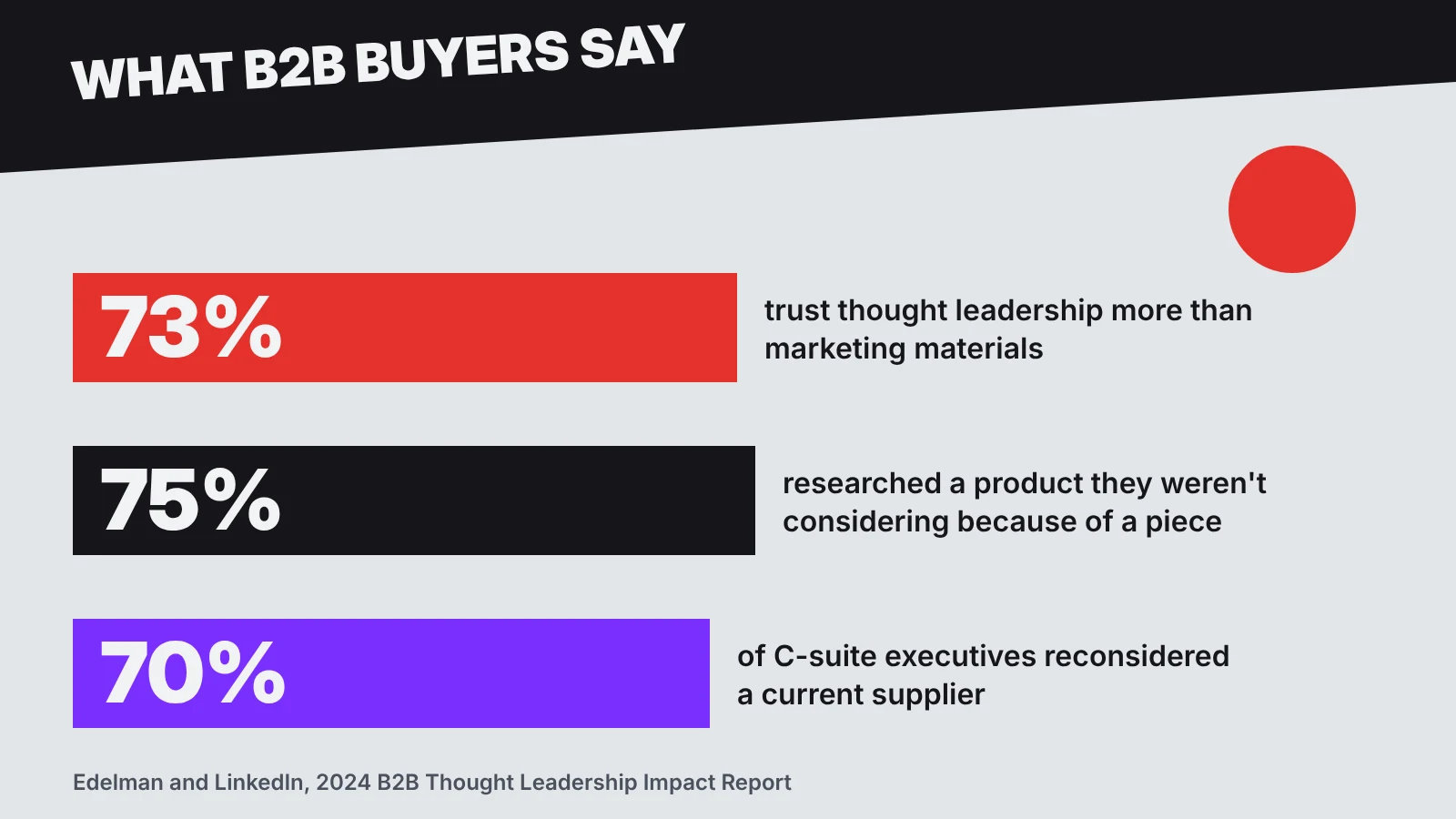
Buyers say this kind of content shapes their choices. In the 2024 Edelman and LinkedIn B2B Thought Leadership Impact Report, a survey of nearly 3,500 business decision-makers:
- 73% said an organisation’s thought leadership is a more trustworthy basis for judging its competencies than its marketing materials.
- 75% said a piece of thought leadership had led them to research a product or service they weren’t previously considering.
- 70% of C-suite executives said it had led them to reconsider a current supplier.
The 2025 edition of the study looked at “hidden buyers”, the people in a buying group who never speak to sales but can still block a decision. It found that more than 40% of B2B deals stall because the buying group can’t agree internally. Content that a finance director or an IT lead reads on their own can settle the arguments your sales team never hears.
There is also room to stand out. In Edelman and LinkedIn’s 2020 study, only 15% rated most of the thought leadership they read as very good or excellent.
Types of thought leadership content
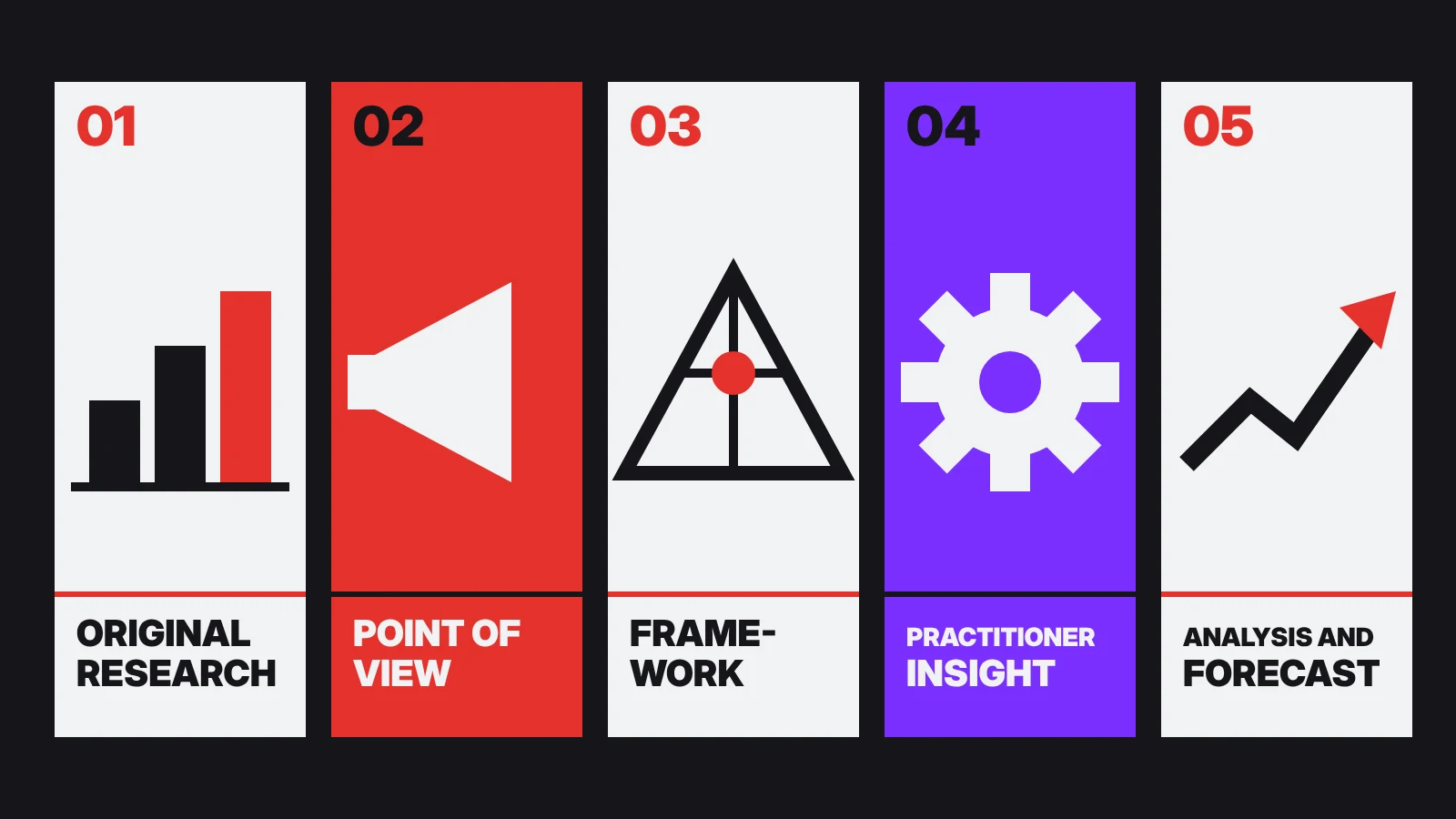
Thought leadership comes in five broad forms. Each one rests on a different source of authority, so pick the type that matches what your business actually has.
- Original research. A survey, an analysis of your own data or a study of public data nobody has joined up before. It is the hardest to copy and the most likely to be quoted by journalists and AI tools.
- A point of view. An argument against common practice, explained well. It costs little to produce but needs someone senior willing to put their name to it.
- A framework. A model, method or checklist that gives your audience a new way to organise a messy problem. Good frameworks get named, shared and taught.
- Practitioner insight. Lessons from doing the work: patterns across many client projects, what failed and why, with details anonymised where needed.
- Analysis and forecasts. What a new law, a platform change or a market shift means for a specific audience, published while the question is still open.
Thought leadership examples
The strongest examples share one trait: the business uses something only it has.
- LinkedIn’s B2B Institute. Rather than publish tips on LinkedIn ads, it worked with the Ehrenberg-Bass Institute on research. The 95-5 rule that came out of it is quoted across B2B marketing and makes the case for long-term brand advertising, which LinkedIn sells.
- Ahrefs. The SEO software company runs studies on its own index of web pages. Its finding that 96.55% of pages get no traffic from Google has been cited for years, and every mention reminds readers where the data came from.
- Rightmove. Its monthly House Price Index is built from asking prices on the property it lists, and UK newspapers report it month after month. The data is a by-product of the business, turned into a regular news moment.
- Gong. The sales software company publishes Gong Labs research based on recorded sales calls, such as how much top sellers talk compared with how much they listen.
Small businesses can work the same way on a smaller scale. Take an illustrative accountancy firm with 300 landlord clients. A short report after each Budget, showing how the changes play out across real (anonymised) portfolios, gives local landlords something no national tax guide can.
How to build thought leadership in 6 steps
1. Choose a narrow territory
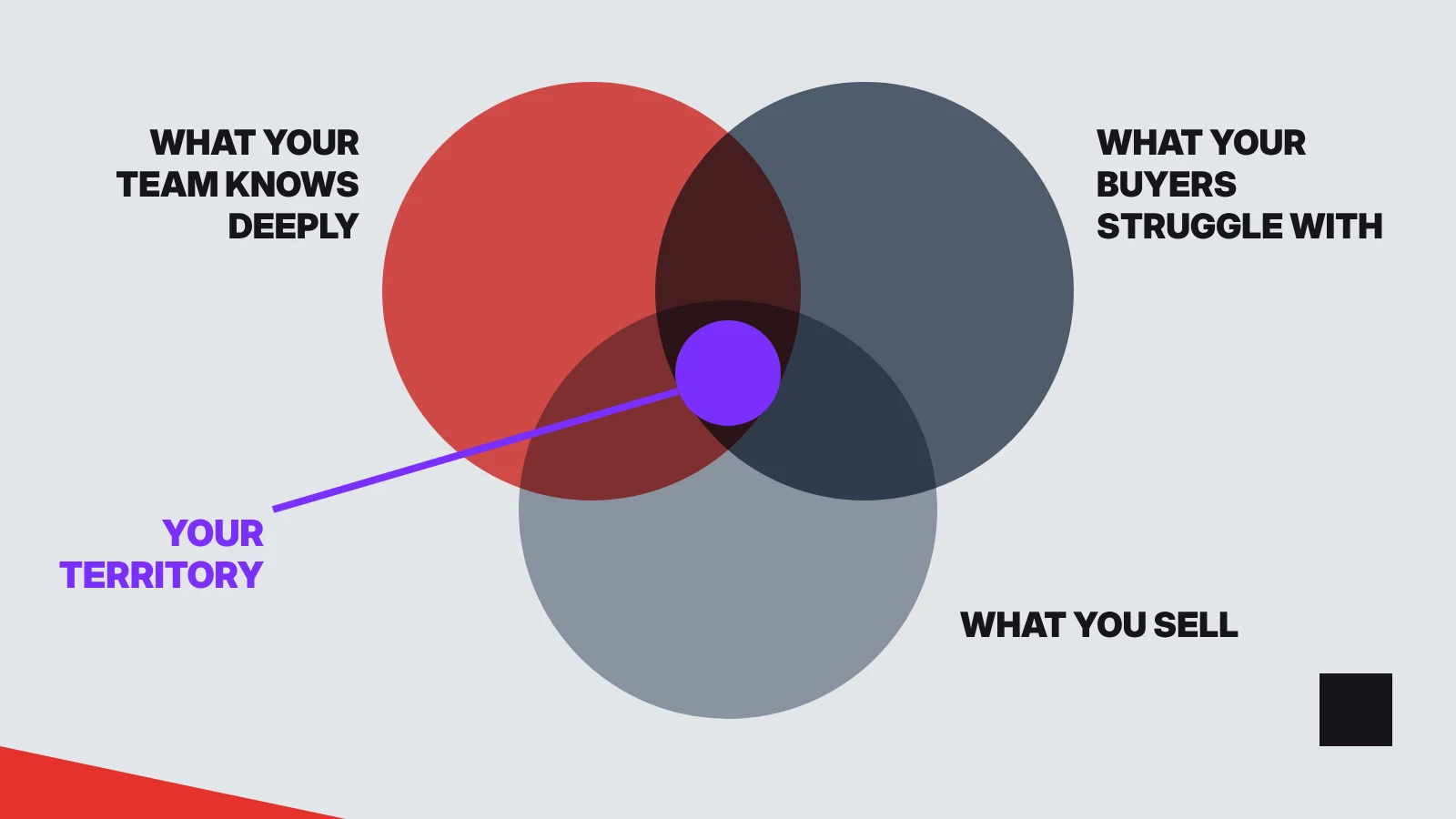
Look for the overlap of three things: what your team knows deeply, what your buyers struggle with and what you sell. Miss the first and you sound like everyone else, miss the second and nobody reads it, miss the third and it won’t bring in work. “Marketing” is too broad a territory. “Getting found by buyers in UK manufacturing” is one you can own. Your brand positioning should already point you towards it.
2. Find your point of view
Ask the people closest to the work what they think most of the industry gets wrong, and listen for the arguments you have with clients again and again. Write each idea as one sentence someone could disagree with. If nobody could disagree, it is a fact, not a point of view.
3. Gather the evidence
A view without proof is just opinion. Pull numbers from your own systems, look for patterns across past projects, run a short survey of customers or interview the experts on your team. Google’s guidance on helpful, reliable content asks whether a page provides “original information, reporting, research, or analysis”, which is exactly what this step produces. Check every figure and say how you collected it.
4. Put a real person in front
Readers trust people more than logos, so name the expert behind each piece and link to an author page that explains their experience. This is also how a site shows the experience and expertise behind E-E-A-T. Experts rarely have time to write, so let a writer interview them for 30 minutes and draft from the transcript, then have the expert check the result for accuracy and voice.
5. Publish and distribute it
Publish the full piece on your own website, where it can rank, be cited and stay under your control. Then take it to where your audience already reads: posts from the named expert on LinkedIn, a newsletter issue, a short video, a talk at a trade event or a story offered to the trade press. Plan these slots in your content calendar before the piece is finished.
6. Measure, learn and repeat
Track the measures in the section below for three to six months before judging a theme. Keep the ideas that get quoted and debated, retire the ones that don’t and update research pieces each year so they stay the source people cite.
Thought leadership and AI search
AI assistants such as ChatGPT, Perplexity and Google’s AI Overviews answer common questions by summarising many sources at once. That makes generic advice easy to replace: if your article says what fifty others say, the AI answer covers it without needing you. Original data, named frameworks and clear expert views are harder to summarise away, because the answer has to say where they came from.
That is why thought leadership sits at the heart of generative engine optimisation. To give your pieces the best chance of being cited, put the key finding in a plain sentence near the top, show the method, date the page and keep the author visible. The AI Readiness Checker tests whether a page shows these trust signals and whether AI crawlers can reach it.
How to measure thought leadership
Thought leadership rarely brings a lead the day it is published, so judge it on signs of influence as well as clicks.
| What to track | Where to find it | What it tells you |
|---|---|---|
| Engaged time and scroll depth | GA4 | Whether people actually read the piece |
| Newsletter sign-ups and return visits | Email platform, GA4 | Whether readers want to hear from you again |
| Branded searches | Google Search Console | Whether more people look for your name |
| Links, press mentions and AI citations | Backlink tool, media monitoring, manual checks in AI assistants | Whether others treat you as a source |
| Invitations | Your inbox | Requests to speak, comment or contribute |
| Sales conversations | CRM notes, “how did you hear about us?” | Whether prospects mention or forward the content |
The last row matters most. Ask your sales team to note when a prospect mentions a piece, and you will soon see which ideas open doors.
Common thought leadership mistakes
- Saying what everyone says. A summary of common advice with a senior name on top is still common advice.
- Disguising a sales pitch. Once a piece turns into a product tour, readers stop trusting the rest of it.
- Claims without evidence. Unsourced statistics and vague “studies show” lines undo the trust you are trying to build. In the UK, misleading claims in marketing can also break the ASA’s advertising code.
- Letting AI write the ideas. AI tools can help with drafting and editing, but they can only repeat what is already published. The point of view has to come from your people.
- Giving up too early. Influence builds through repetition. One strong idea a quarter, shared for months, beats a weekly piece that gets a single post and is forgotten.
Frequently asked questions
What is thought leadership?
Thought leadership is content that shares an informed point of view on a problem an audience cares about, backed by original evidence or experience. Its aim is to change how readers think about the problem and to earn their trust, rather than to sell a product directly.
What is an example of thought leadership?
Ahrefs’ study showing that 96.55% of pages get no traffic from Google is a well-known example. It uses data only Ahrefs has, takes a clear position and has been cited widely for years.
What is the difference between thought leadership and content marketing?
Content marketing usually answers questions people already search for. Thought leadership is a type of content marketing that offers a new perspective, original data or a framework, signed by a named expert or organisation.
How do you become a thought leader in your industry?
Pick a narrow topic where your expertise, your buyers’ problems and your offer overlap. Form a clear view, back it with evidence, publish it under a named expert and keep sharing it consistently where your audience reads.
Does thought leadership work for small businesses?
Yes. A small business rarely has a research budget, but it often sees patterns across its clients that bigger competitors miss. Turning those patterns into short reports, opinion pieces or local analysis is thought leadership at a scale that suits it.
How do you measure thought leadership?
Track engaged time, newsletter sign-ups, branded searches, links, press mentions and AI citations. The most telling sign is prospects mentioning your content in sales conversations.
On this page
Back to topTurn what your team knows into ideas buyers remember
Kutola helps businesses find the topics they can credibly own, shape their experts’ knowledge into research and opinion pieces and build a content strategy that puts those ideas in front of the right people. Get in touch to talk about your thought leadership.