How to make ad creative that converts
Ad creative that converts does four things quickly: it stops the right person scrolling, shows one clear benefit, proves it and tells them exactly what to do next. The words, images and video in an ad usually matter more to results than targeting tweaks or bid settings, because ad platforms now handle much of the targeting automatically and the creative is what decides who responds.
Creative is one part of a wider paid media strategy. This guide covers why creative matters so much, what converting ads have in common, how to adapt creative to search, social, video and display, how to make and test it and what UK advertising rules expect when you use AI to produce ads.
Why ad creative matters more than ever
An analysis by Nielsen of nearly 500 campaigns found that creative accounted for 47% of the sales lift from advertising, more than reach, targeting, brand or recency. Since then the balance has shifted further towards creative. Meta’s Advantage+ campaigns and Google’s Performance Max use automation to decide who sees an ad, so the main thing an advertiser still controls is what the ad says and shows.
Good creative also lowers costs. Platforms reward ads that people engage with, so a stronger ad can reach more of the right people for the same budget, as our guide to lowering Meta ad costs explains.
What ad creative that converts has in common
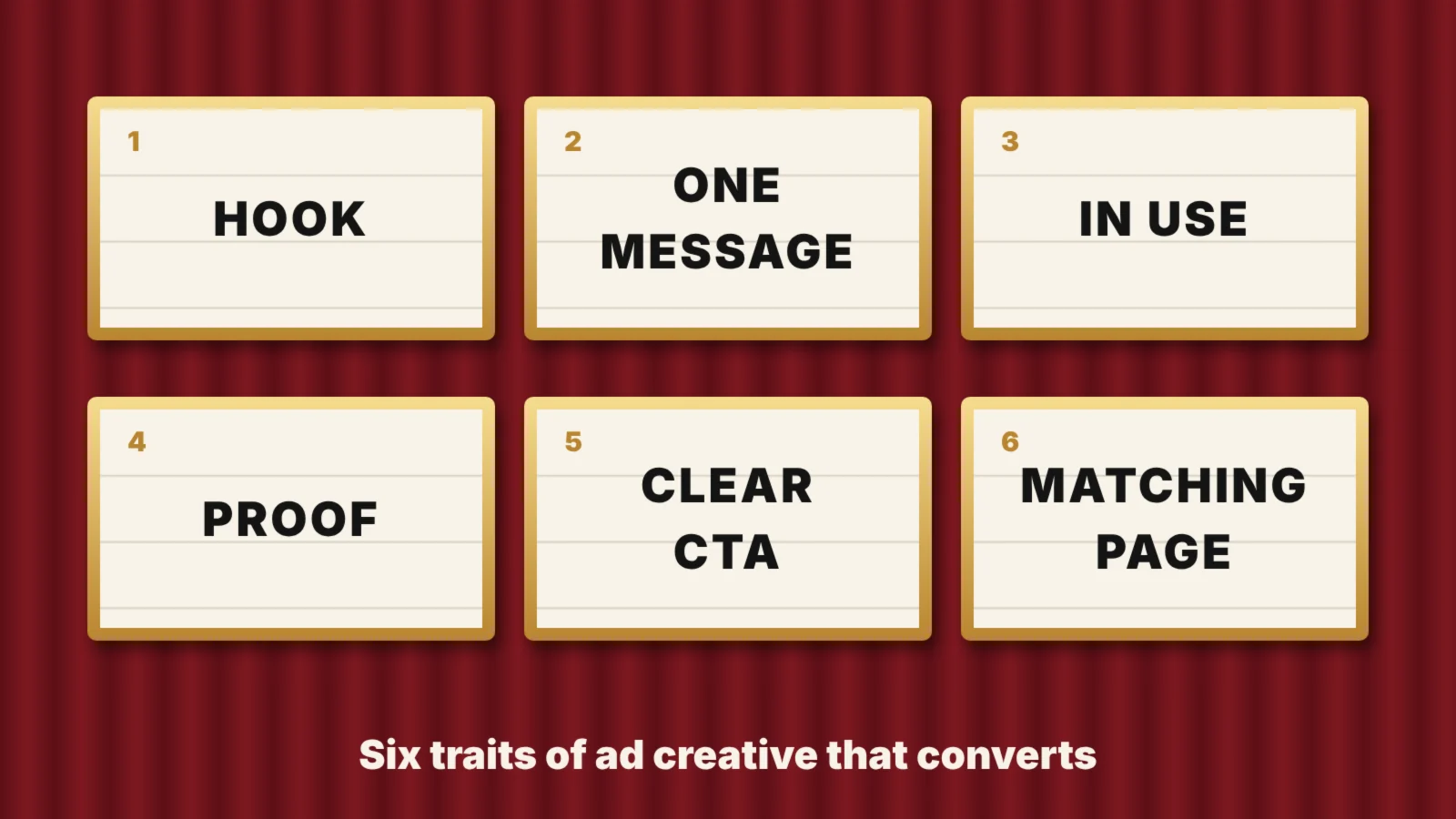
Formats differ, but ads that turn viewers into customers tend to share six traits:
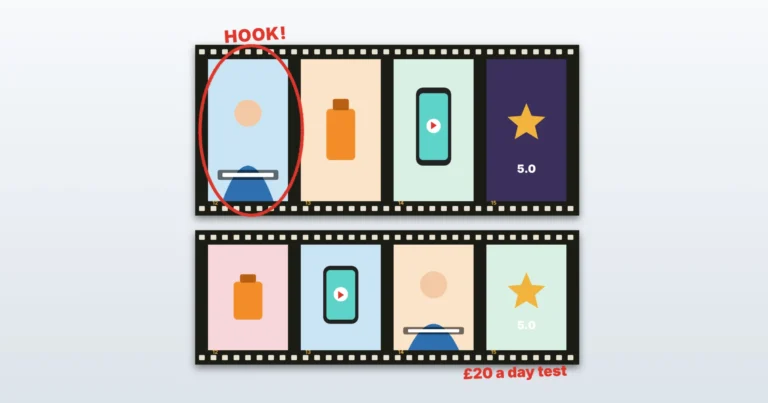
- A hook in the first moment. The opening line, image or first second of video earns attention. Lead with the problem, the result or something unexpected.
- One clear message. One benefit for one audience. Ads that try to say everything leave people remembering nothing.
- The product or service in use. Show what it does and who it is for, rather than a logo and a slogan.
- Proof. Reviews, ratings, numbers, recognisable customers or a short demonstration make the claim believable. Our guide to types of social proof lists the options.
- A specific call to action. “Book a free survey” or “Get your quote in 2 minutes” works better than “Learn more”.
- A landing page that matches. The page should repeat the promise, look consistent with the ad and make the next step easy.
How to adapt creative to each ad format
Search ads
People are already looking, so relevance beats cleverness. Put the search term or the problem in the headline, give a concrete reason to choose you, such as price, speed or reviews, and use extensions for extra proof. Our guide to Google Ads costs explains how better ads also lower what you pay per click.
Social image and carousel ads
These interrupt someone who was not looking for you. Use a bold image with little text, a headline that names the problem and a carousel to show steps, products or before-and-after results.
Short video
Design for sound off and a vertical screen. Show the hook in the first one to two seconds, add captions and make the product visible early. Creator-style videos that feel native to the platform often outperform polished adverts, as covered in our guide to TikTok ads.
Display ads
Space is tight and attention is low. Use one short message, a clear brand mark and a visible button, and rely on retargeting audiences that already know you.
How to create ad creative in 6 steps
- Start with the customer. Note the problem, the words customers use and the objections they raise. Reviews and sales calls are good sources.
- Write several angles. Draft three to five different messages, such as saving time, saving money, avoiding a risk or a customer story.
- Build each angle in the formats you need. A video, a static image and a search ad for each angle let you see which message works, not just which format.
- Check the essentials. Hook, one message, proof, call to action and a matching landing page.
- Check the rules. Make sure every claim can be backed up and that prices, offers and urgency are accurate.
- Launch, measure and refresh. Judge ads on cost per result rather than clicks, and plan new versions before performance drops.
How to test ad creative
Testing tells you which message and format work, so you spend more on winners and stop guessing.
- Test angles before details. A different message usually changes results far more than a new button colour.
- Change one main thing at a time when you want to learn why an ad won.
- Use the platform’s testing tools, such as Meta’s A/B tests or Google Ads experiments, to split audiences fairly.
- Give tests enough data. Small budgets need longer tests. Our guide to sample sizes explains why.
- Watch for creative fatigue. When frequency rises and results fall, the audience has seen the ad too often. Refresh the creative rather than raising the budget.
Using AI to make ads, and what the ASA expects
AI tools can now write ad copy, generate images and video and produce endless variations to test. They are useful for speed, but the ad still has to follow the UK Advertising Codes, which apply whatever tool made it.
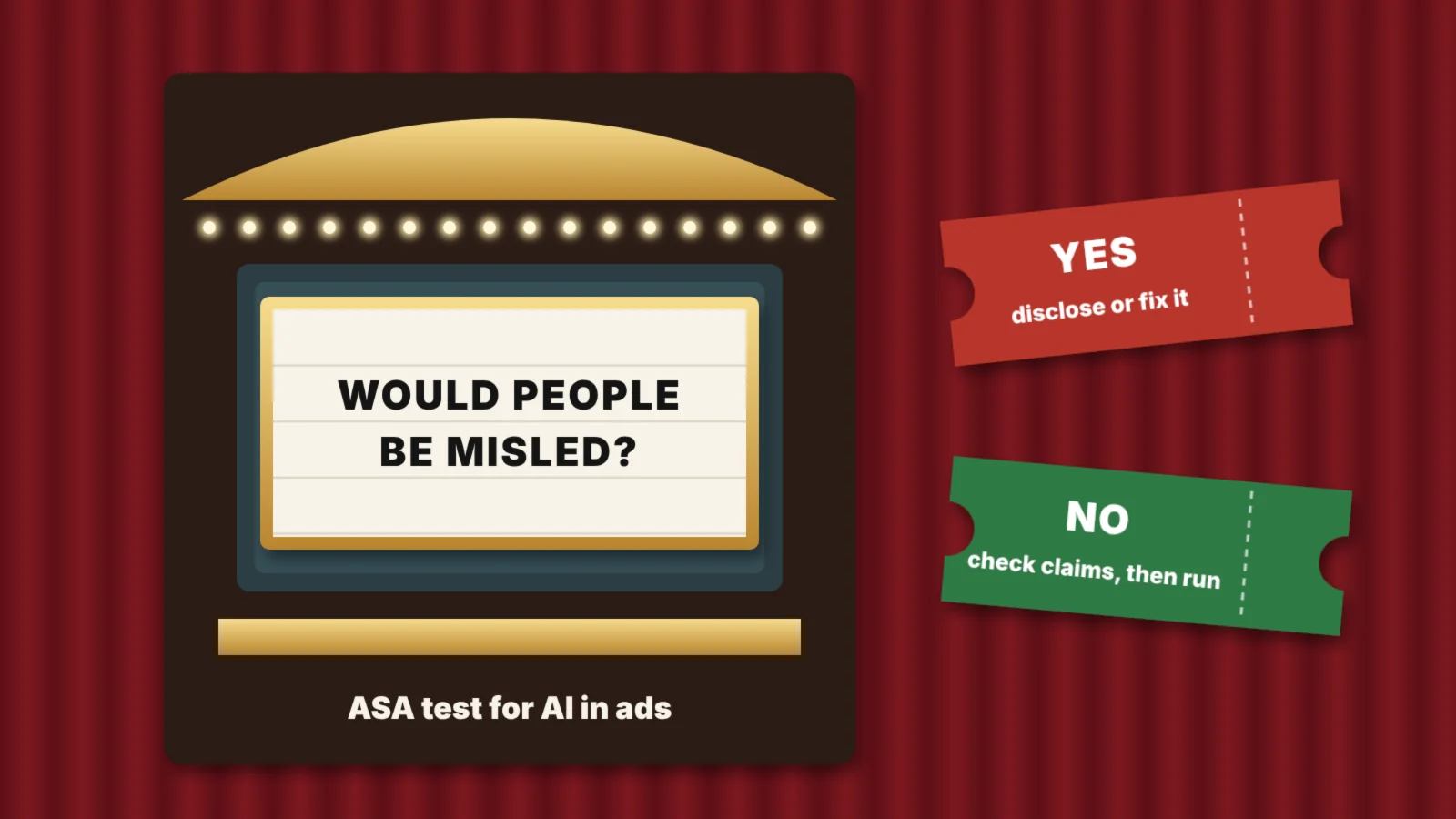
There is no blanket rule that ads must say they used AI. Instead, the ASA’s guidance on disclosing AI in advertising suggests asking two questions: would people be misled if you did not disclose the AI use, and if so, would a disclosure clarify the message or contradict it?
In practice that means:
- Do not exaggerate results. An AI-generated “after” image that shows results the product cannot achieve is misleading, and a small “made with AI” note does not fix it.
- Be careful with realistic people. If an ad uses an AI-generated presenter, influencer or customer that people could take for real, make that clear.
- Never imitate real people without permission. Deepfakes of celebrities or public figures can mislead and cause serious harm.
- Back up every claim. AI-written copy can state things as fact that you cannot prove. Check every number and promise before the ad runs.
- Keep urgency honest. Countdown timers and “only 3 left” messages must be true, as our guide to UK rules on urgency explains.
Common ad creative mistakes
- Burying the hook. Logos and slow introductions waste the only moment people give you.
- Saying too much. Three benefits in one ad usually land as none.
- Using the same ad everywhere. A TV-style video rarely works as a vertical social ad, and a social ad rarely works as a search ad.
- Judging ads on clicks. An ad that gets cheap clicks from the wrong people can cost more per customer.
- Sending traffic to the home page. The landing page should continue the ad’s promise.
- Letting ads run too long. Even strong creative wears out. Plan refreshes.
- Trusting AI copy without checking. Unsupported claims break the advertising rules, however the ad was made.
Frequently asked questions
What is ad creative?
Ad creative is the content of an advert that people see and hear: the headline, text, images, video, sound and call to action. It is separate from the targeting, budget and bidding settings that decide who sees the ad.
What makes an ad convert?
A strong hook, one clear benefit for a specific audience, proof such as reviews or a demonstration, a specific call to action and a landing page that continues the same promise.
How often should I refresh ad creative?
When results start to fall and frequency rises, which can happen within a few weeks for small audiences on social platforms. Plan new versions in advance rather than waiting for performance to drop.
Do I have to say an ad was made with AI in the UK?
Not always. There is no blanket rule, but the ASA says you should disclose AI use if leaving it out would mislead people, for example with a realistic AI-generated person. A disclosure cannot fix an ad that exaggerates what a product does.
How many ad variations should I test?
Start with three to five different messages, each in the formats you need. Test messages before small details, and give each test enough budget and time to produce a clear result.
On this page
Back to topTurn your ad spend into customers
Kutola plans and builds ad creative around what your customers care about, tests it properly and connects it to landing pages that convert. See how it fits into our social media strategy work, or get in touch to talk through your ads.