Digital PR: how to earn links and AI citations for your brand
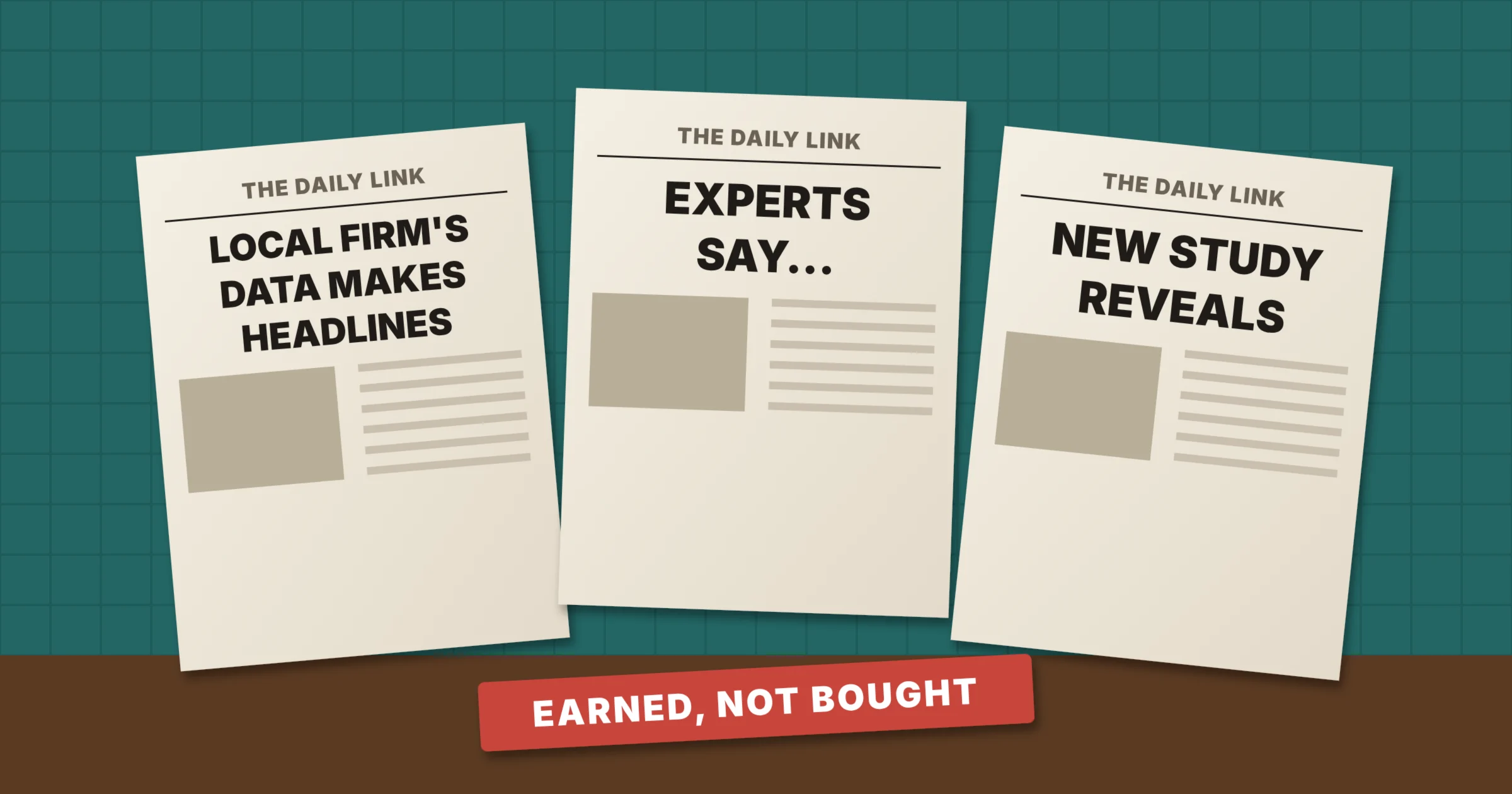
Digital PR is the work of getting your business mentioned and linked by news sites, trade publications, blogs and other trusted websites. It uses the methods of traditional PR, such as stories, data and expert comment, but aims for online coverage that builds search rankings, brand awareness and, increasingly, the citations that AI tools draw on when they recommend businesses.
Links from respected sites remain one of the clearest signals of authority in an SEO strategy, and AI assistants lean heavily on what third parties say about you. This guide explains what digital PR is, why it matters for search and AI, the tactics that work for small and mid-sized businesses, a step-by-step process, how to measure results and the Google rules that keep link building safe.
What is digital PR?
Digital PR is publicity designed to earn coverage online. A campaign might share original research, comment on a news story, publish a useful tool or tell a story about your business, with the aim of being featured and linked by relevant websites.
It differs from traditional link building, which often means asking site owners for links one by one or placing articles. Digital PR earns links because the content is newsworthy or useful. The coverage also brings referral visits, brand searches and credibility that a link alone does not.
Why digital PR matters for search and AI
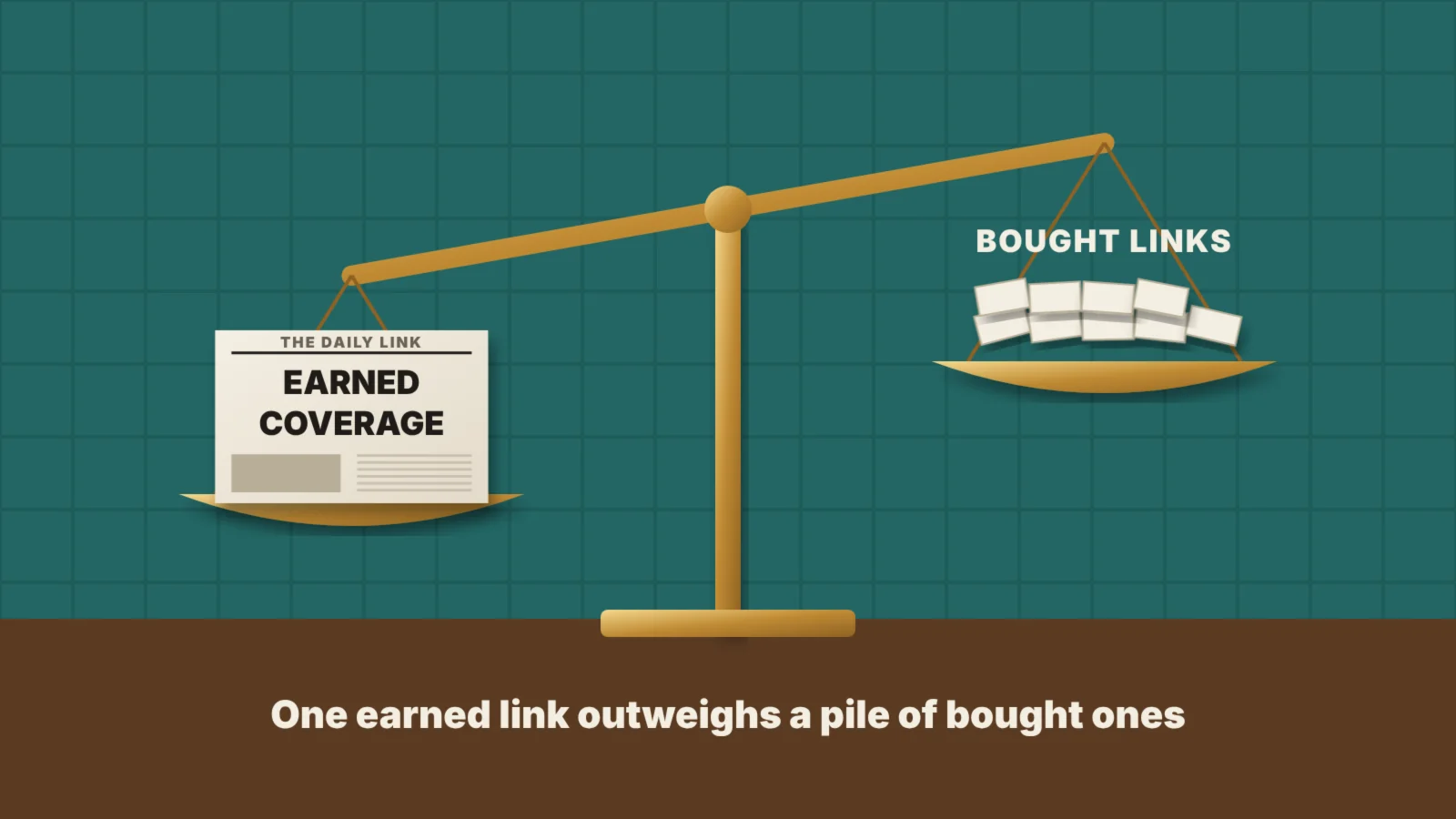
Search engines still use links from other sites to judge which pages deserve to rank. A few links from respected, relevant publications usually do more than many from low-quality directories.
AI search adds a second reason. Generative tools build answers from sources they trust, and those sources are mostly other people’s websites, not yours. In Muck Rack’s July 2025 study of links cited by AI tools, more than 95% came from non-paid sources and around a quarter came from journalism. Being covered by the sites that AI tools read is one of the most practical parts of generative engine optimisation.
Digital PR also supports E-E-A-T. Independent coverage of your expertise is evidence that others trust you, which is hard to fake.
Digital PR tactics that work
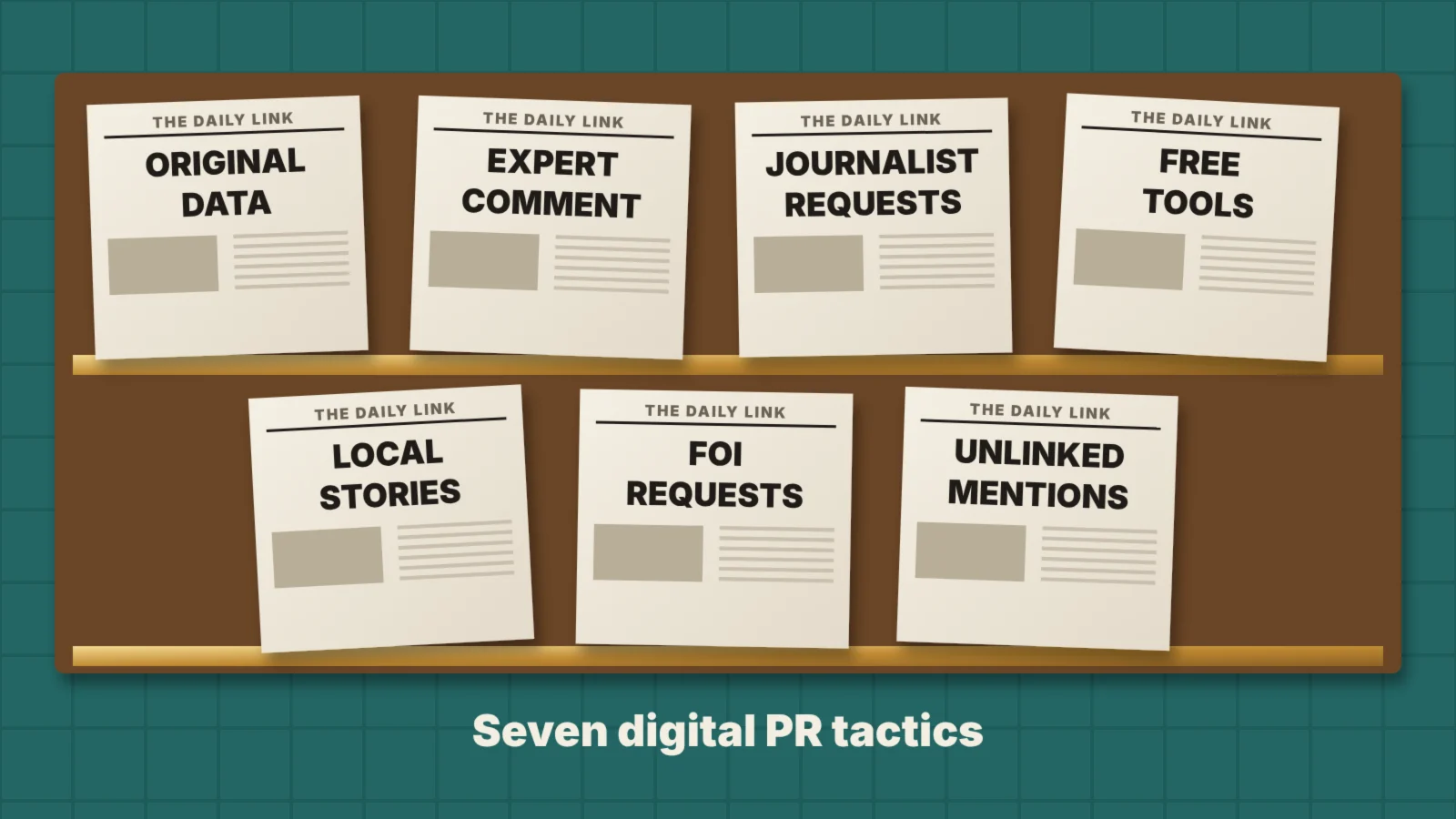
- Original data and research. Surveys, analysis of your own anonymised data or public data turned into a fresh story. Journalists link to the source of a statistic.
- Expert comment on the news. Offer a quick, quotable view when your industry is in the news. Speed matters more than polish.
- Journalist requests. Answer requests from journalists looking for sources, through services such as ResponseSource or the #journorequest hashtag on social platforms.
- Free tools and calculators. Useful tools attract links for years, because people cite them whenever the topic comes up.
- Local and trade stories. A new hire, a community project or a milestone can earn coverage in local news and trade publications that national outlets would ignore.
- Freedom of Information requests. UK public bodies must answer reasonable requests under the Freedom of Information Act 2000, which can provide original data for a story.
- Reclaiming unlinked mentions. When a site mentions your brand without a link, a polite request to add one often works.
How to run a digital PR campaign in 7 steps
- Set a goal. Decide what success means, such as links to a key service page, coverage in your trade press or mentions in AI answers about your category.
- Pick the right publications. List the national, regional and trade sites your customers read and that AI tools tend to cite for your topic.
- Find a story. Look for data you hold, a strong opinion your experts share or a trend that affects your customers. Ask whether a journalist would care, not whether you would.
- Build the asset. Create the research page, tool or report on your own website, with clear findings, a short method note and images journalists can use.
- Write a short pitch. Lead with the most interesting finding in the subject line, keep the email brief and tailor it to each journalist’s beat.
- Follow the news. Be ready to react when a related story breaks, with comment that adds something new.
- Track, follow up and reuse. Record coverage and links, ask politely for missing links and turn the story into blog posts, social content and sales material.
Stay within Google’s link rules
Digital PR works because it earns links. Paying for links or exchanging them in bulk can do the opposite. Google’s spam policies treat links bought or arranged to manipulate rankings as link spam, which can lead to those links being ignored or to a manual action.
Keep it safe:
- Never pay for followed links. Sponsored articles and paid placements should use rel=”sponsored” on the links.
- Avoid large-scale guest posting written mainly to get links, especially with keyword-stuffed anchor text.
- Do not swap links in bulk with other sites.
- Focus on relevance. A link from a respected trade publication is worth more than many from unrelated sites.
UK advertising rules apply too. If you pay a publisher or creator for coverage, it is advertising and must be clearly labelled, in the same way as paid influencer posts.
How to measure digital PR
- Coverage and links: the number of articles, how many link to you and the quality and relevance of the sites.
- Referral traffic: visits from coverage, tracked in GA4.
- Rankings: movement for the pages and topics the campaign supported.
- Brand searches: growth in searches for your business name in Search Console.
- AI visibility: whether AI tools mention or cite you more often for the questions that matter. Our guide to tracking AI visibility shows how.
Results build over months, so judge digital PR over a series of campaigns rather than one.
Common digital PR mistakes
- Stories nobody cares about. A new website or a minor product update is rarely news.
- Mass pitching. Sending the same email to hundreds of journalists wastes their time and damages your reputation.
- Weak data. Small or biased surveys get challenged. Explain your method and sample.
- Hiding the asset. If the research sits in a PDF or on a page with no clear findings, journalists will not link to it.
- Chasing link counts. A few relevant links beat many irrelevant ones.
- Paying for links. It breaks Google’s rules and rarely lasts.
- Giving up too soon. Relationships with journalists and publications take time to build.
Frequently asked questions
What is digital PR?
Digital PR is the practice of earning online coverage, mentions and links from news sites, trade publications, blogs and other trusted websites, using stories, data, expert comment and useful content. It supports search rankings, brand awareness and AI visibility.
What is the difference between digital PR and link building?
Link building is any effort to get links to your site, including outreach and placements. Digital PR earns links by creating content and stories that publications want to cover, so the links come with real coverage and credibility.
Does digital PR help with AI search?
Yes. AI tools build answers mostly from third-party sources such as news and trade sites. Coverage on the sites they read makes it more likely that your business is mentioned or cited in AI answers.
How long does digital PR take to work?
Coverage can appear within days of a campaign, but the effect on rankings and AI visibility usually builds over several months and several campaigns.
Can a small business do digital PR?
Yes. Local news, trade publications, expert comment and journalist requests are all realistic for small businesses, and a few relevant pieces of coverage can make a clear difference in a local or niche market.
On this page
Back to topGet your business talked about in the right places
Kutola plans digital PR around stories and data your audience cares about, earns coverage and links from relevant publications and tracks how it lifts your search and AI visibility. See how it fits into our SEO and AI search work, or get in touch to talk through your ideas.