Website copywriting: how to write pages that sell
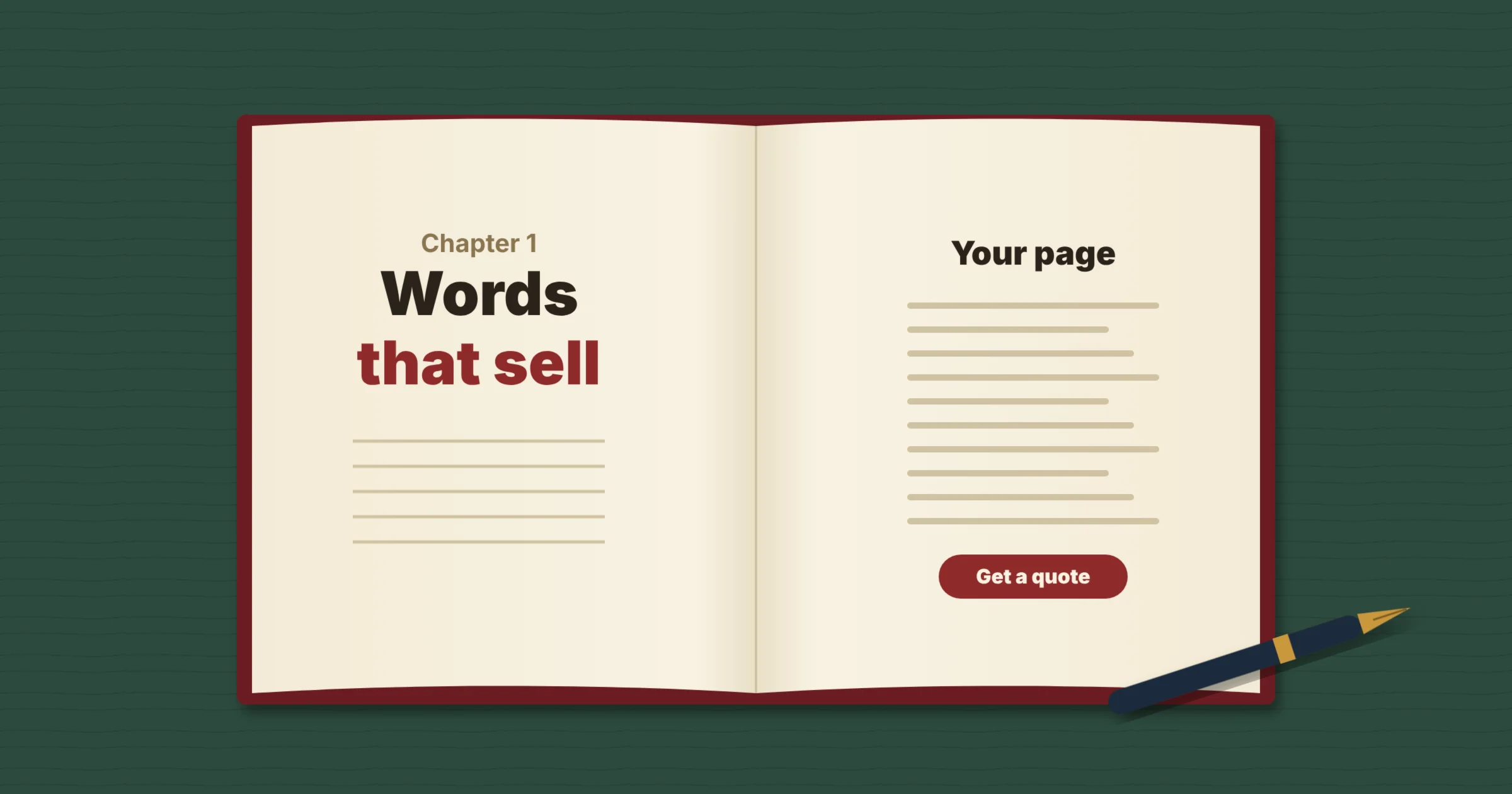
Website copywriting is writing the words on your website so that visitors understand what you offer, trust you and take the next step, whether that is buying, booking or getting in touch. Copy that sells starts with the customer’s problem, explains the outcome in plain English, backs every claim with proof and asks for one clear action. Most visitors scan rather than read, so structure matters as much as the words.
Copy is one of the biggest levers in conversion rate optimisation, and it builds on your value proposition. This guide covers what website copywriting is, the principles behind copy that sells, how to write each main page, a seven-step process and how to write for search engines and AI tools as well as people.
What is website copywriting?
Website copywriting is the persuasive text on the pages that drive your business: the home page, service and product pages, landing pages, the about page and calls to action. Its job is to move a visitor towards a decision.
It differs from content writing, which covers articles and guides meant to inform, attract search traffic and build trust over time. The two work together. A blog post might bring someone to your site, but the copy on your service page is what turns that interest into an enquiry.
Why website copy matters
Design gets attention, but words do the persuading. Visitors decide within seconds whether a page is relevant, and they do it by scanning headings, the first lines of paragraphs and buttons.
Research by the Nielsen Norman Group found that on an average web page, users read at most 28% of the words during a visit, and 20% is more likely. That makes every heading, opening sentence and button label count. Clear copy also helps search engines and AI tools understand what you do, which affects whether they show or recommend you.
The principles of website copy that sells
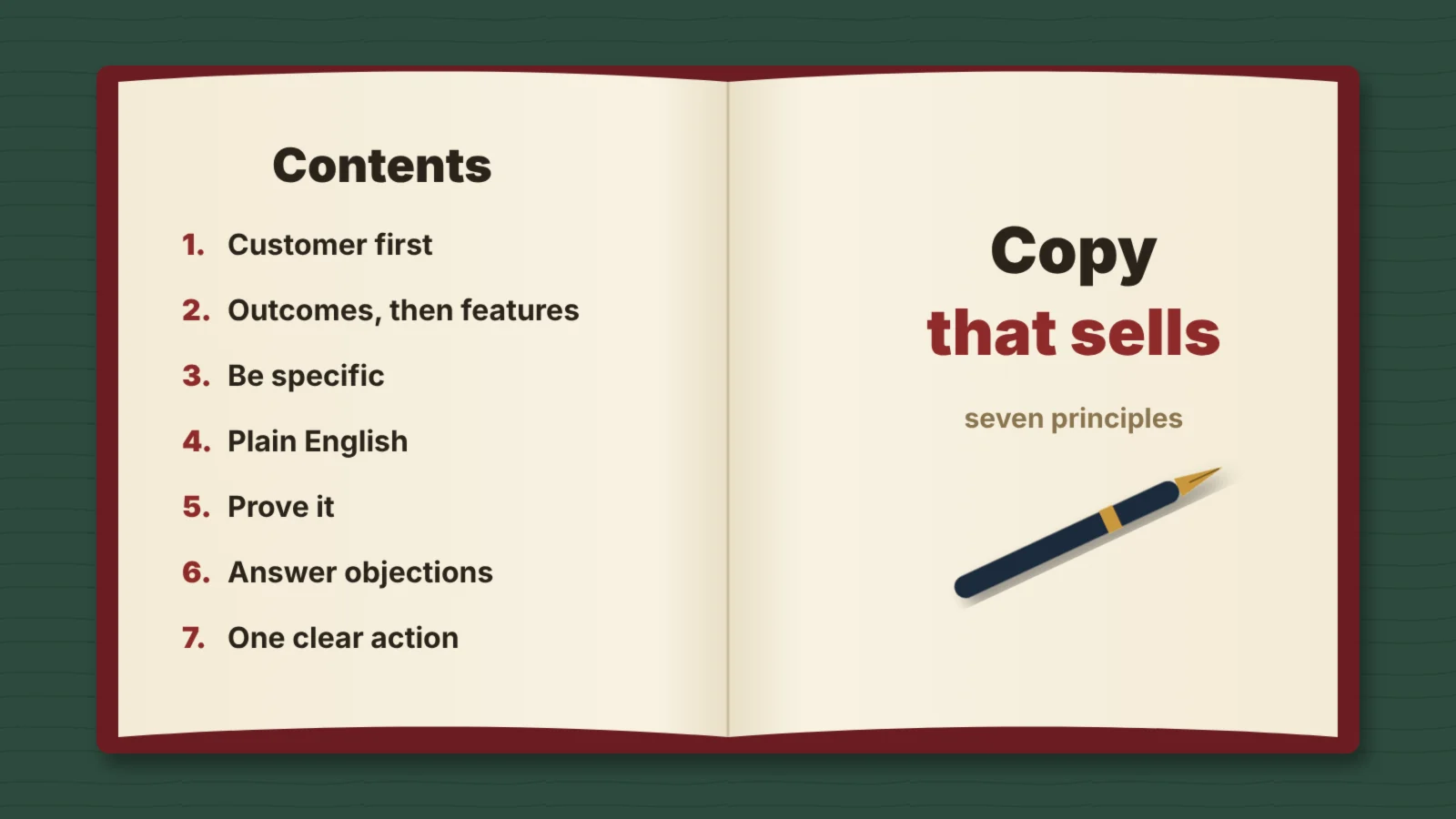
- Start with the customer, not the company. Lead with the problem they have or the result they want. “We are a leading provider” says nothing to a visitor.
- Sell outcomes, then explain features. “Your accounts filed on time, every time” before “cloud bookkeeping software”.
- Be specific. “Boiler repairs in Leeds, usually within 24 hours” beats “fast, reliable service”. Numbers, places and examples make claims believable.
- Use plain English. Short sentences, common words and no jargon. Write the way you would explain it to a customer on the phone.
- Prove it. Reviews, case studies, client logos, guarantees and accreditations answer the silent question “why should I believe you?”
- Answer objections. Price, time, risk and “is this right for me?” are the usual blockers. Address them on the page before people have to ask.
- Ask for one clear action. One main call to action per page, with a button that says what happens next, such as “Get a free quote”.
How to write the main pages of your website
Home page
Say what you do, who it is for and why you are the right choice in the first screen. Use a headline built on your value proposition, a short supporting line, one main call to action and immediate proof such as a review score. Then guide people to the right service or product.
Service and product pages
These usually convert the most visitors, so give them the most effort. Describe the problem, the result, what is included, how it works, the price or how pricing works, proof from similar customers and answers to common questions. Give each main service its own page rather than listing everything on one.
About page
People visit the about page to decide whether they can trust you. Explain who you are, why you do this work and what makes your approach different, with real photos of the team. Keep the focus on what that means for the customer.
Contact page
Make it easy. Say what happens after someone gets in touch and how quickly you reply, keep forms short and offer more than one way to reach you.
Landing pages
A landing page has one goal and one audience, usually for an ad or email campaign. Our guide to what makes a landing page convert covers the structure in detail.
How to write website copy in 7 steps
- Research your customers. Read reviews, listen to sales calls and look at the searches that bring people to your site. Collect the exact words customers use.
- Define the goal of each page and the one action you want visitors to take.
- Write the headline first. State the main benefit for this audience. Write ten versions and choose the clearest, not the cleverest.
- Outline the page as questions. List what a visitor needs to know, in the order they need to know it, and turn each question into a section heading.
- Draft the body. Answer each question in short paragraphs and lists, adding proof as you go.
- Edit hard. Cut words that do not help the reader decide. Read it aloud and check it on a phone screen.
- Test and improve. Watch how people use the page, ask a few customers what they understood and test key headlines or calls to action with an A/B test where traffic allows.
Write in a consistent tone of voice
Tone of voice is how your brand sounds, and it should feel the same on every page, from the home page to error messages. A useful starting point is to describe the personality in three or four traits, each with a “this, not that” note, such as “friendly, not overfamiliar”. Some businesses use brand archetypes to define that personality.
Write the agreed voice into your brand guidelines with real examples of good and bad copy, so that anyone writing for the website can match it.
Write copy for search engines and AI tools
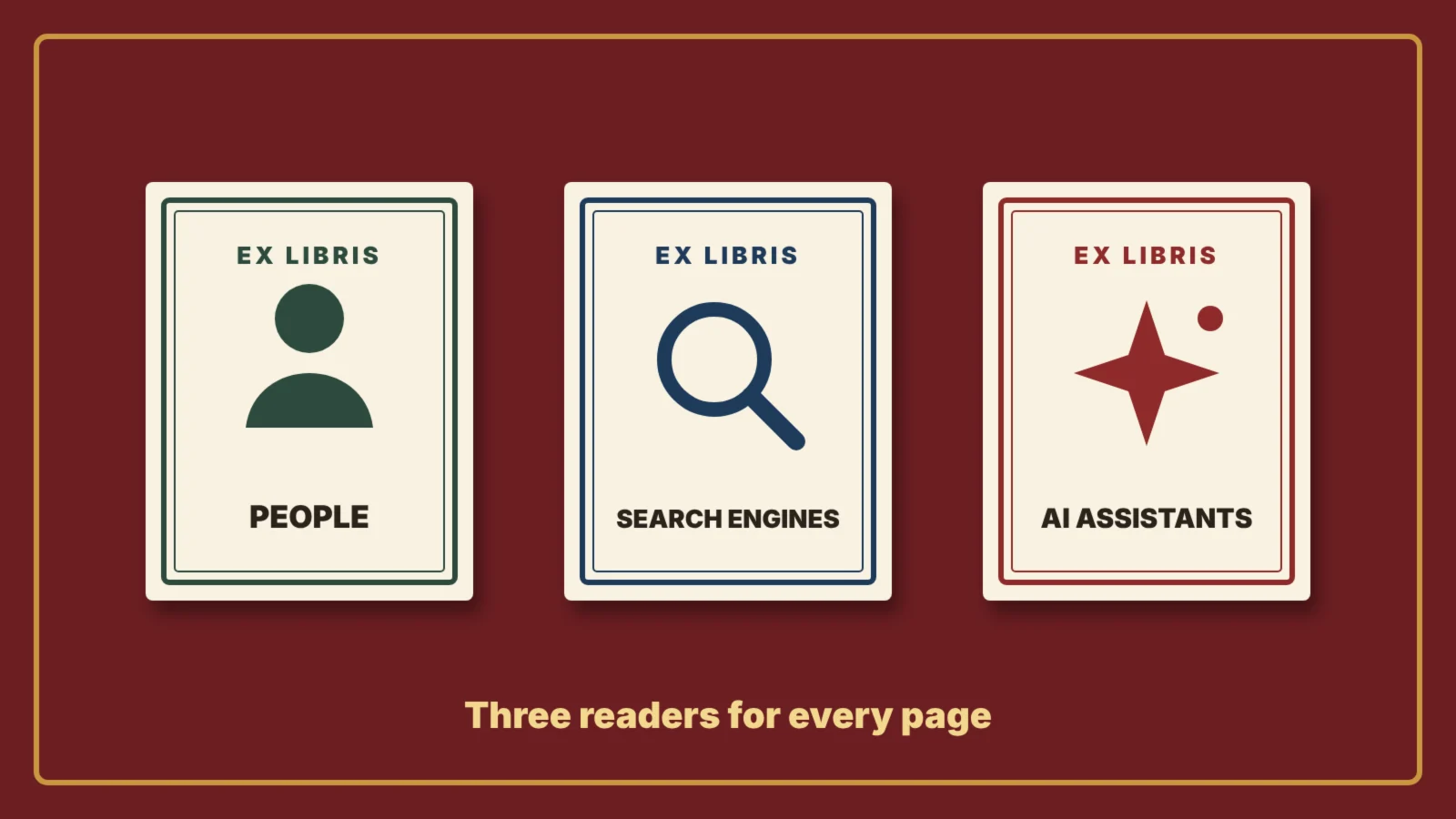
Good website copy now has three readers: people, search engines and AI assistants that summarise and recommend businesses. The same habits help all three:
- Use the words people search for in headings and opening lines, based on keyword research rather than internal jargon.
- State facts plainly, such as what you offer, where, for whom and at what price, so AI tools can quote you accurately.
- Answer common questions directly in a short FAQ section on service pages.
- Give each page one clear topic, so search engines know which page to show for which search.
- Keep the text in the HTML rather than inside images or tabs that need scripts to load.
Common website copywriting mistakes
- Talking about yourself. Count how often you say “we” compared with “you”. Turn it round.
- Vague claims. “Quality”, “passionate” and “solutions” mean nothing without specifics.
- Walls of text. Long paragraphs on a phone screen get skipped. Use headings, short paragraphs and lists.
- Hiding the price. If you can give a price or a starting price, do. If not, explain how pricing works.
- Too many calls to action. Several competing buttons make people hesitate.
- Copying competitors. If your copy could sit on a rival’s site, it does not explain why to choose you.
- Never updating it. Review your main pages when your services, prices or customers change.
Frequently asked questions
What is website copywriting?
Website copywriting is writing the words on a website’s key pages, such as the home page, service pages and landing pages, to persuade visitors to take an action like buying, booking or making an enquiry.
How do I write good website copy?
Start with the customer’s problem and the result they want, use plain and specific language, back claims with proof, answer common objections and ask for one clear action on each page. Structure the page with clear headings, because most visitors scan.
What is the difference between copywriting and content writing?
Copywriting aims to persuade someone to act, usually on sales and service pages. Content writing aims to inform and attract, usually through articles and guides. Most websites need both.
How long should website copy be?
As long as it needs to be to answer the visitor’s questions, and no longer. Service pages for considered purchases often need more detail than a home page, but every section should help the reader decide.
Can I use AI to write my website copy?
AI can help with first drafts and headline ideas, but edit everything carefully. Add your own specifics, proof and voice, and check every claim, because generic AI copy rarely explains why someone should choose you.
On this page
Back to topTurn your website into your best salesperson
Kutola rewrites key pages around what your customers need to hear, from home and service pages to landing pages and calls to action, and tests what works. See how it fits into our brand and digital experience work, or get in touch to talk through your website.