
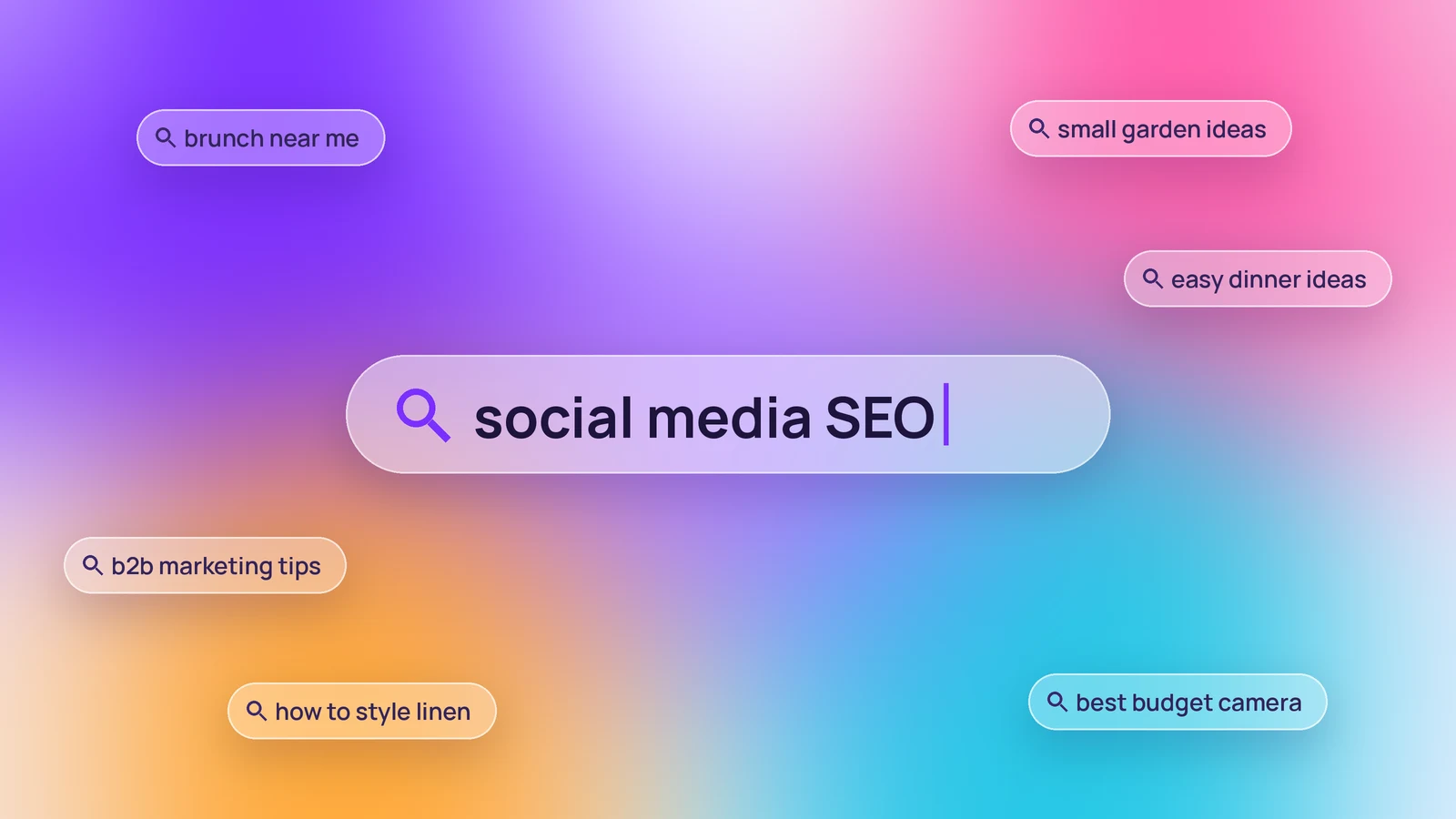
Social media SEO is the practice of optimising your profiles and content so people can find them when they search on platforms such as TikTok, Instagram, YouTube, LinkedIn, Pinterest and Reddit. Often called social SEO, it treats every social platform as a search engine in its own right, because for many people that is exactly what it has become.
It also reaches beyond the platforms themselves. Social posts now appear in Google results, and AI tools regularly draw on social content when they answer questions. This guide explains how social search works, how it differs from traditional search engine optimisation, what to do on each major platform and how to measure the results.
Key takeaways
- Social media SEO means optimising profiles and content so people find them through search on TikTok, Instagram, YouTube, LinkedIn, Pinterest and Reddit.
- Platforms read captions, spoken words, on-screen text, profiles and hashtags, then rank results by relevance, engagement, authority, freshness and personalisation.
- Social content increasingly appears in Google, and public posts from Instagram professional accounts can be indexed since July 2025.
- AI tools cite Reddit, YouTube and LinkedIn more than almost any other sources, so social visibility now shapes AI answers too.
- Consistent brand names and descriptions across every profile help people, search engines and AI tools understand who you are.
What is social media SEO?
Social media SEO means making your content easy for a platform’s search function to understand, match to the right queries and show to the right people. It covers the words in your profile, captions and video, how you use hashtags and alt text, and the signals your content earns once it is live, such as views, saves, shares and comments.
Traditional social media marketing focuses on the feed: reaching people who follow you or who the algorithm decides to show you to. Social media SEO focuses on intent: being there when someone actively looks for a product, a place, an answer or an idea. Content that is found through search also tends to keep working for months, long after it has dropped out of the feed.
Why social media SEO matters now
- People search on social platforms. In 2022, a senior Google executive revealed that internal research found almost 40% of young people looking for a place to have lunch went to TikTok or Instagram rather than Google Maps or Search. As Econsultancy pointed out, that figure was about discovery rather than every kind of search, but it captured a real shift in behaviour that has only grown since.
- Younger audiences start on video platforms. In the UK, Ofcom reports that 96% of children aged 8 to 14 use YouTube. The next generation of customers is used to finding information through video first.
- Social content now ranks in Google. Google regularly shows videos from TikTok, YouTube and Instagram in its results. Since July 2025, public posts from Instagram professional accounts can also be indexed by Google and Bing.
- AI tools cite social platforms. A study of 30 million sources by Peec AI found that Reddit, YouTube and LinkedIn were the most cited domains across ChatGPT, Google AI Mode, Gemini, Perplexity and AI Overviews.
Together, these trends mean a brand’s social presence is no longer only about engagement. It is part of how the brand gets found everywhere people look for answers.
How social search algorithms work
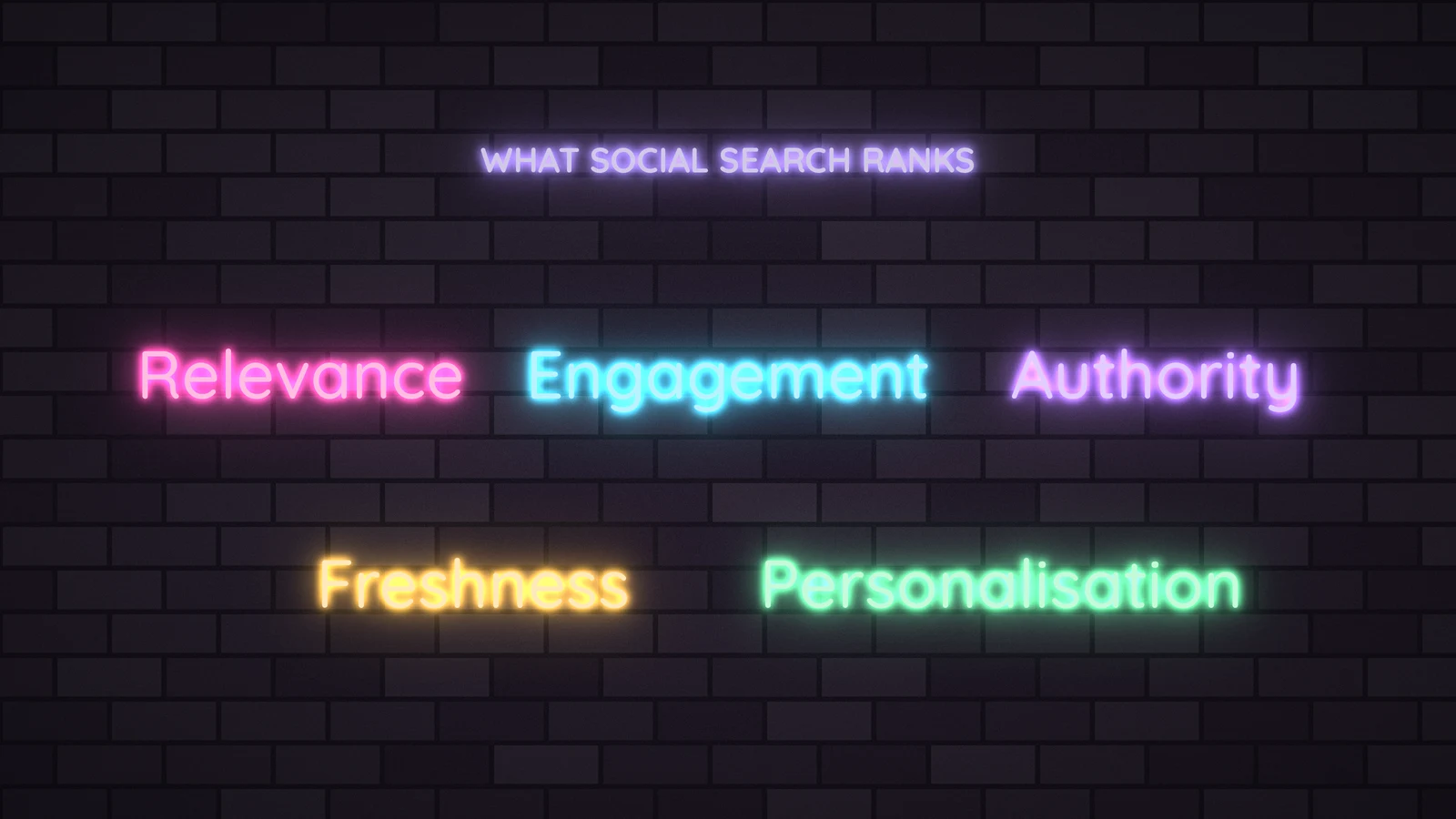
Each platform has its own algorithm, but social search engines weigh broadly similar signals when deciding what to show for a query:
- Relevance: whether the words in your caption, title, on-screen text, spoken audio, hashtags and profile match what the person searched for. Many platforms now transcribe speech and read text in videos.
- Engagement: how people respond to the content, including watch time, completion rate, saves, shares, comments and clicks. A strong engagement rate tells the platform that the content satisfies viewers.
- Account signals: whether the account consistently posts about the topic, which helps the platform understand what it is an authority on.
- Freshness: recent content is often favoured, especially for trending topics.
- Personalisation: the searcher’s interests, history, language and location shape which results they see.
Social media SEO vs traditional SEO
| Traditional SEO | Social media SEO | |
|---|---|---|
| Where you appear | Search engine results pages | Platform search, Explore and For You feeds, and increasingly Google and AI answers |
| Main content | Web pages | Videos, images, carousels, posts and discussions |
| Keyword placement | Titles, headings, body copy, metadata | Captions, spoken words, on-screen text, profile name and bio, hashtags |
| Authority signals | Backlinks and site reputation | Engagement, consistency and account reputation |
| Speed of results | Usually months | Can be days, but visibility fades faster |
| Lifespan | Long, with regular updates | Shorter, though searchable posts last far longer than feed posts |
The two work best together. The same keyword research can feed a blog post, a YouTube video, a TikTok series and a LinkedIn post, each adapted to the platform.
Social media SEO platform by platform
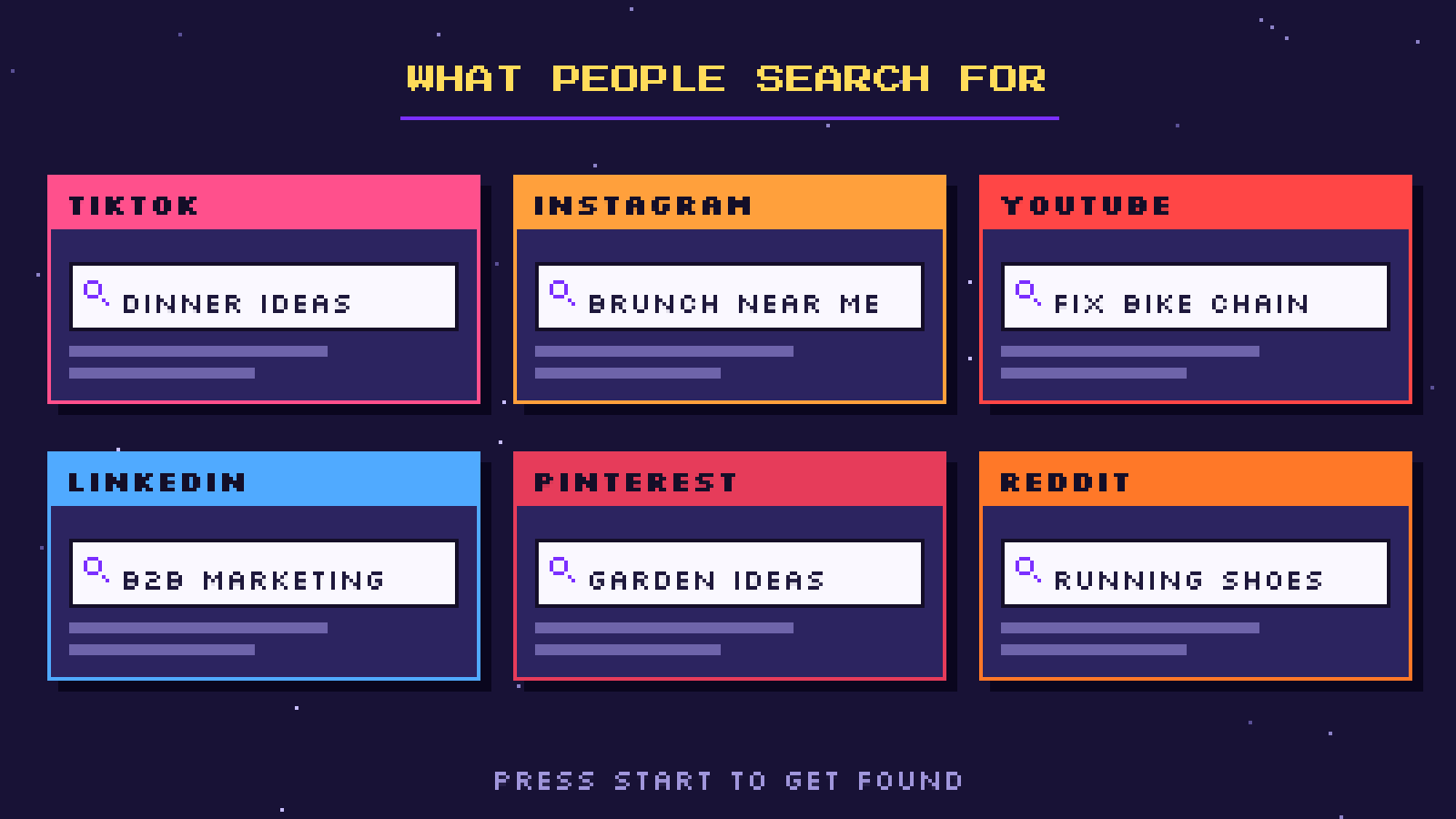
TikTok SEO
TikTok is used as a discovery engine for recipes, products, places, how-tos and reviews. Its search reads captions, on-screen text, spoken words and hashtags, and it suggests related searches under many videos, which creates more ways to be found through TikTok SEO.
- Say your main keyword out loud in the first few seconds and show it as on-screen text.
- Write captions that describe what the video covers in the words people search for.
- Use TikTok’s Creator Search Insights to see what people search for and which topics lack good content.
- Build series around recurring questions in your niche so the account becomes known for the topic.
Instagram SEO
Instagram search matches keywords in the name field, username, bio and captions, then ranks results using engagement and the searcher’s activity. Since July 2025, public posts from professional accounts can also appear in Google and Bing results, which makes captions and alt text a bigger part of Instagram SEO than ever.
- Include your main keyword in the name field, not only in the username.
- Write captions with descriptive keywords rather than relying on hashtags alone.
- Add custom alt text to images to describe what they show.
- Keep the account public and set as a professional account if you want posts to be indexable.
YouTube SEO
YouTube is often described as one of the largest search engines in the world, and its videos are among the sources AI tools cite most. It relies heavily on titles, descriptions, captions and viewer satisfaction signals such as watch time.
- Put the main keyword near the start of the title and explain the topic clearly in the first lines of the description.
- Add chapters so both YouTube and Google can surface specific moments in your video.
- Upload accurate captions rather than relying only on automatic ones.
- Answer real questions and create playlists that group videos around a topic.
LinkedIn SEO
LinkedIn is where B2B buyers research companies, people and ideas. Company pages, profiles, articles and posts can all appear in LinkedIn search and in Google, and LinkedIn is one of the platforms AI tools cite most for business topics.
- Describe what the company does in plain, searchable terms in the tagline and About section.
- Make sure people’s headlines and profiles reflect the expertise they want to be known for.
- Publish articles and posts that answer the questions buyers ask in your sector.
- Keep the company name and description consistent with your website and other profiles.
Pinterest SEO
Pinterest works like a visual search engine for ideas and plans, from home design to weddings and recipes. Pins often keep driving traffic for months or years, which makes them unusually durable.
- Use descriptive keywords in pin titles, descriptions and board names.
- Check Pinterest Trends to see what people search for and when interest peaks.
- Link pins to relevant pages on your website so interest turns into visits.
Reddit is different from the other platforms because brands cannot simply publish their way to visibility. Communities value honesty and dislike promotion. Yet Reddit threads rank prominently in Google, and in 2024 Reddit signed data licensing deals with Google and later OpenAI, which is one reason its discussions appear so often in AI answers.
- Use social listening to find the threads where your category, competitors or problems are discussed.
- Take part as a clearly identified brand or expert, answer questions helpfully and follow each community’s rules.
- Never post fake reviews or pose as customers. It breaks community trust and, in the UK, fake reviews are now illegal.
Social media SEO and AI search
Social media SEO and generative engine optimisation increasingly overlap. AI tools build answers from sources they trust, and discussions, reviews and videos on social platforms are among the most common. When people ask an AI tool which brand to choose, what is said about you on Reddit, YouTube and LinkedIn can shape the answer.
This makes consistency important. Use the same brand name, description and core messages on your website and every social profile, so both search engines and AI models understand who you are. The differences between optimising for search engines, direct answers and AI tools are explained in our comparison of GEO vs SEO vs AEO.
How to do social media SEO: 7 steps
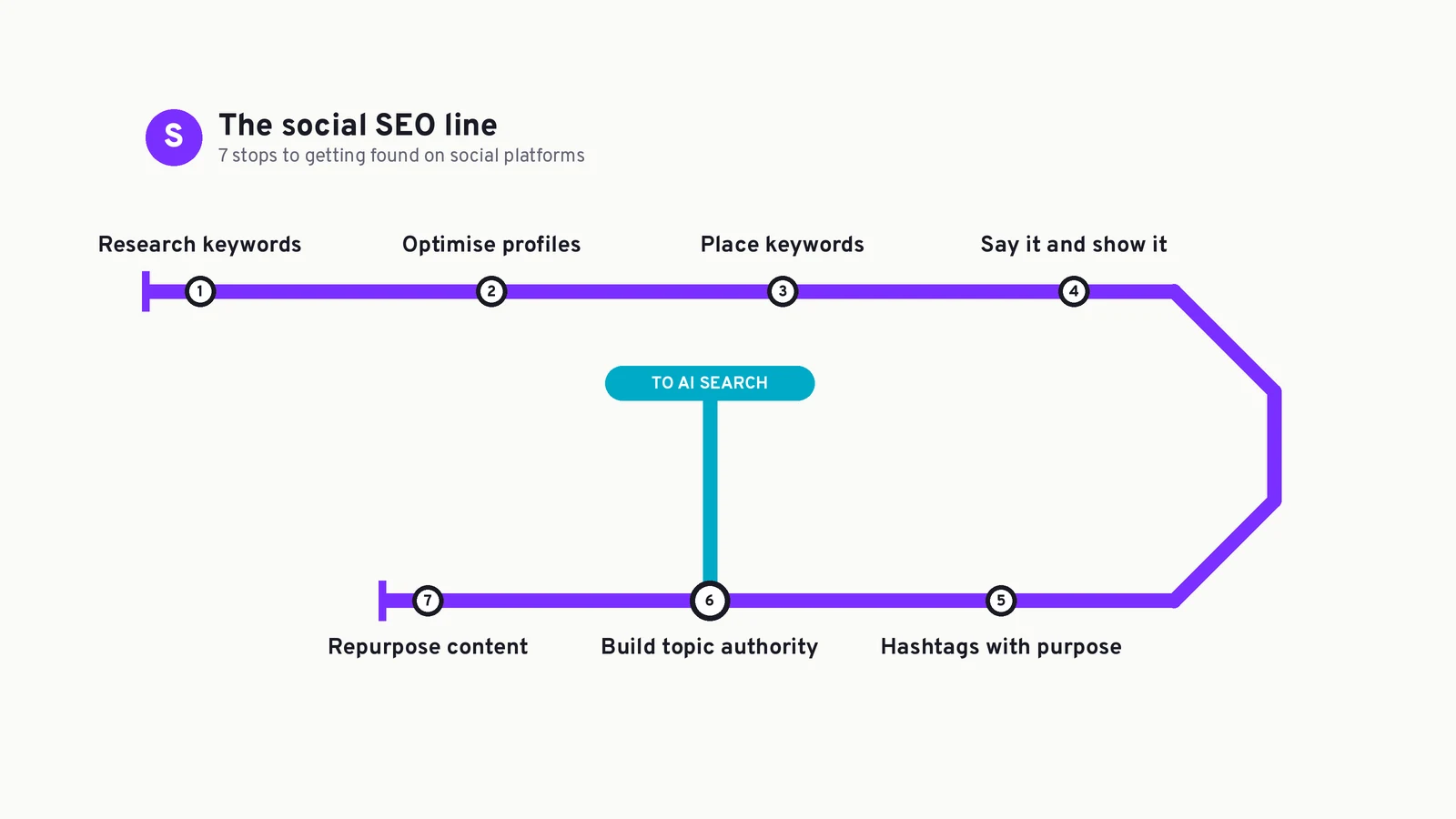
- Research keywords on each platform. Type topics into each platform’s search bar and note the autocomplete suggestions. Combine these with tools such as Creator Search Insights and Pinterest Trends, and with search volume data from SEO tools. Long-tail keywords and full questions often work best.
- Optimise your profiles. Use a recognisable name, include your main keyword in the name field and bio where the platform allows it, and keep descriptions consistent across platforms.
- Put keywords where the platform reads them. Use them naturally in captions, titles, descriptions and the opening lines, where both viewers and algorithms pay most attention.
- Say it and show it. Mention the keyword out loud and show it on screen in videos. Add captions and alt text, which help accessibility as well as search.
- Use hashtags with purpose. A few specific, relevant hashtags help categorise content. Long lists of generic ones add little. If you are unsure what a popular tag or abbreviation means, our guide to social media acronyms covers the most common ones.
- Build topic authority. Post consistently around a small number of themes and create series that answer related questions, so the platform learns what your account is about.
- Repurpose across platforms. Turn one piece of research into a blog post, a short video, a carousel and a LinkedIn post, adapting the format and wording for each audience.
How to measure social media SEO
Most platforms show where views come from. Look for the share of views that come from search, and track it over time:
- TikTok: traffic source data shows how many views come from search.
- YouTube: YouTube Studio shows views from YouTube search and the search terms that led people to your videos.
- Instagram and LinkedIn: insights show reach, profile visits and how people discovered your content.
- Google: check whether your social posts and videos appear for your target keywords, and watch for referrals from social platforms in your analytics and Google Search Console.
- AI answers: test the questions your customers ask in ChatGPT, Perplexity and Google’s AI features, and note whether your brand is mentioned and which social sources are cited alongside it.
Common social media SEO mistakes
- Keyword stuffing. Captions written for algorithms rather than people put viewers off, and engagement is a ranking signal.
- Relying only on hashtags. Captions, spoken words and on-screen text now matter at least as much.
- Inconsistent brand names. Different names and descriptions on each platform confuse search engines, AI tools and people.
- Ignoring comments. Comments add context and keywords, and replies signal an active, trusted account.
- Chasing trends that do not fit. Trending audio and formats can boost reach, but content that is unrelated to your topic weakens the account’s authority.
Frequently asked questions
What is social media SEO?
Social media SEO is the practice of optimising social media profiles and content so people can find them through search on platforms such as TikTok, Instagram, YouTube, LinkedIn, Pinterest and Reddit, as well as in Google and AI answers.
Is social SEO the same as social media SEO?
Yes. Social SEO is a shorter name for the same practice: treating social platforms as search engines and optimising content so it appears when people search for relevant topics.
Do hashtags still matter for social media SEO?
Yes, but less than they used to. A few specific, relevant hashtags help platforms categorise content. Keywords in captions, spoken audio, on-screen text and profiles now carry at least as much weight.
Can Instagram posts appear in Google search?
Yes. Since July 2025, public posts from Instagram professional accounts can be indexed by Google and Bing. Account holders can review this in Instagram’s privacy settings.
How does social media SEO help with AI search?
AI tools often cite social platforms such as Reddit, YouTube and LinkedIn when answering questions. A clear, consistent and helpful presence on these platforms makes it more likely that your brand is mentioned and described accurately in AI answers.
Get found wherever people search
Kutola helps brands build visibility across search engines, social platforms and AI tools with a single, joined-up strategy. Get in touch to see how easy your brand is to find today.